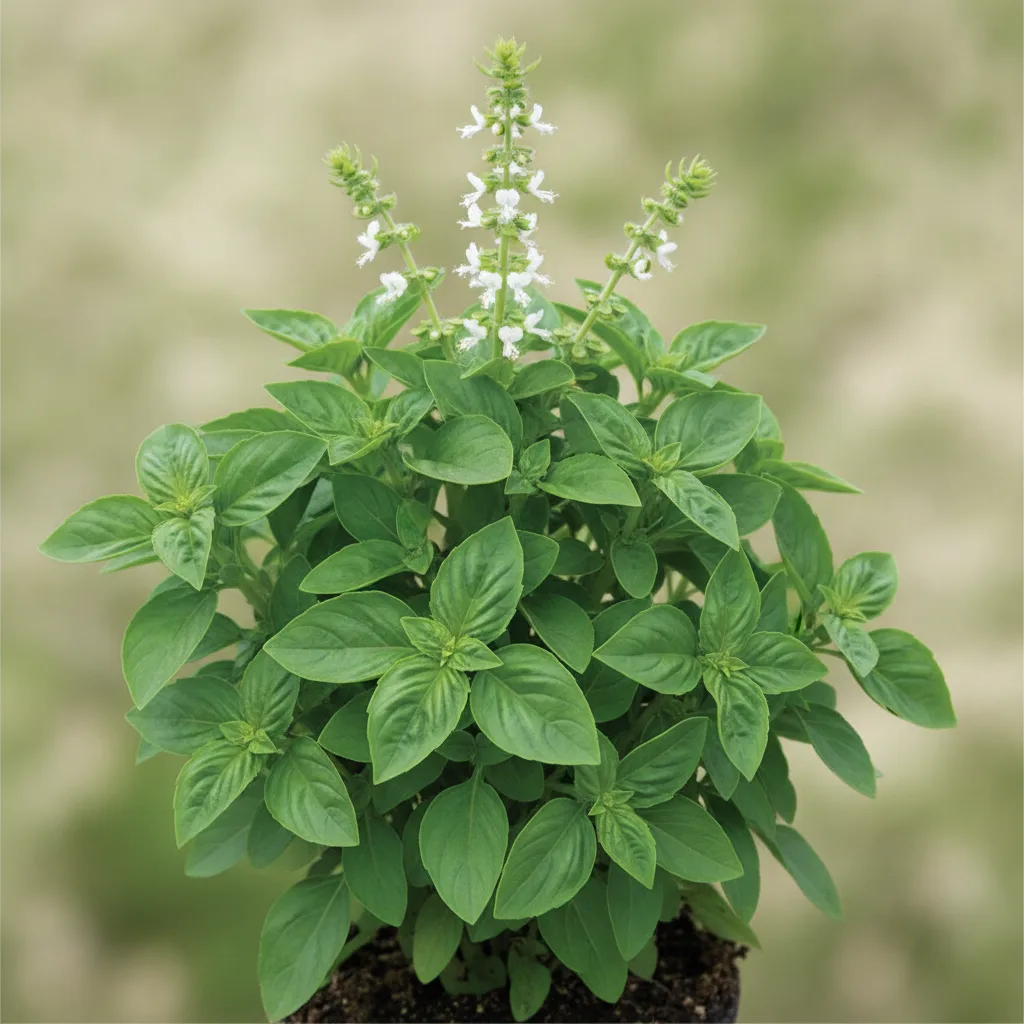
The essential summer herb — pinch it often for bushy growth and a steady supply of fragrant leaves. Fast and rewarding from seed in warm weather.
At a glance
- Plant type: Edible plant
- Aspect: full sun
- Water: regular, moderate watering
- Frost: tender
- Maintenance: low maintenance
- Origin: Exotic
About Sweet Basil
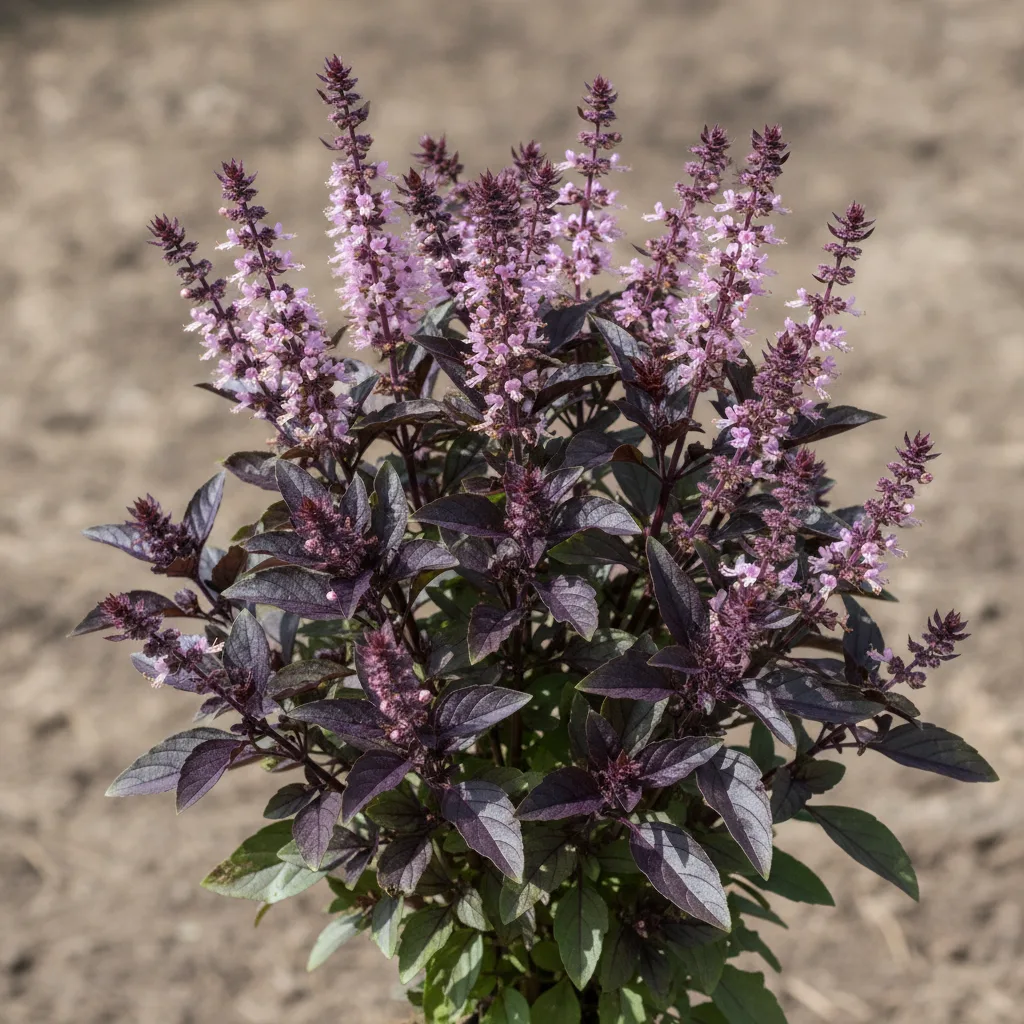
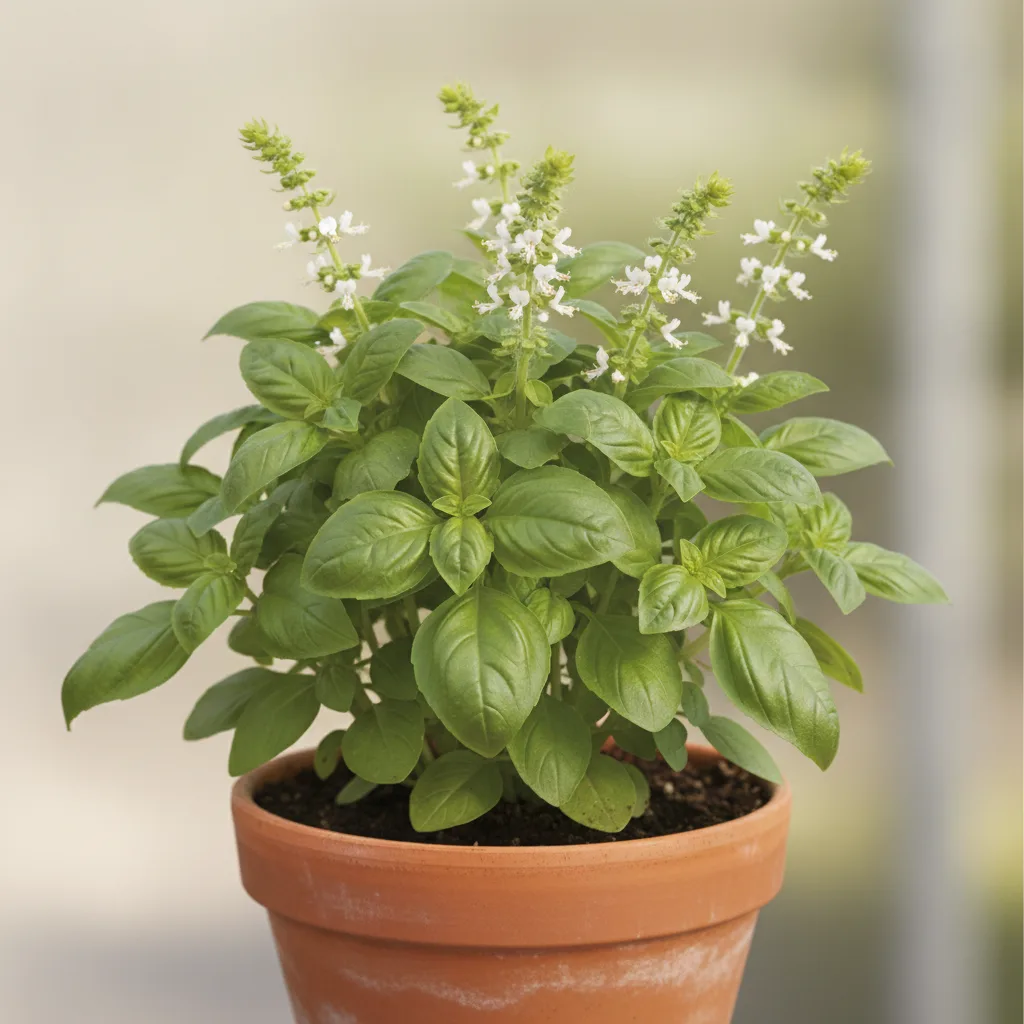
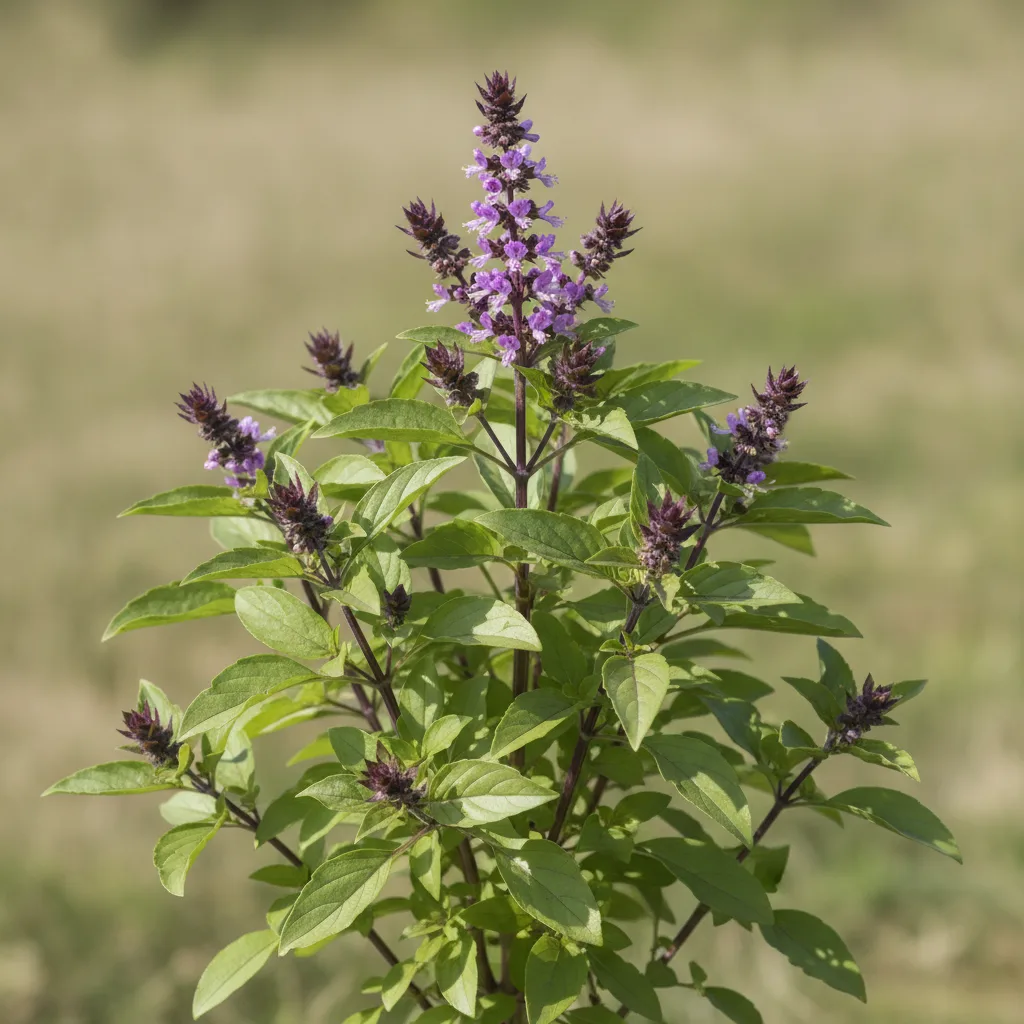
Botanically, Ocimum basilicum is a fast-growing edible plant in the Lamiaceae family. The foliage is aromatic. White flowers appear in summer.
Where to grow Sweet Basil
Sweet Basil suits warm-temperate, subtropical and tropical climates and grows best in full sun. It is frost tender, so protect it from hard frosts or grow it in a sheltered spot or pot.
Soil & planting
Most soils suit Sweet Basil provided drainage is reasonable. Dig in plenty of compost before planting, water in well, and mulch to keep roots cool.
Watering & feeding
Sweet Basil does best with regular, moderate watering. Feed regularly through the growing season for the best crop. Keep a newly planted specimen evenly watered through its first season; established plants can then follow the water needs above.
Pruning & care
Prune Sweet Basil after flowering to keep it compact and encourage the next flush of blooms. Once established, it is low maintenance.
Using Sweet Basil in the garden
Sweet Basil earns its place for edible harvests, pots and courtyard containers, feeding bees and pollinators and its fragrance. It is equally at home in the ground or a large pot on a balcony or courtyard.
Companion planting & design
For easier irrigation and care, group Sweet Basil with species that also favour regular, moderate watering and warm-temperate climate. Leave enough room for the mature spread so neighbouring plants are not crowded out.
Good to know
It is regarded as non-toxic and pet-safe.
Buying Sweet Basil
Plant Sale lists Sweet Basil as seed and potted plants. Catalogue forms are planning guidance until the Plant Sale team confirms live availability.
Prefer to grow it yourself? See the Sweet Basil seed sowing guide for depth, timing and germination.