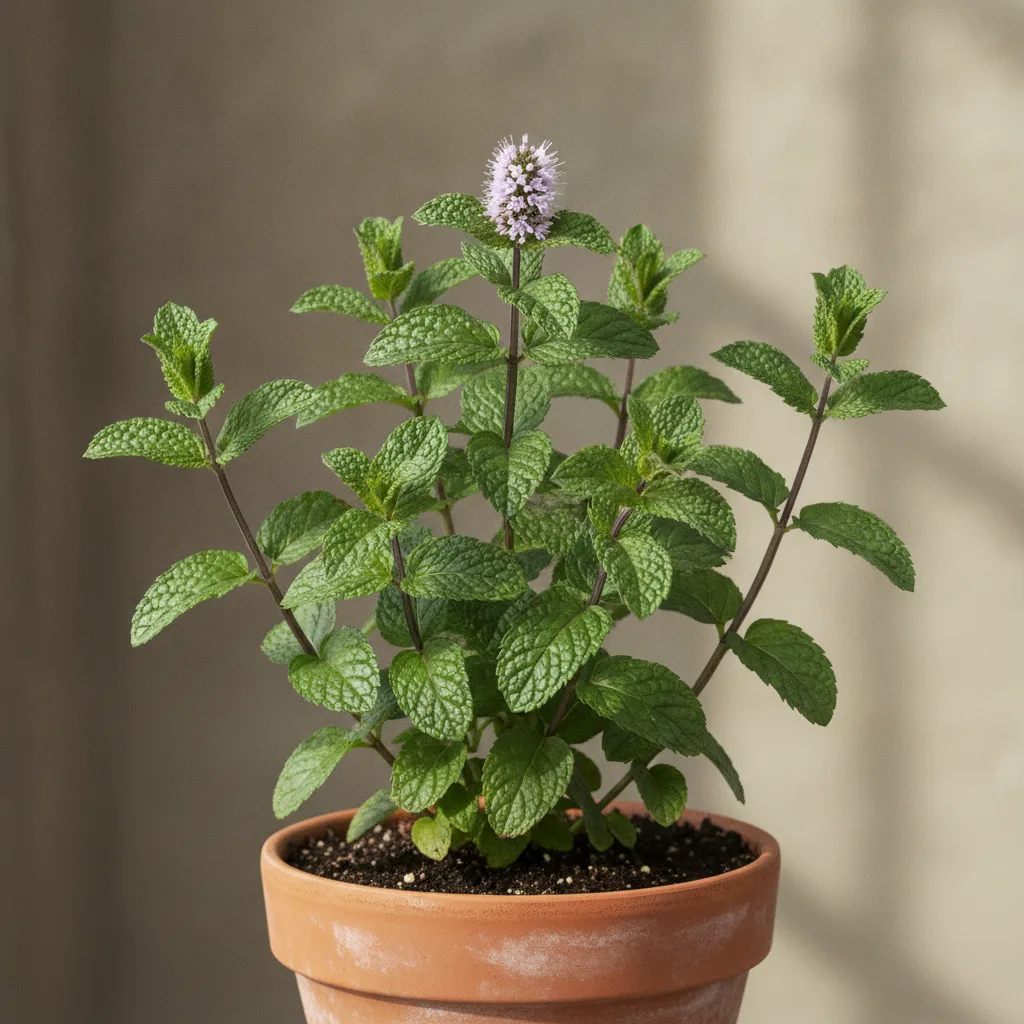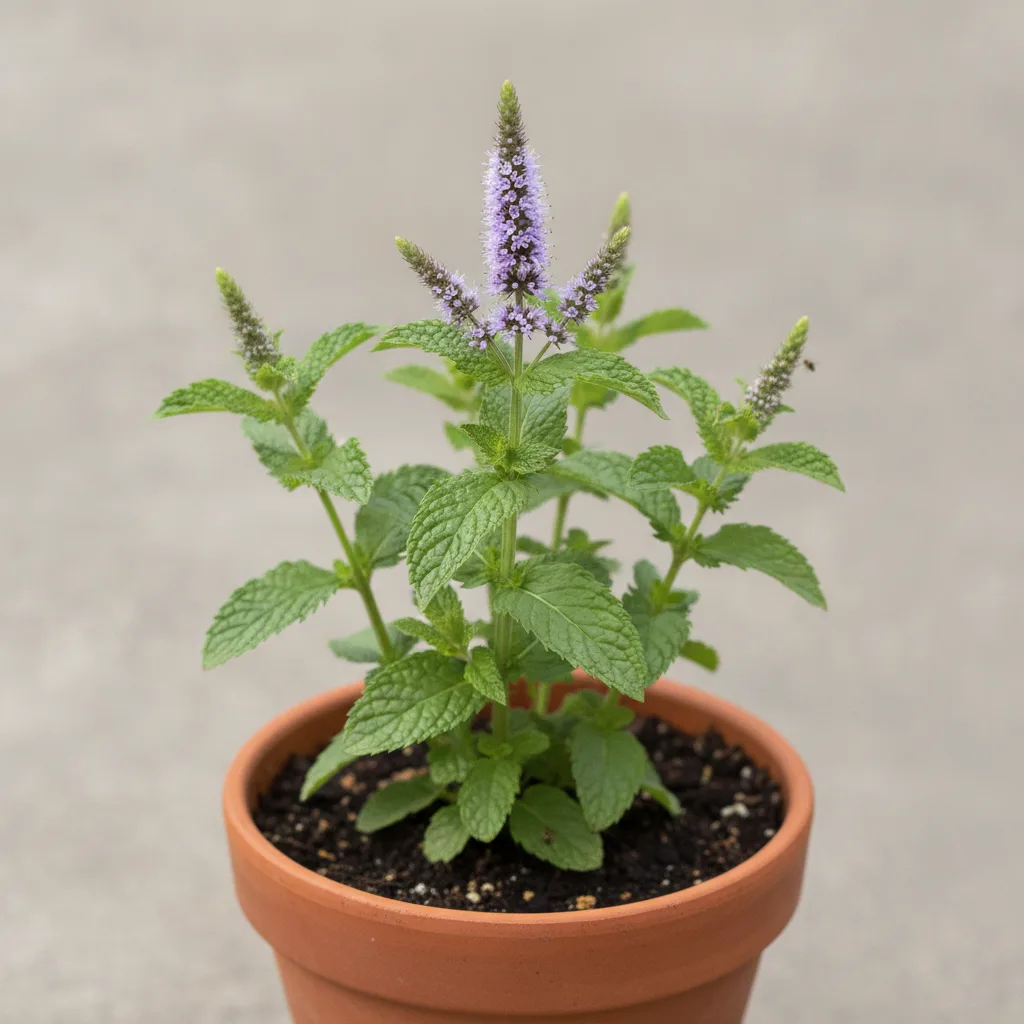
Vigorous, fragrant and almost impossible to kill — best grown in a pot to keep its running roots in check. A few leaves transform drinks, salads and lamb.
At a glance
- Plant type: Perennial
- Aspect: part shade or morning sun and full sun
- Water: consistently moist soil
- Frost: hardy
- Maintenance: low maintenance
- Origin: Exotic
About Spearmint
Botanically, Mentha spicata is a fast-growing perennial in the Lamiaceae family. The foliage is aromatic. Purple flowers appear in summer.
Where to grow Spearmint
Spearmint suits warm-temperate and cool-temperate climates and grows best in part shade or morning sun and full sun. It is frost hardy and shrugs off cold winters.
Soil & planting
Most soils suit Spearmint provided drainage is reasonable. Dig in plenty of compost before planting, water in well, and mulch to keep roots cool.
Watering & feeding
Spearmint prefers consistently moist soil. Refresh mulch and provide a modest balanced feed at the start of spring. During the first growing season, water deeply whenever the upper soil begins to dry, then reduce the frequency as roots establish.
Pruning & care
Prune Spearmint after flowering to keep it compact and encourage the next flush of blooms. Overall it is low maintenance.
Using Spearmint in the garden
Spearmint earns its place for edible harvests and pots and courtyard containers. It is equally at home in the ground or a large pot on a balcony or courtyard.
Companion planting & design
Combine Spearmint with plants that share its preference for consistently moist soil and warm-temperate climate. Use an odd-numbered group where space allows, or repeat it at intervals through a longer bed.
Good to know
It is regarded as non-toxic and pet-safe. Be aware it can self-seed or spread into bushland in some regions — check it is not a declared weed in your area before planting.