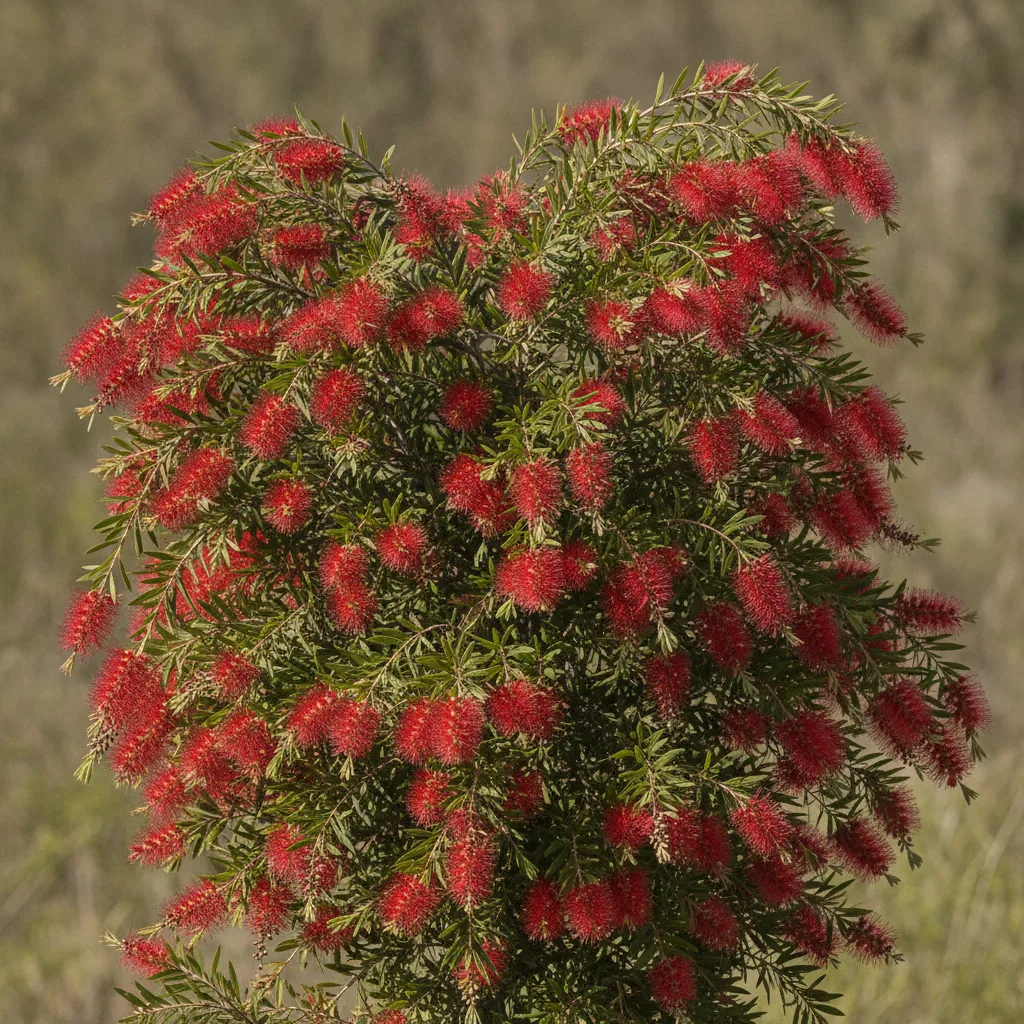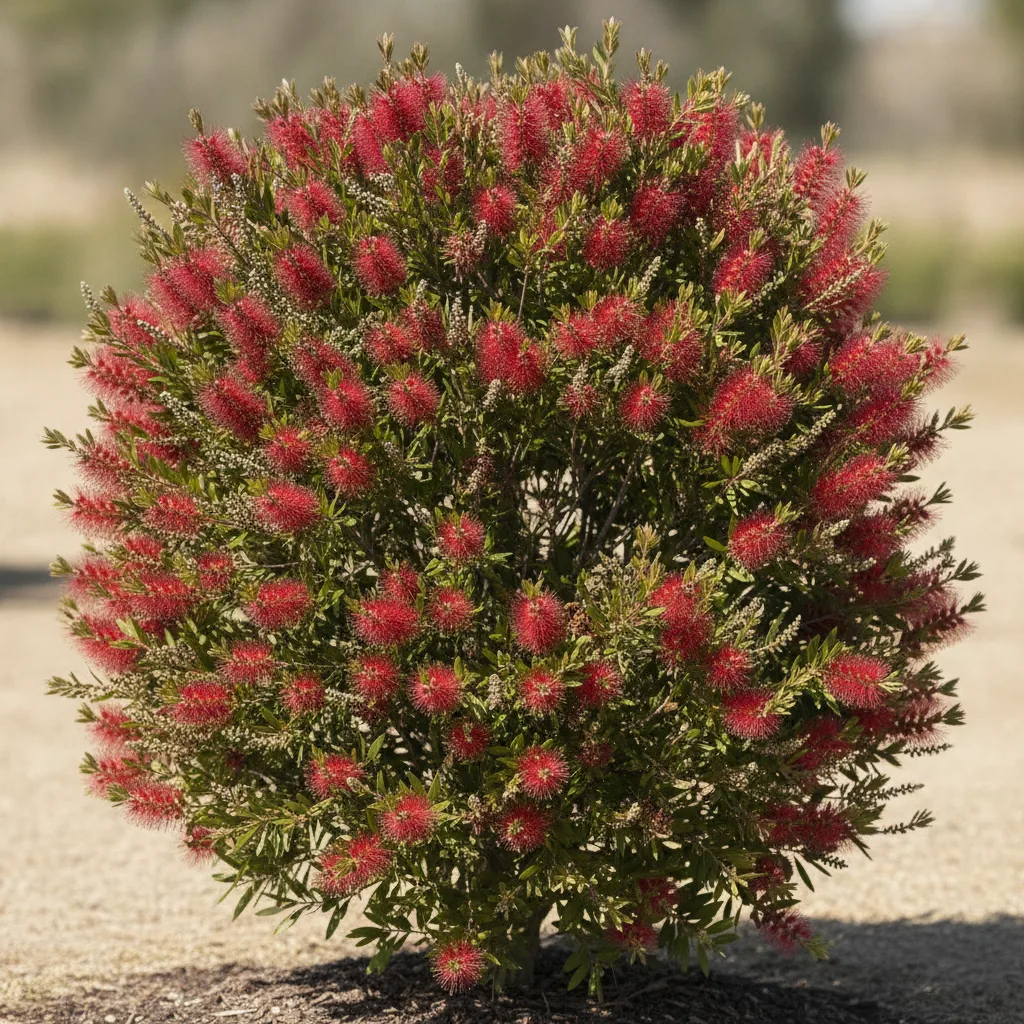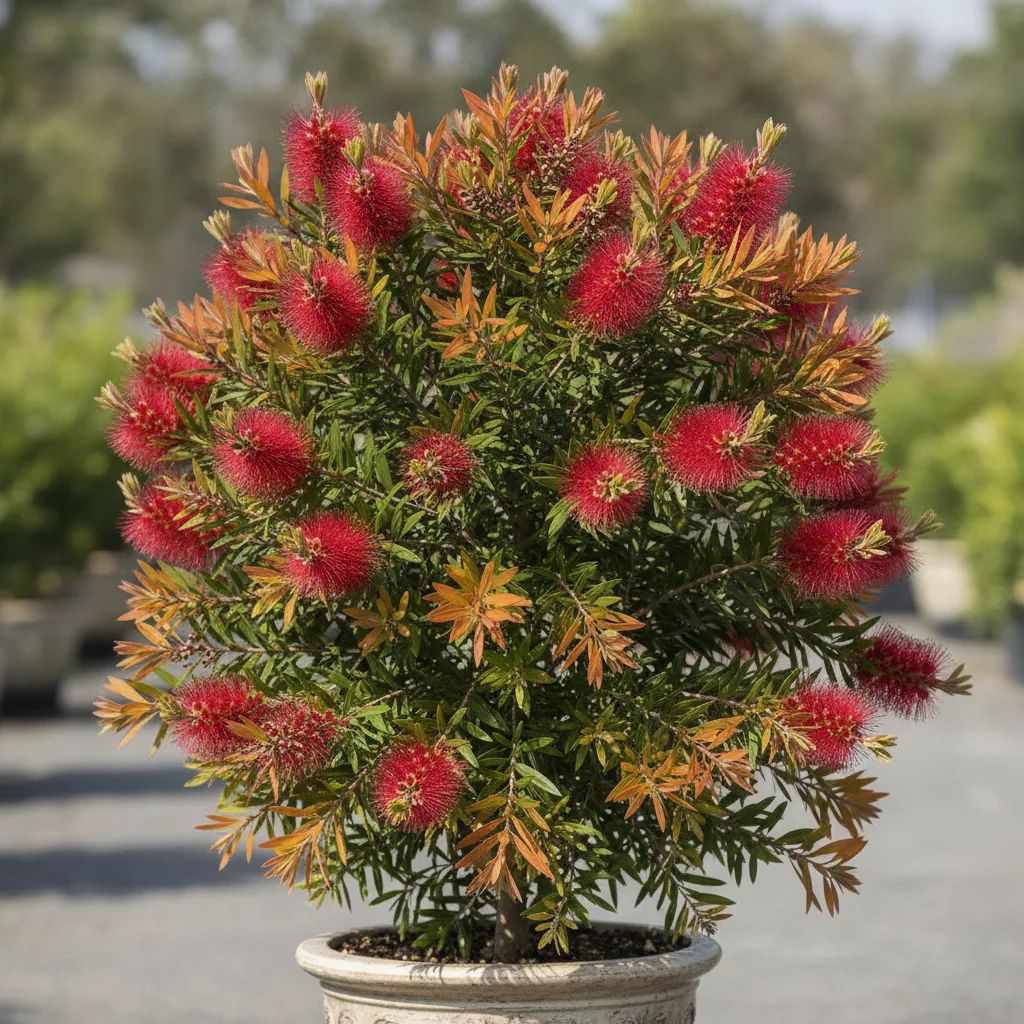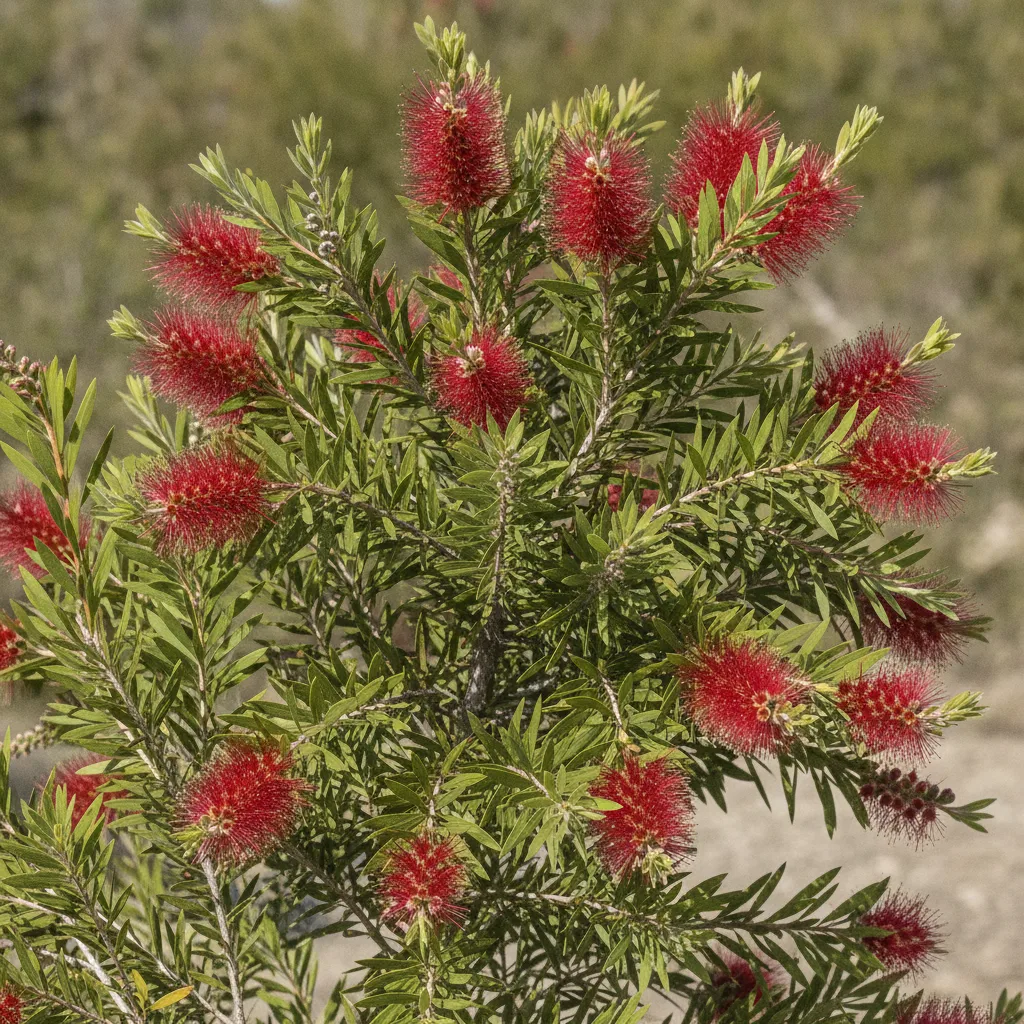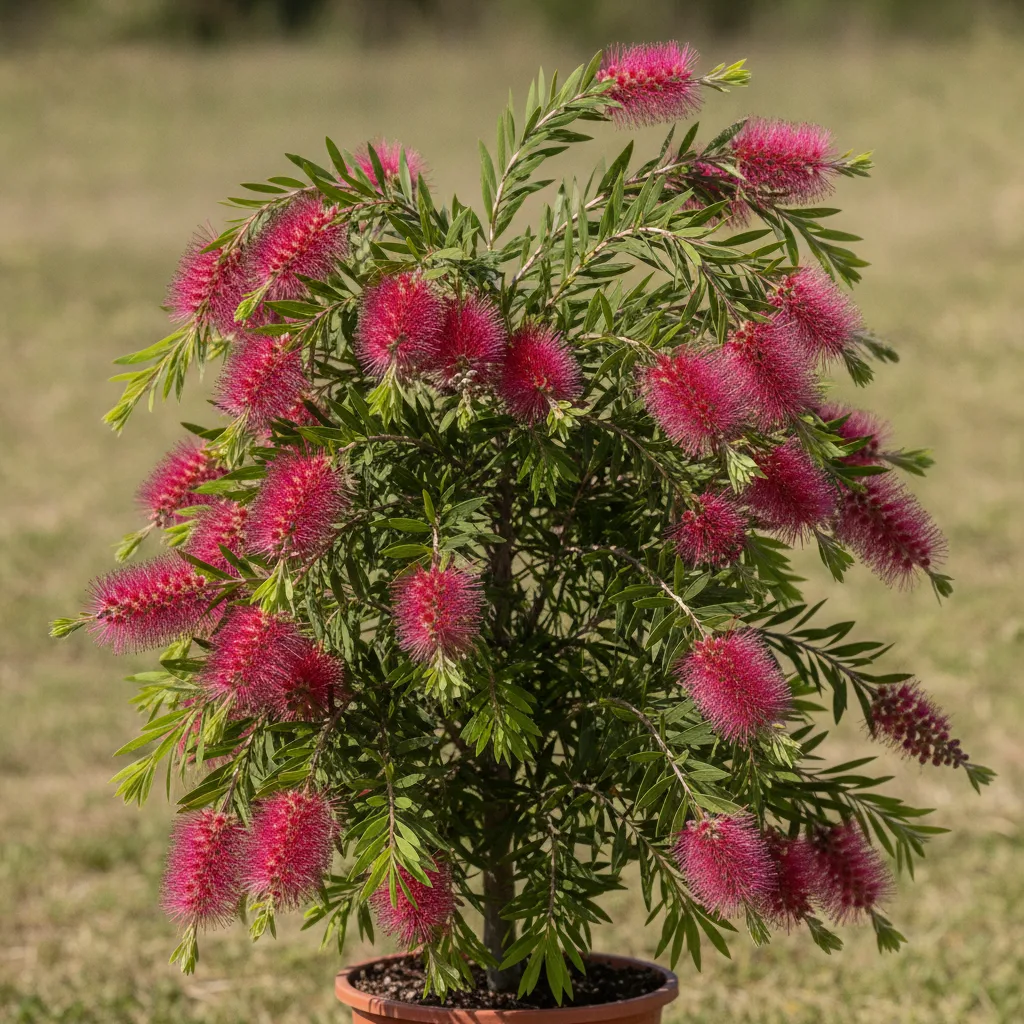
A weeping bottlebrush bearing vivid hot-pink brushes in spring and autumn that draw honeyeaters. A colourful, hardy feature and informal screen for warm gardens.
At a glance
- Plant type: Shrub
- Mature size: 3 m H × 2.5 m W
- Aspect: full sun
- Water: regular, moderate watering
- Frost: hardy
- Maintenance: low maintenance
- Origin: Australian native
About Hot Pink Bottlebrush
Callistemon viminalis 'Hot Pink' is a fast-growing shrub in the Myrtaceae family, native to Queensland and New South Wales. It reaches around 3 m tall and 2.5 m wide at maturity, with evergreen foliage. Pink flowers appear in spring and autumn.
Where to grow Hot Pink Bottlebrush
Hot Pink Bottlebrush suits subtropical and warm-temperate climates and grows best in full sun. It is frost hardy and shrugs off cold winters. It also tolerates salt-laden coastal winds.
Soil & planting
Hot Pink Bottlebrush does best in clay and free-draining soil. Plant into well-prepared ground, firm the soil around the roots and water deeply to settle it in. For a screen, space plants about 1.5 m apart.
Watering & feeding
Hot Pink Bottlebrush does best with regular, moderate watering. As an Australian native, feed it only with a low-phosphorus native fertiliser. For the first year, favour occasional deep watering over frequent shallow drinks so roots move into the surrounding soil.
Pruning & care
Prune Hot Pink Bottlebrush after flowering to keep it compact and encourage the next flush of blooms. It clips well, so trim two or three times a year for a formal finish. For most gardens, it is low maintenance.
Using Hot Pink Bottlebrush in the garden
Hot Pink Bottlebrush earns its place for drawing nectar-feeding birds into the garden, a feature or specimen planting and a fast screen or informal hedge.
Companion planting & design
Hot Pink Bottlebrush sits most comfortably beside plants adapted to regular, moderate watering and subtropical climate. A small cluster gives stronger visual impact than isolated plants scattered through the garden. It combines naturally with other Australian natives in a habitat or water-wise garden.
Buying Hot Pink Bottlebrush
Plant Sale lists Hot Pink Bottlebrush as tube stock, potted plants and advanced specimens. Use the quote builder above to ask about current stock, sizes and pricing.