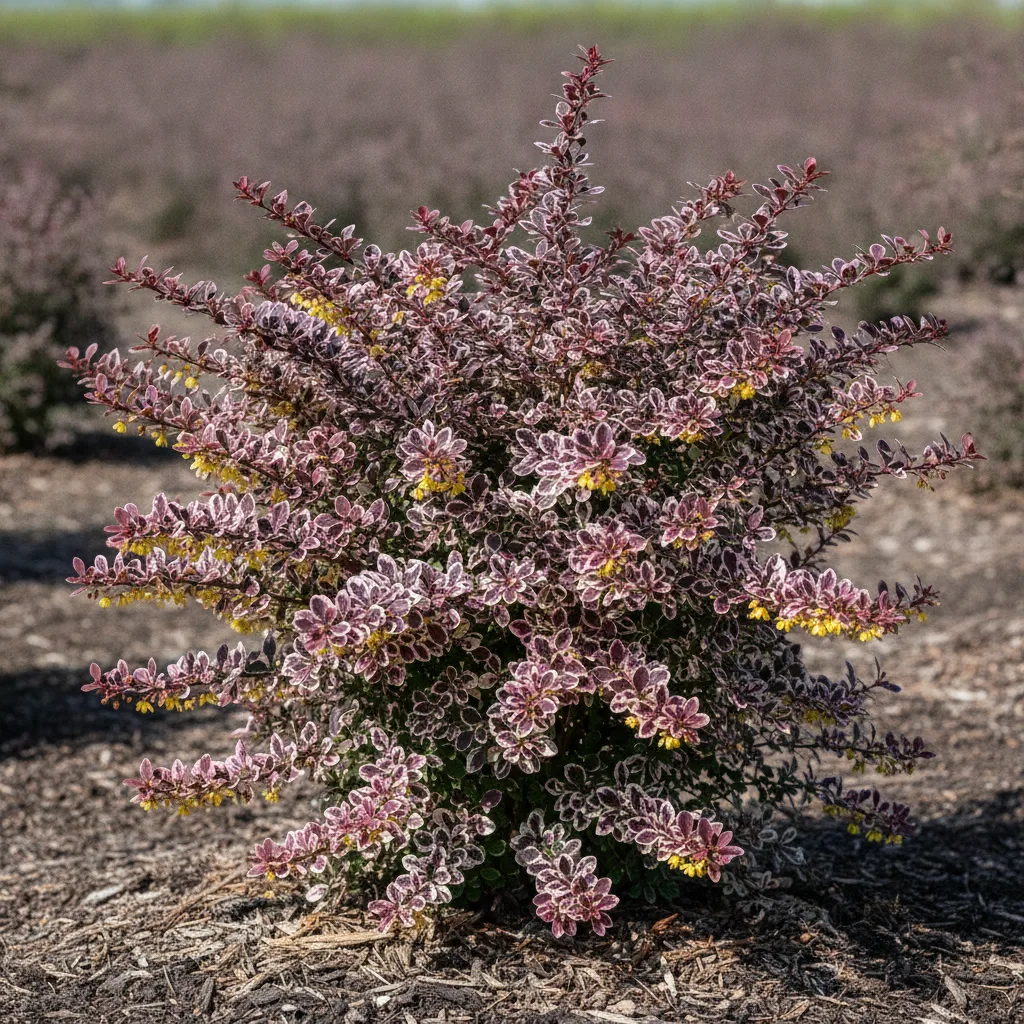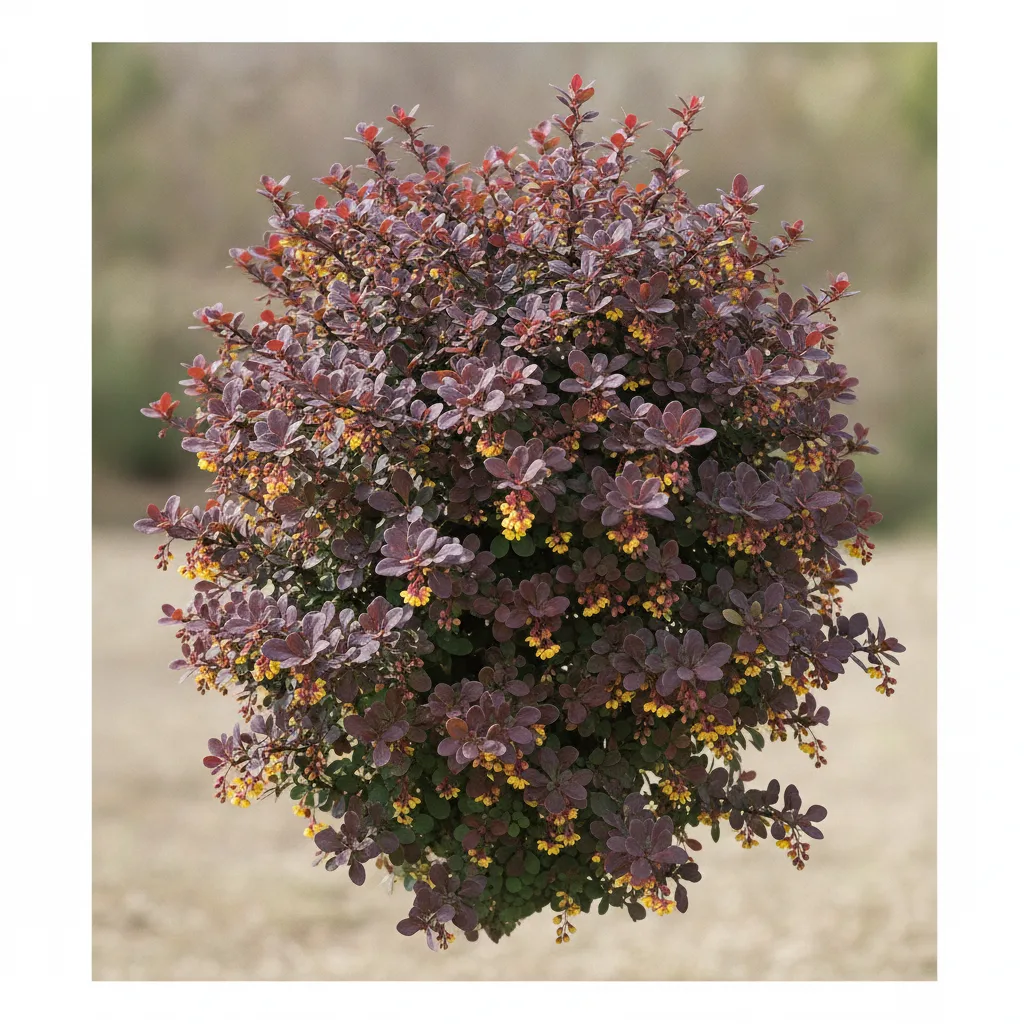
A compact thorny deciduous shrub with rich burgundy-purple foliage that intensifies to fiery red in autumn. Its dense prickly growth makes a low barrier hedge or colour accent.
At a glance
- Plant type: Shrub
- Mature size: 60 cm H × 60 cm W
- Aspect: full sun
- Water: happy on low water
- Frost: hardy
- Maintenance: low maintenance
- Origin: Exotic
About Dwarf Japanese Barberry
Botanically, Berberis thunbergii 'Atropurpurea Nana' is a slow-growing shrub in the Berberidaceae family. It reaches around 60 cm tall and 60 cm wide at maturity, with deciduous, purple-toned and rich in autumn colour foliage. Yellow flowers appear in spring.
Where to grow Dwarf Japanese Barberry
Dwarf Japanese Barberry suits cool-temperate and warm-temperate climates and grows best in full sun. It is frost hardy and shrugs off cold winters.
Soil & planting
Dwarf Japanese Barberry does best in free-draining and loamy soil. Dig in plenty of compost before planting, water in well, and mulch to keep roots cool. For a screen, space plants about 50 cm apart.
Watering & feeding
Dwarf Japanese Barberry performs well with relatively little water once established. Refresh mulch and provide a modest balanced feed at the start of spring. During the first growing season, water deeply whenever the upper soil begins to dry, then reduce the frequency as roots establish.
Pruning & care
Prune Dwarf Japanese Barberry after flowering to keep it compact and encourage the next flush of blooms. It clips well, so trim two or three times a year for a formal finish. Overall it is low maintenance.
Using Dwarf Japanese Barberry in the garden
Dwarf Japanese Barberry earns its place for a fast screen or informal hedge, a feature or specimen planting and pots and courtyard containers. It is equally at home in the ground or a large pot on a balcony or courtyard.
Companion planting & design
Combine Dwarf Japanese Barberry with plants that share its preference for low water use and cool-temperate climate. Use an odd-numbered group where space allows, or repeat it at intervals through a longer bed.
Good to know
It is thorny — useful as a barrier, but wear gloves when pruning.
Buying Dwarf Japanese Barberry
Plant Sale lists Dwarf Japanese Barberry as tube stock and potted plants. Current stock is confirmed with your quote; ask about your preferred size before planning a purchase.