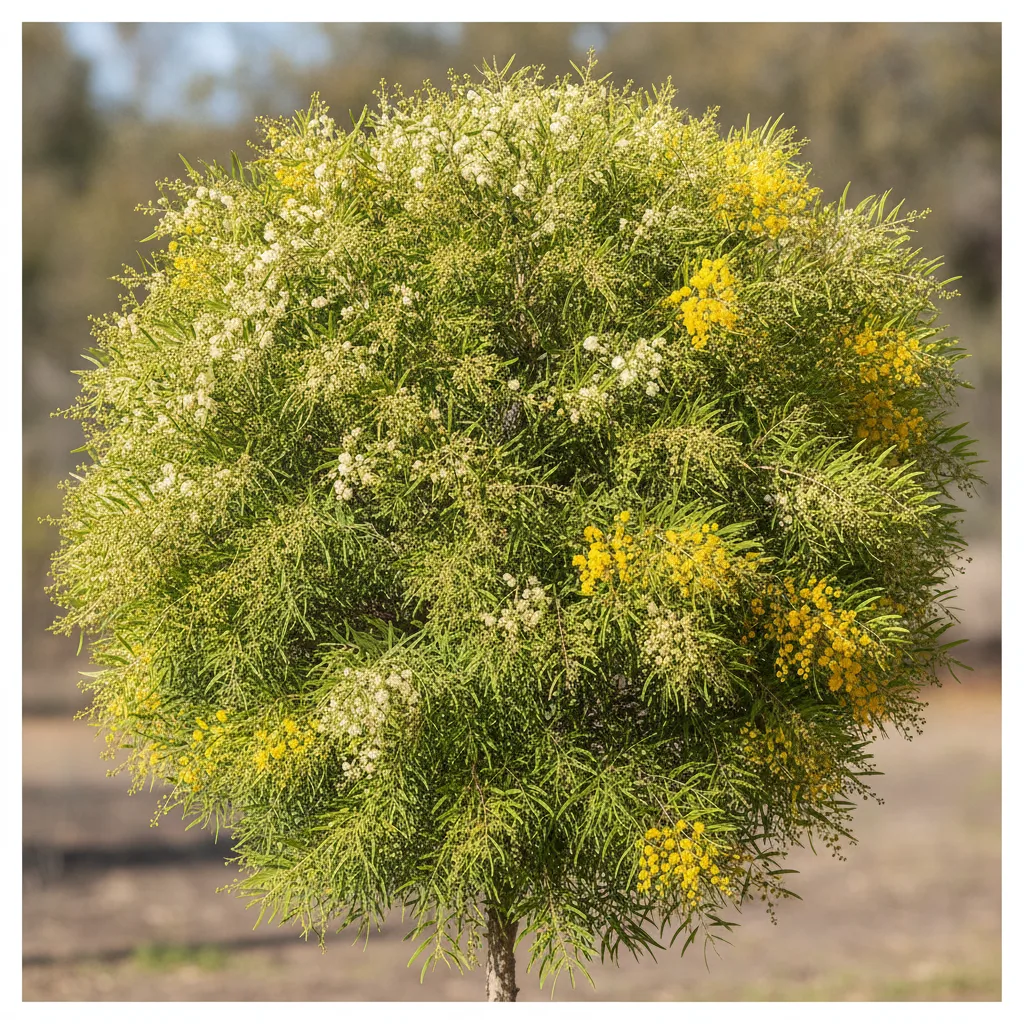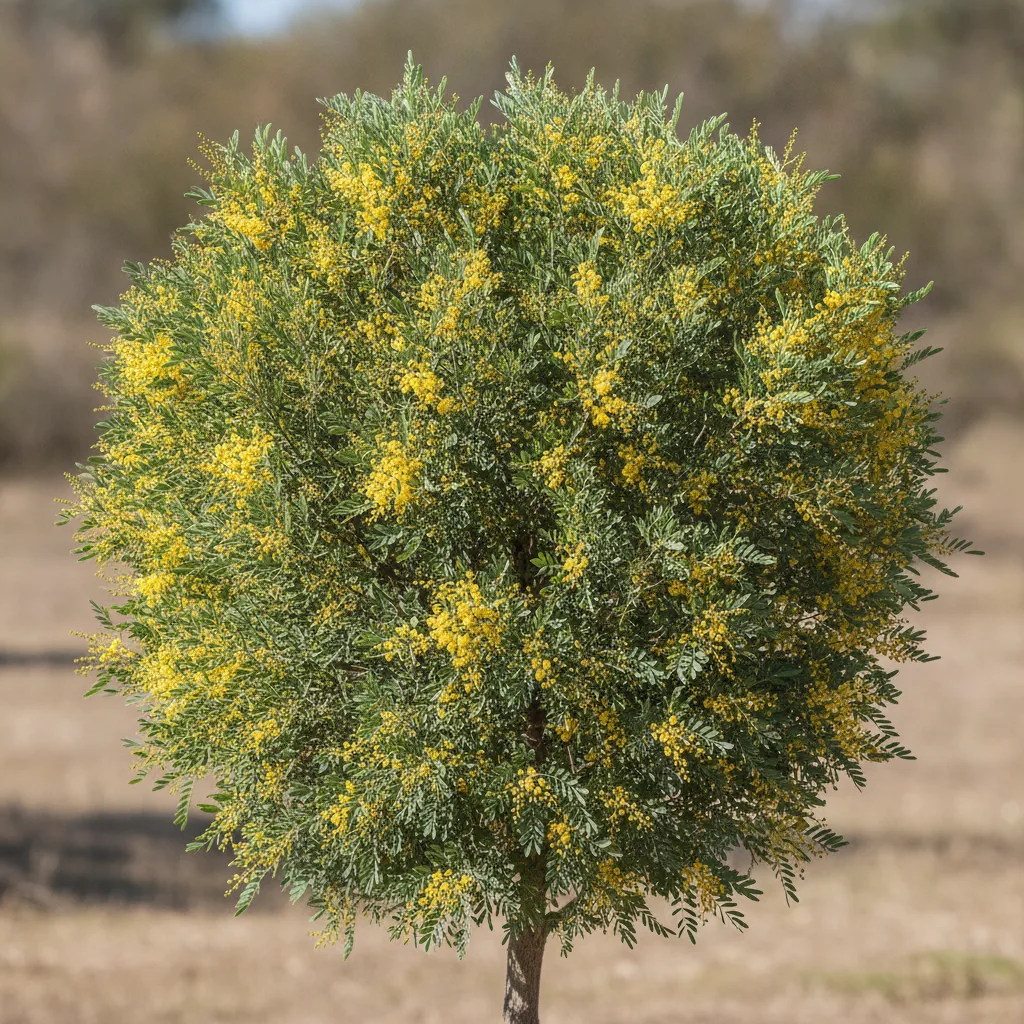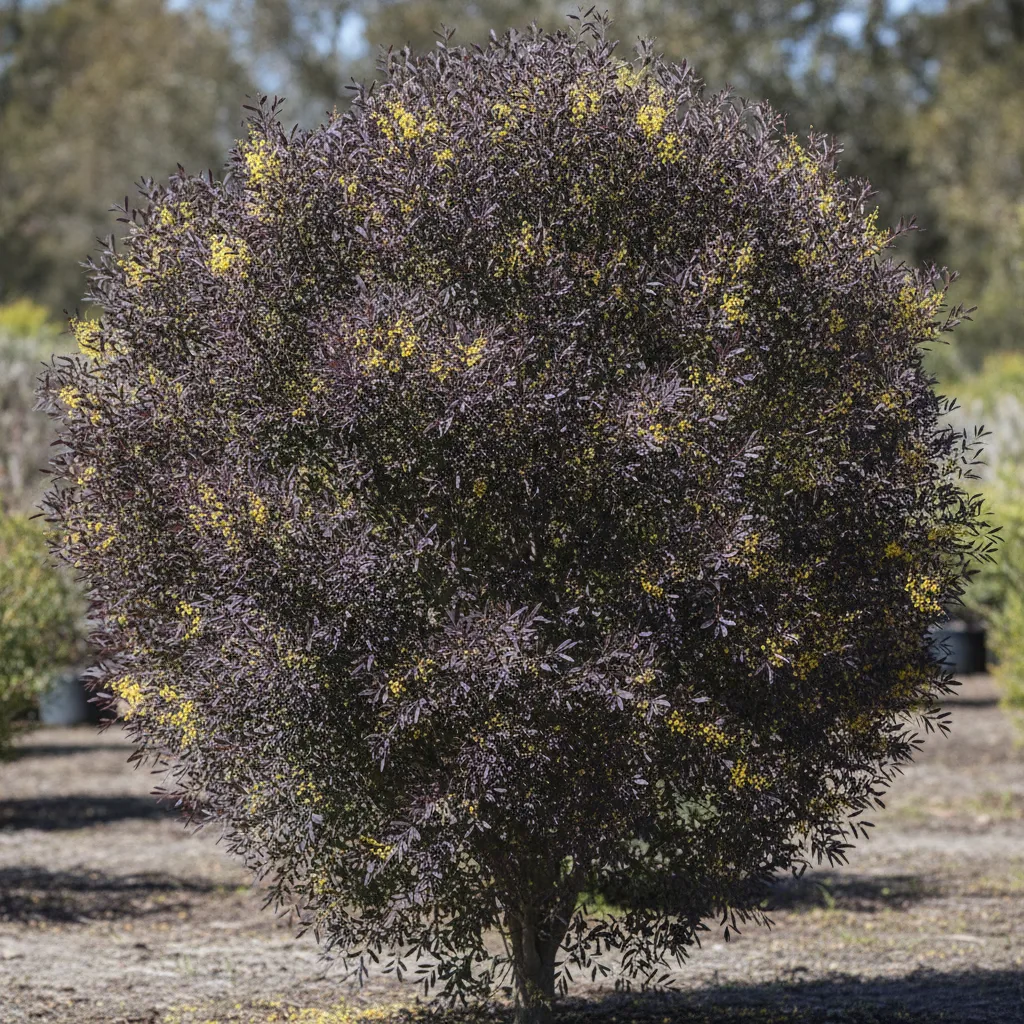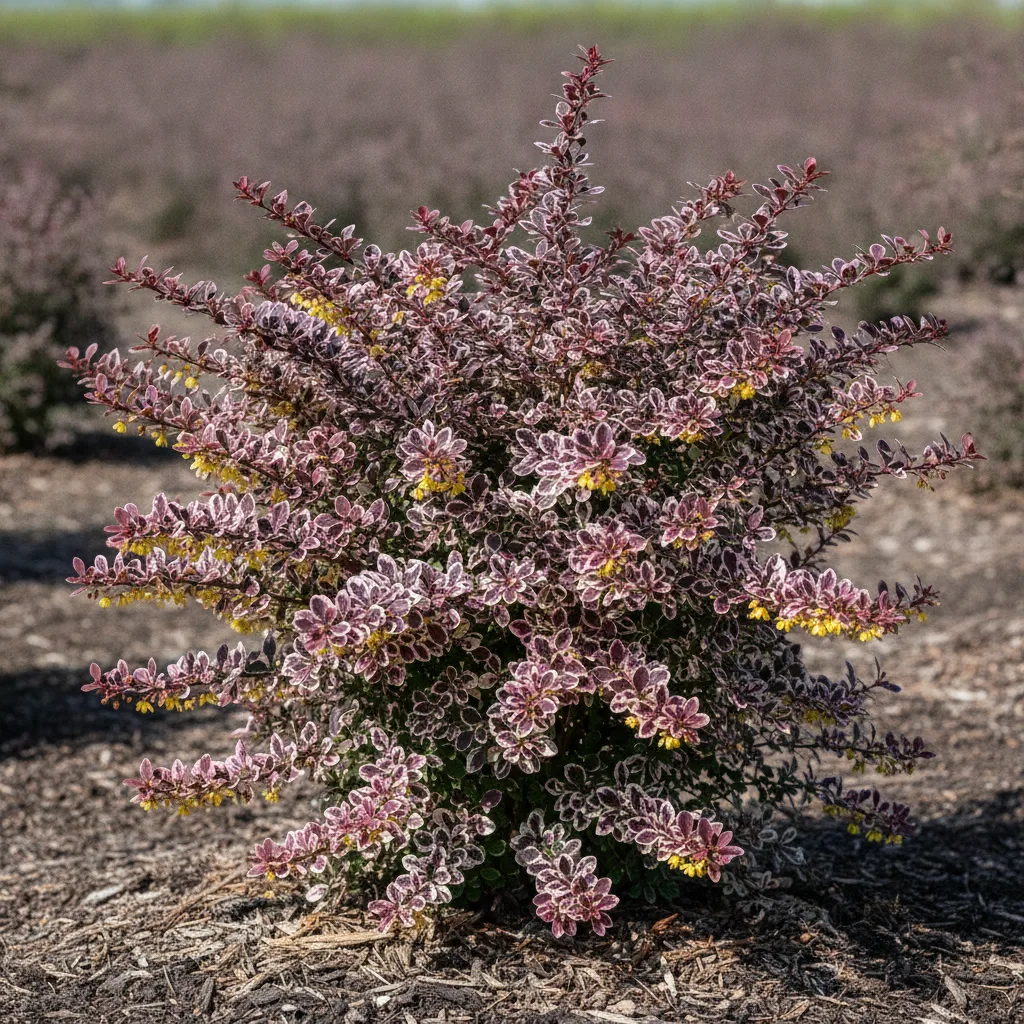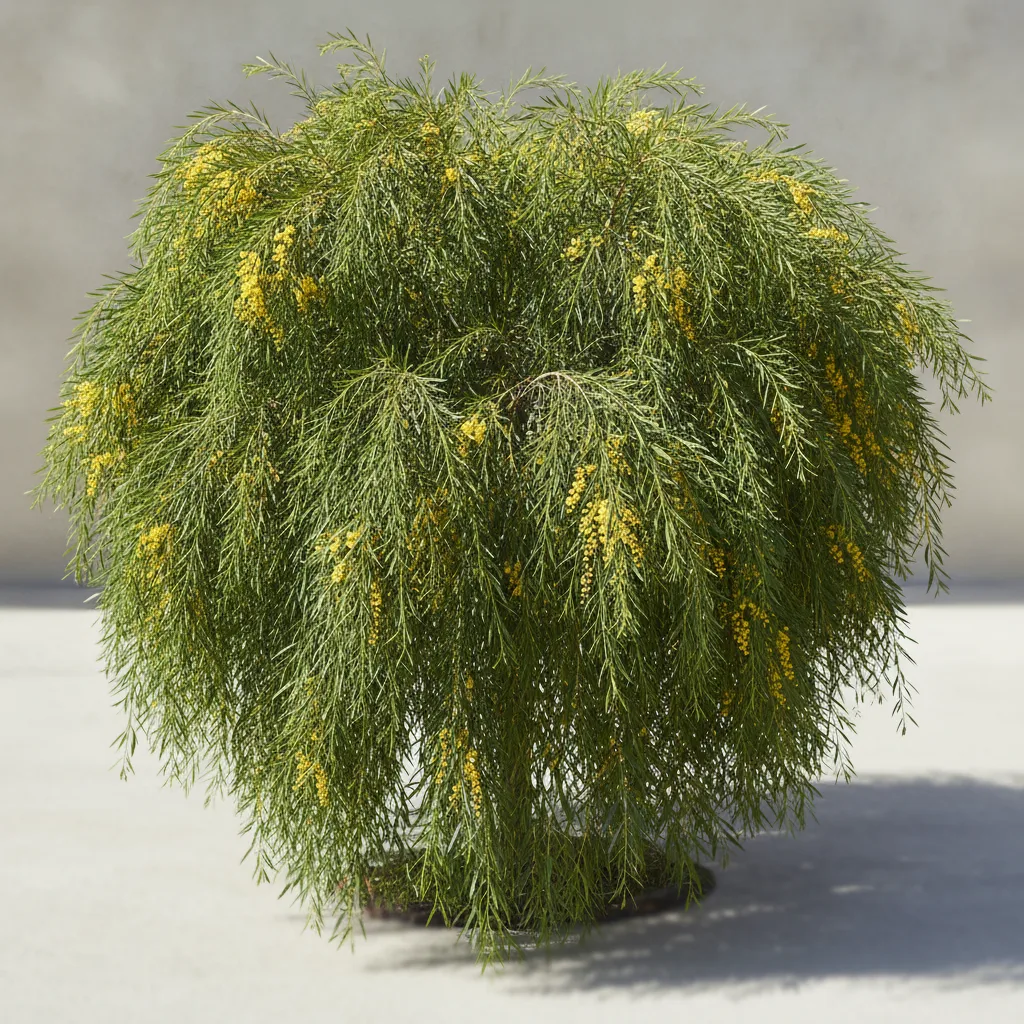
A compact, weeping wattle grown for its fountain of fine lime-green foliage rather than its flowers — a soft, mounding feature for pots, borders and low screens.
At a glance
- Plant type: Shrub
- Mature size: 1 m tall
- Aspect: full sun and part shade or morning sun
- Water: happy on low water
- Frost: hardy
- Maintenance: low maintenance
- Origin: Australian native
About Dwarf River Wattle
Acacia cognata is a fast-growing shrub in the Fabaceae family, native to New South Wales and Victoria. It reaches around 1 m tall at maturity, with evergreen and golden foliage. Yellow flowers appear in spring.
Where to grow Dwarf River Wattle
Dwarf River Wattle suits warm-temperate, cool-temperate and Mediterranean climates and grows best in full sun and part shade or morning sun. It is frost hardy and shrugs off cold winters. It also tolerates salt-laden coastal winds.
Soil & planting
Most soils suit Dwarf River Wattle provided drainage is reasonable. Plant into well-prepared ground, firm the soil around the roots and water deeply to settle it in.
Watering & feeding
Dwarf River Wattle performs well with relatively little water once established. As an Australian native, feed it only with a low-phosphorus native fertiliser. Keep a newly planted specimen evenly watered through its first season; established plants can then follow the water needs above.
Pruning & care
Prune Dwarf River Wattle after flowering to keep it compact and encourage the next flush of blooms. It clips well, so trim two or three times a year for a formal finish. Its ongoing care level is low maintenance.
Using Dwarf River Wattle in the garden
Dwarf River Wattle earns its place for a feature or specimen planting, pots and courtyard containers and a fast screen or informal hedge. It is equally at home in the ground or a large pot on a balcony or courtyard.
Companion planting & design
Build the planting around neighbours suited to the same low water use and warm-temperate climate as Dwarf River Wattle. Repeating the foliage or flower colour nearby will make the composition feel deliberate. It combines naturally with other Australian natives in a habitat or water-wise garden.