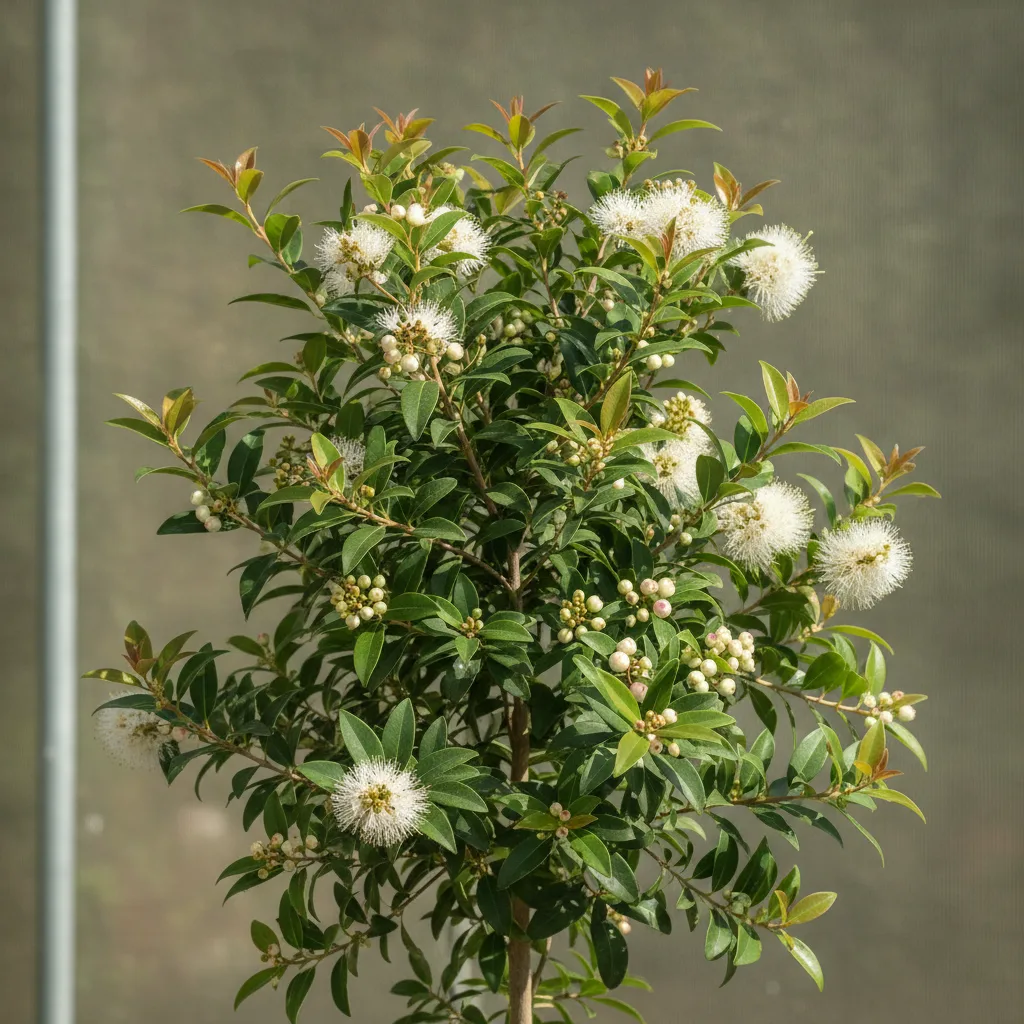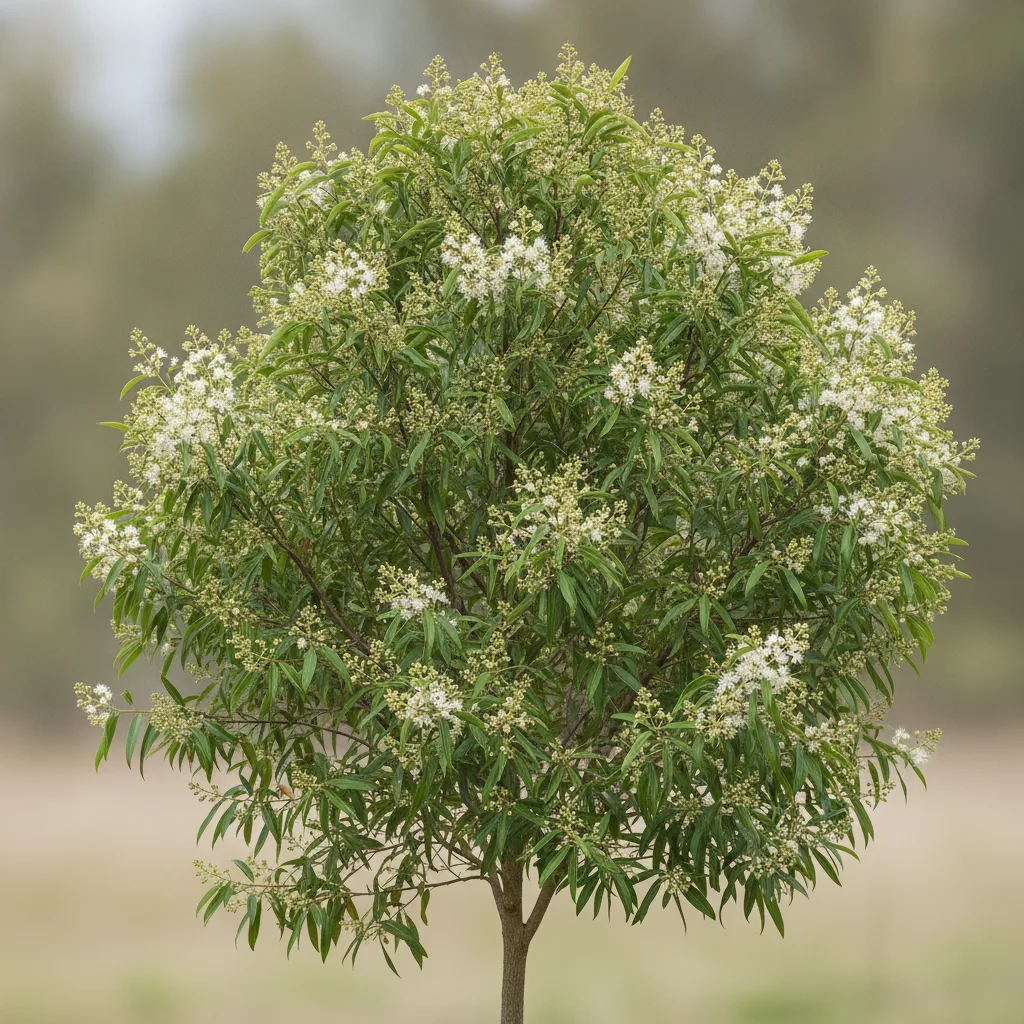
A rainforest tree whose glossy leaves release an intense lemon fragrance and are prized as a bush-tucker culinary herb, topped with fluffy cream flowers in summer. A useful aromatic feature and screen.
At a glance
- Plant type: Tree
- Mature size: 5 m H × 3 m W
- Aspect: full sun and part shade or morning sun
- Water: regular, moderate watering
- Frost: tender
- Maintenance: low maintenance
- Origin: Australian native
About Lemon Myrtle
Botanically, Backhousia citriodora is a tree in the Myrtaceae family, native to Queensland. It reaches around 5 m tall and 3 m wide at maturity, with evergreen and aromatic foliage. Cream green and white flowers appear in summer and autumn.
Where to grow Lemon Myrtle
Lemon Myrtle suits subtropical, tropical and warm-temperate climates and grows best in full sun and part shade or morning sun. It is frost tender, so protect it from hard frosts or grow it in a sheltered spot or pot.
Soil & planting
Lemon Myrtle does best in free-draining and acidic soil. Dig in plenty of compost before planting, water in well, and mulch to keep roots cool. For a screen, space plants about 1.8 m apart.
Watering & feeding
Lemon Myrtle does best with regular, moderate watering. As an Australian native, feed it only with a low-phosphorus native fertiliser. Check moisture below the mulch during establishment and water thoroughly when needed rather than following a rigid schedule.
Pruning & care
Prune Lemon Myrtle after flowering to keep it compact and encourage the next flush of blooms. It clips well, so trim two or three times a year for a formal finish. Once established, it is low maintenance.
Using Lemon Myrtle in the garden
Lemon Myrtle earns its place for a feature or specimen planting, a fast screen or informal hedge and pots and courtyard containers. It is equally at home in the ground or a large pot on a balcony or courtyard.
Companion planting & design
For easier irrigation and care, group Lemon Myrtle with species that also favour regular, moderate watering and subtropical climate. Leave enough room for the mature spread so neighbouring plants are not crowded out. It combines naturally with other Australian natives in a habitat or water-wise garden.
Buying Lemon Myrtle
Plant Sale lists Lemon Myrtle as tube stock, potted plants and advanced specimens. Catalogue forms are planning guidance until the Plant Sale team confirms live availability.