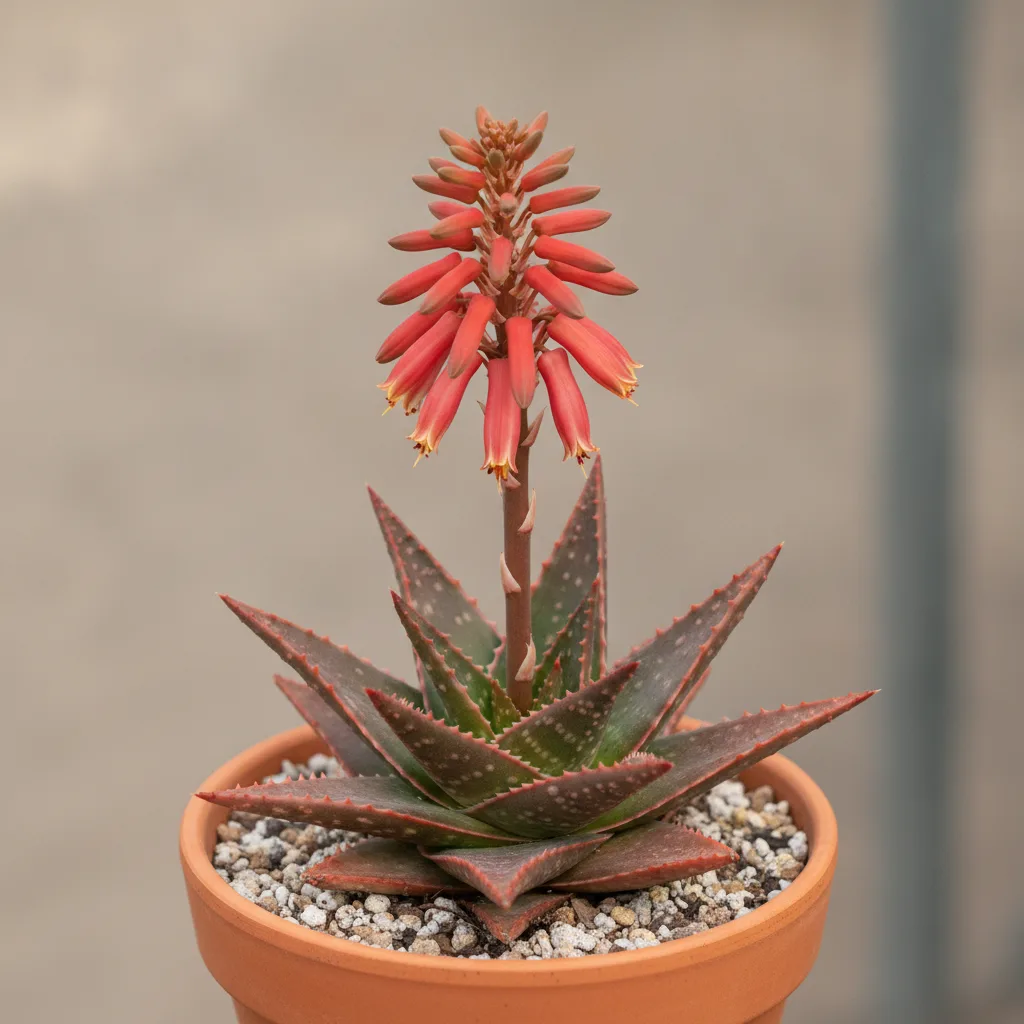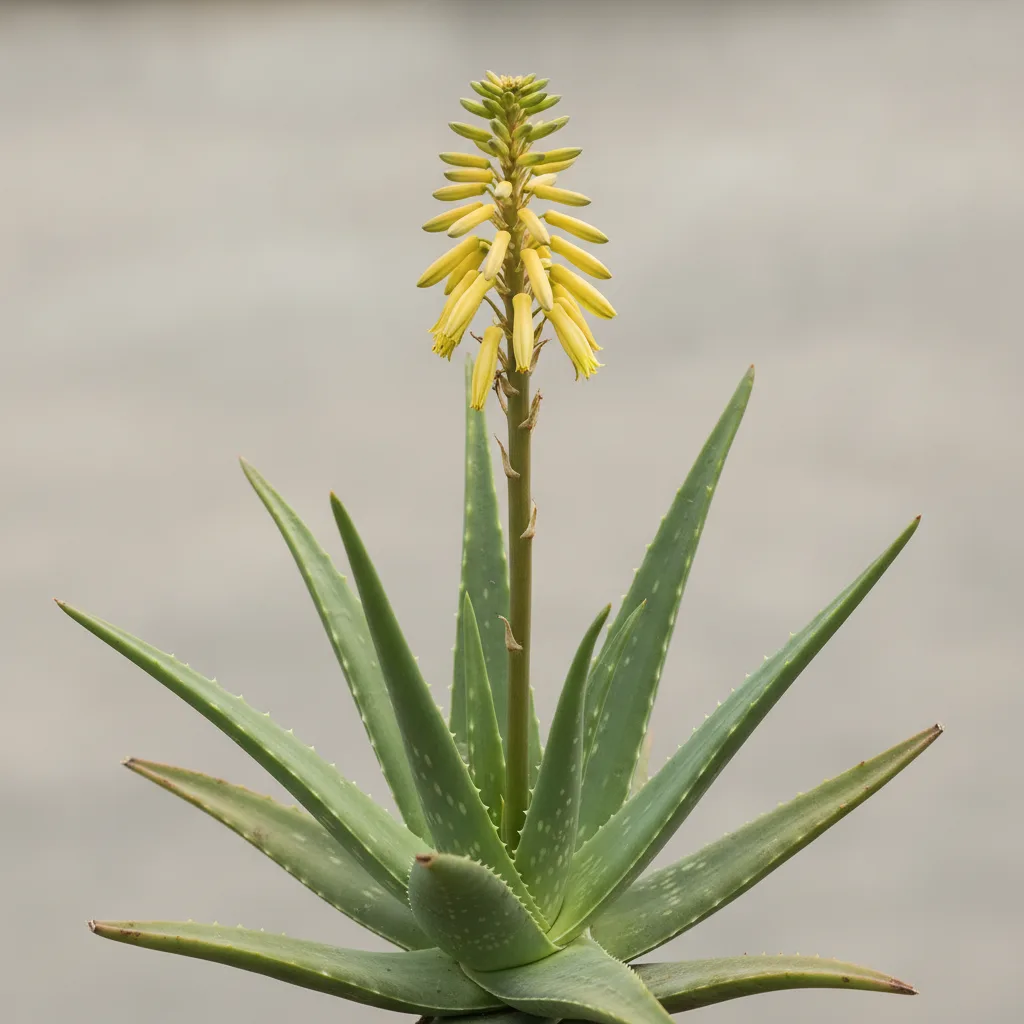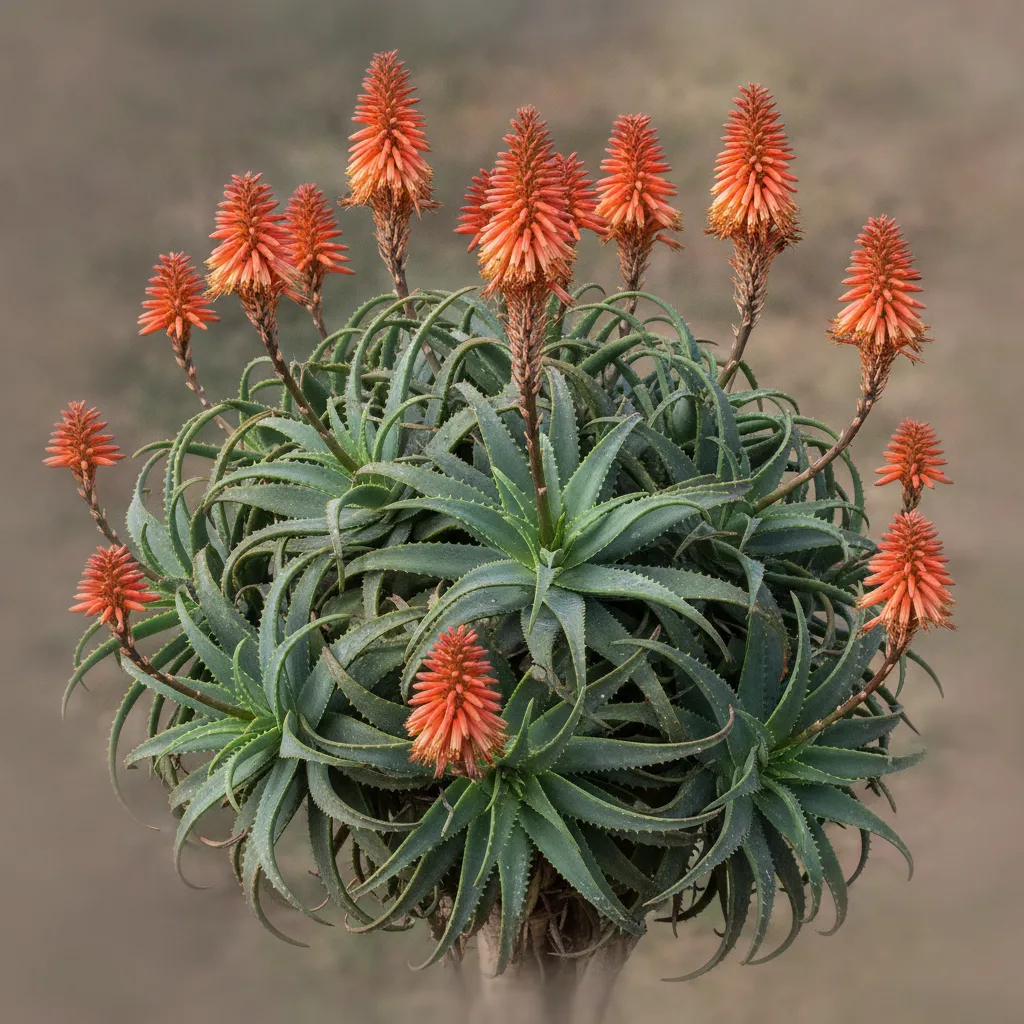
A large branching shrub aloe with sprawling rosettes of toothed grey-green leaves, producing brilliant orange-red torch-like flower spikes through winter that draw nectar-feeding birds. A bold coastal feature.
At a glance
- Plant type: Succulent
- Mature size: 3 m H × 2 m W
- Aspect: full sun
- Water: very drought tolerant once established
- Frost: tender
- Maintenance: low maintenance
- Origin: Exotic
About Krantz Aloe
Aloe arborescens is a moderate-growing succulent in the Asphodelaceae family. It reaches around 3 m tall and 2 m wide at maturity, with evergreen and silver-grey foliage. Orange and red flowers appear in winter.
Where to grow Krantz Aloe
Krantz Aloe suits arid and semi-arid, Mediterranean, warm-temperate and subtropical climates and grows best in full sun. It is frost tender, so protect it from hard frosts or grow it in a sheltered spot or pot. It also is a genuinely water-wise choice and tolerates salt-laden coastal winds.
Soil & planting
Krantz Aloe does best in sandy and free-draining soil. Plant into well-prepared ground, firm the soil around the roots and water deeply to settle it in. For a screen, space plants about 1.2 m apart.
Watering & feeding
Krantz Aloe handles dry conditions well once established. Feed as new growth begins, following the rate on a balanced garden fertiliser. Check moisture below the mulch during establishment and water thoroughly when needed rather than following a rigid schedule.
Pruning & care
Prune Krantz Aloe after flowering to keep it compact and encourage the next flush of blooms. It clips well, so trim two or three times a year for a formal finish. For most gardens, it is low maintenance.
Using Krantz Aloe in the garden
Krantz Aloe earns its place for a feature or specimen planting, a fast screen or informal hedge and drawing nectar-feeding birds into the garden.
Companion planting & design
Krantz Aloe sits most comfortably beside plants adapted to dry conditions once established and arid and semi-arid climate. A small cluster gives stronger visual impact than isolated plants scattered through the garden.
Good to know
Note that it is toxic to cats and dogs, so site it away from pets that chew.
Buying Krantz Aloe
Plant Sale lists Krantz Aloe as potted plants. Use the quote builder above to ask about current stock, sizes and pricing.