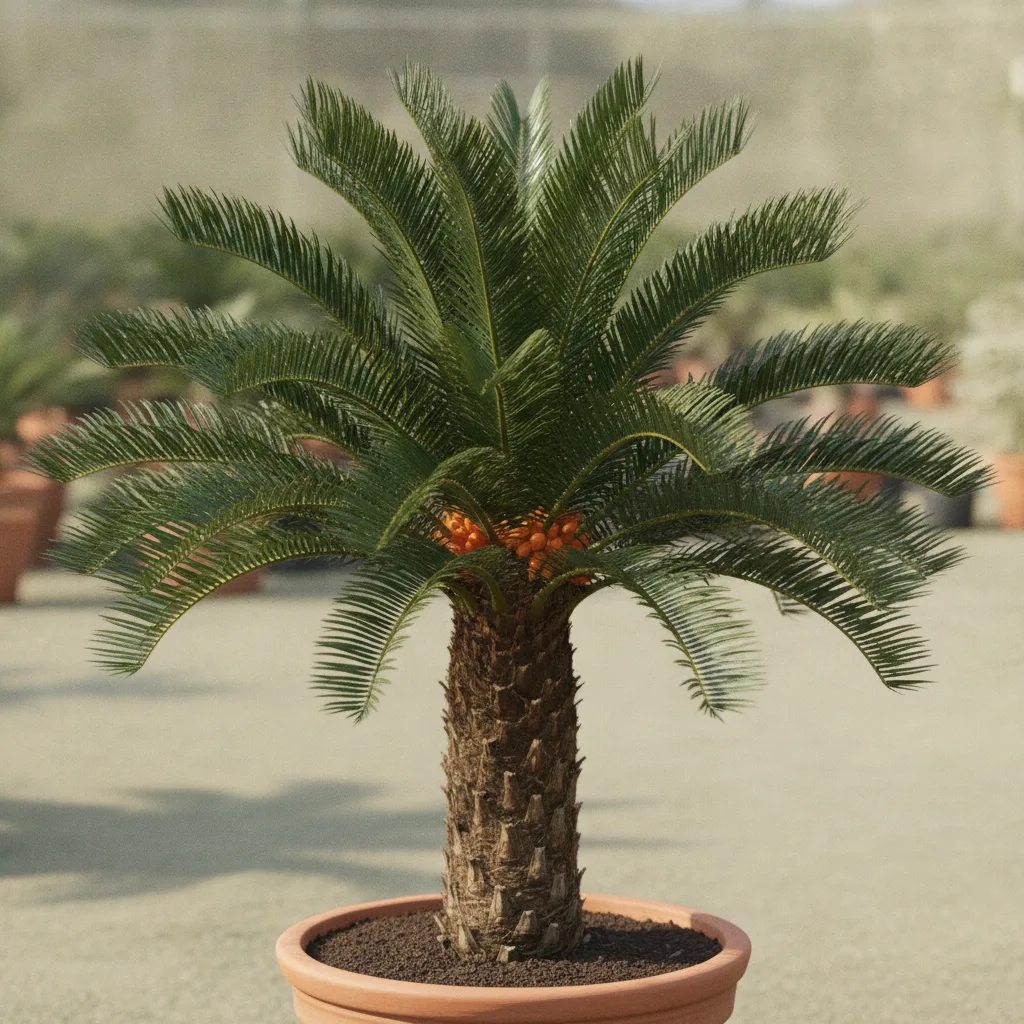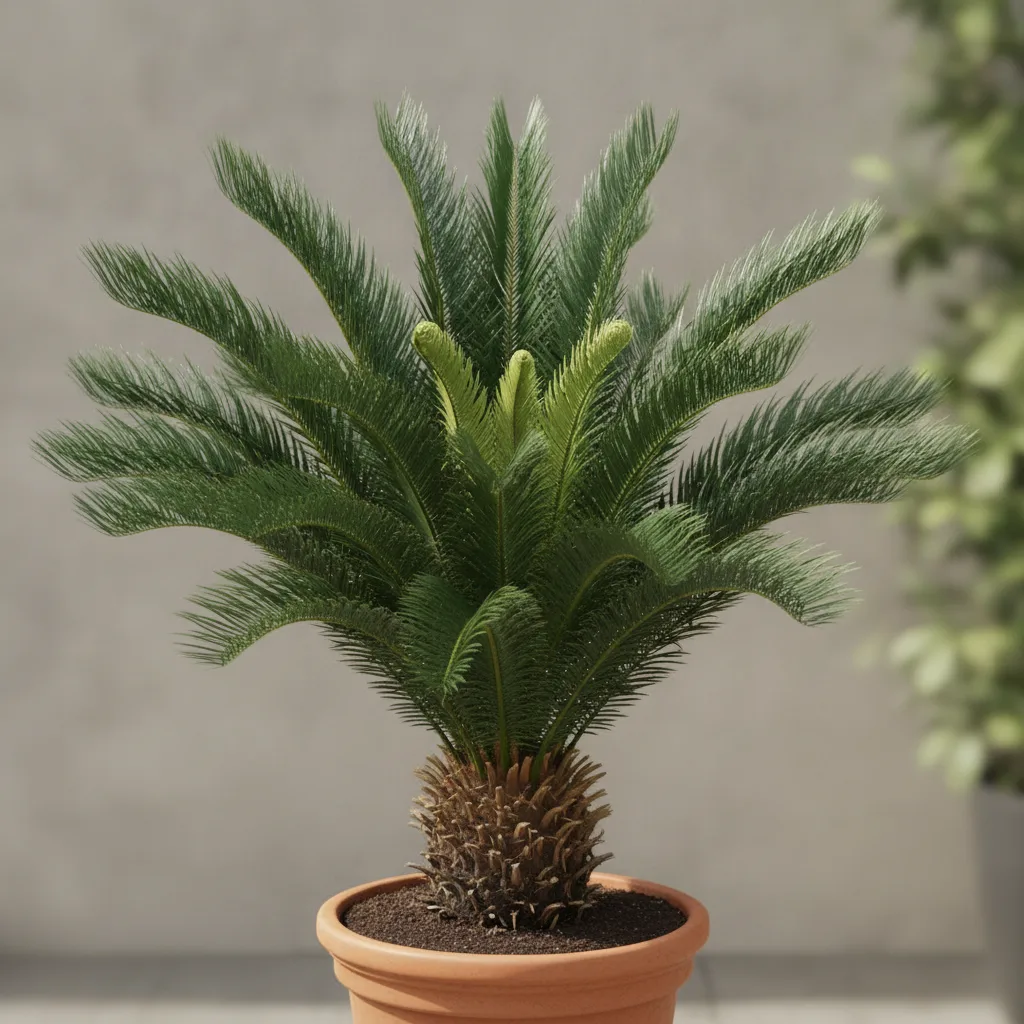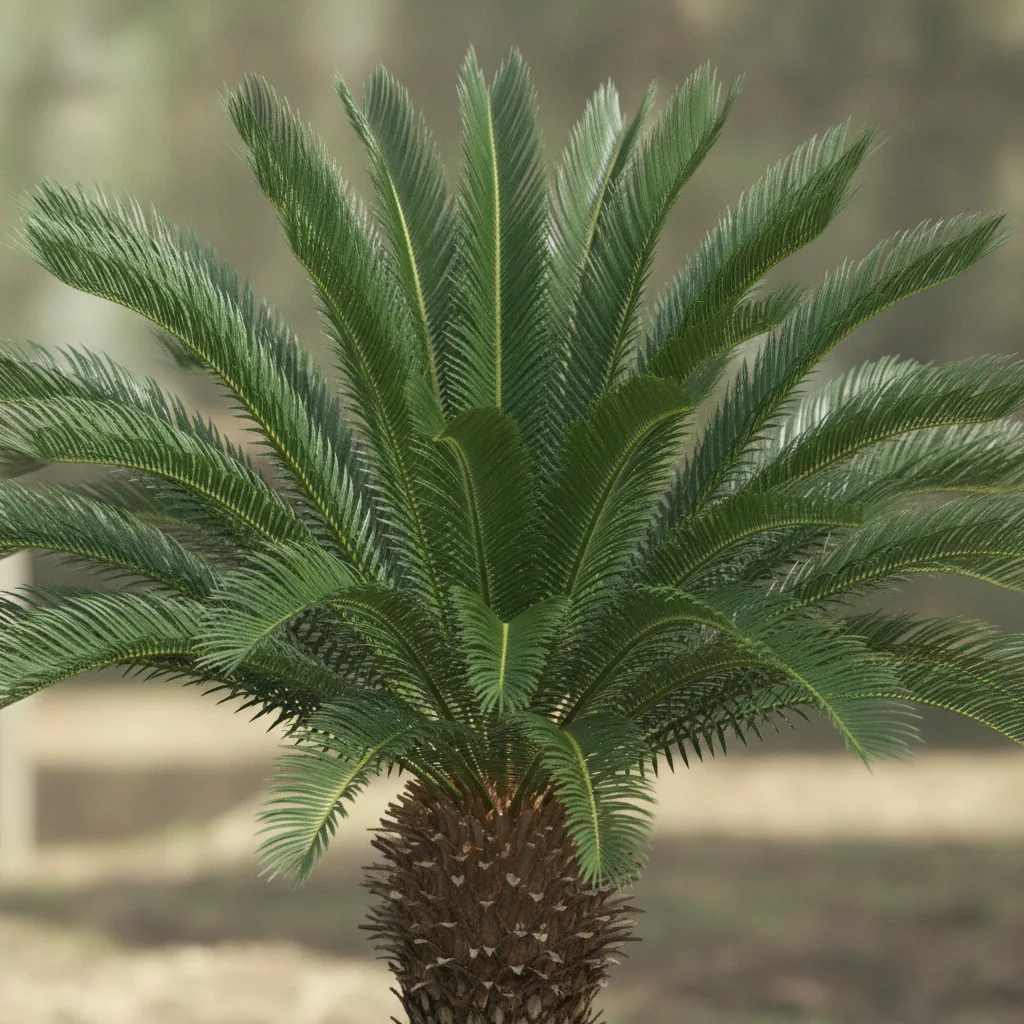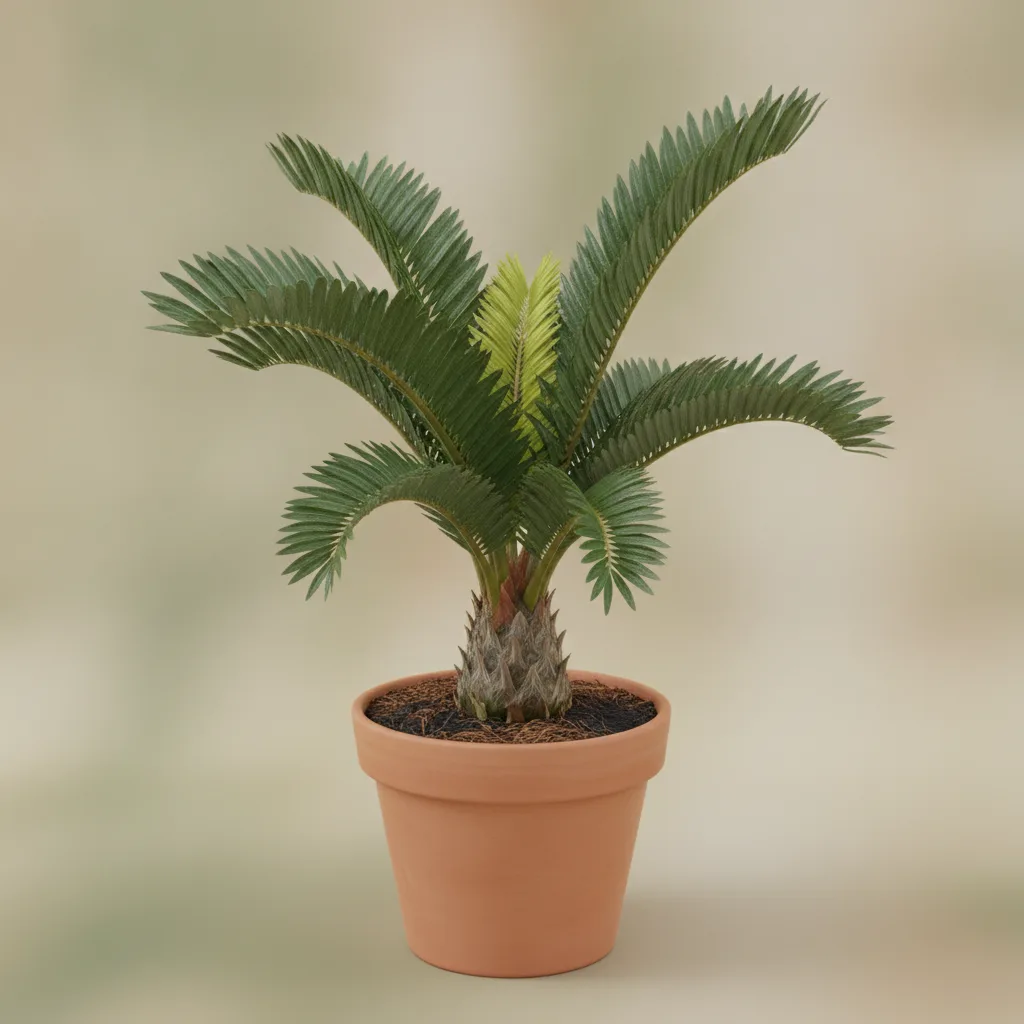
A compact cycad with low spreading fronds of thick, fuzzy, cardboard-textured leaflets radiating from a short trunk. A tough, drought-hardy feature for pots and coastal gardens; toxic to pets if eaten.
At a glance
- Plant type: Palm or cycad
- Mature size: 1 m H × 1.5 m W
- Aspect: full sun and part shade or morning sun
- Water: happy on low water
- Frost: tender
- Maintenance: low maintenance
- Origin: Exotic
About Cardboard Palm
Botanically, Zamia furfuracea is a slow-growing palm or cycad in the Zamiaceae family. It reaches around 1 m tall and 1.5 m wide at maturity, with evergreen foliage.
Where to grow Cardboard Palm
Cardboard Palm suits tropical and subtropical climates and grows best in full sun and part shade or morning sun. It is frost tender, so protect it from hard frosts or grow it in a sheltered spot or pot. It also tolerates salt-laden coastal winds.
Soil & planting
Cardboard Palm does best in free-draining soil. Dig in plenty of compost before planting, water in well, and mulch to keep roots cool.
Watering & feeding
Cardboard Palm performs well with relatively little water once established. A light spring feed is usually enough to maintain steady growth. New plantings need closer moisture checks in hot or windy weather, with watering tapered once strong new growth appears.
Pruning & care
Tip-prune Cardboard Palm in spring to maintain a dense, shapely habit. Once established, it is low maintenance.
Using Cardboard Palm in the garden
Cardboard Palm earns its place for a feature or specimen planting and pots and courtyard containers. It is equally at home in the ground or a large pot on a balcony or courtyard.
Companion planting & design
For easier irrigation and care, group Cardboard Palm with species that also favour low water use and tropical climate. Leave enough room for the mature spread so neighbouring plants are not crowded out.
Good to know
Note that it is toxic to cats and dogs, so site it away from pets that chew.
Buying Cardboard Palm
Plant Sale lists Cardboard Palm as potted plants. Catalogue forms are planning guidance until the Plant Sale team confirms live availability.