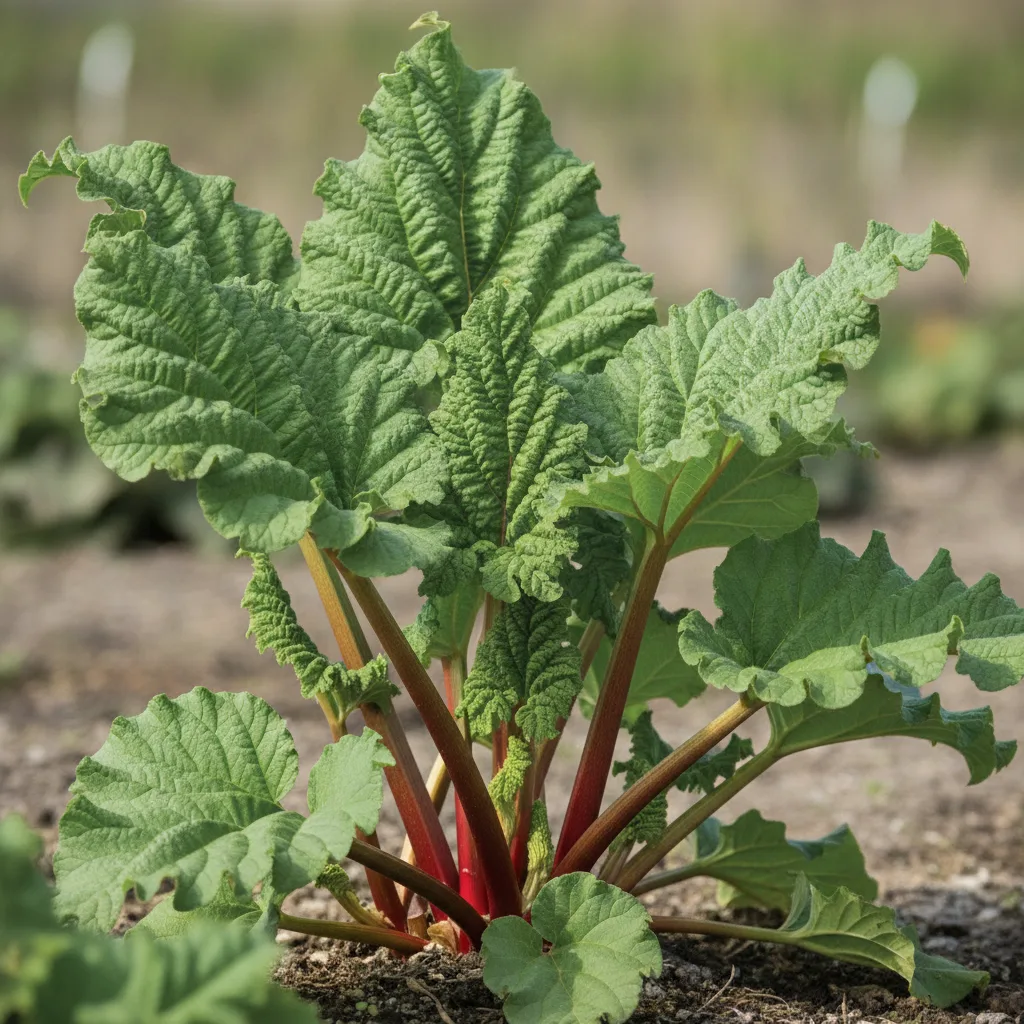
A handsome, long-lived perennial grown for its tart crimson stalks — but never the leaves, which are toxic. Plant once and harvest each spring for years to come.
At a glance
- Plant type: Edible plant
- Mature size: 80 cm tall
- Aspect: full sun and part shade or morning sun
- Water: regular, moderate watering
- Frost: hardy
- Maintenance: low maintenance
- Origin: Exotic
About Rhubarb
Rheum rhabarbarum is a moderate-growing edible plant in the Polygonaceae family. It reaches around 80 cm tall at maturity.
Where to grow Rhubarb
Rhubarb suits cool-temperate and warm-temperate climates and grows best in full sun and part shade or morning sun. It is frost hardy and shrugs off cold winters.
Soil & planting
Rhubarb does best in free-draining and loamy soil. Plant into well-prepared ground, firm the soil around the roots and water deeply to settle it in.
Watering & feeding
Rhubarb does best with regular, moderate watering. Feed regularly through the growing season for the best crop. New plantings need closer moisture checks in hot or windy weather, with watering tapered once strong new growth appears.
Pruning & care
Tip-prune Rhubarb in spring to maintain a dense, shapely habit. Its ongoing care level is low maintenance.
Using Rhubarb in the garden
Rhubarb earns its place for edible harvests.
Companion planting & design
Build the planting around neighbours suited to the same regular, moderate watering and cool-temperate climate as Rhubarb. Repeating the foliage or flower colour nearby will make the composition feel deliberate.
Good to know
Note that it is toxic to cats and dogs, so site it away from pets that chew.
Buying Rhubarb
Plant Sale lists Rhubarb as seed and seedlings. Use the quote builder above to check current sizes, pricing and availability before ordering.
Prefer to grow it yourself? See the Rhubarb seed sowing guide for depth, timing and germination.