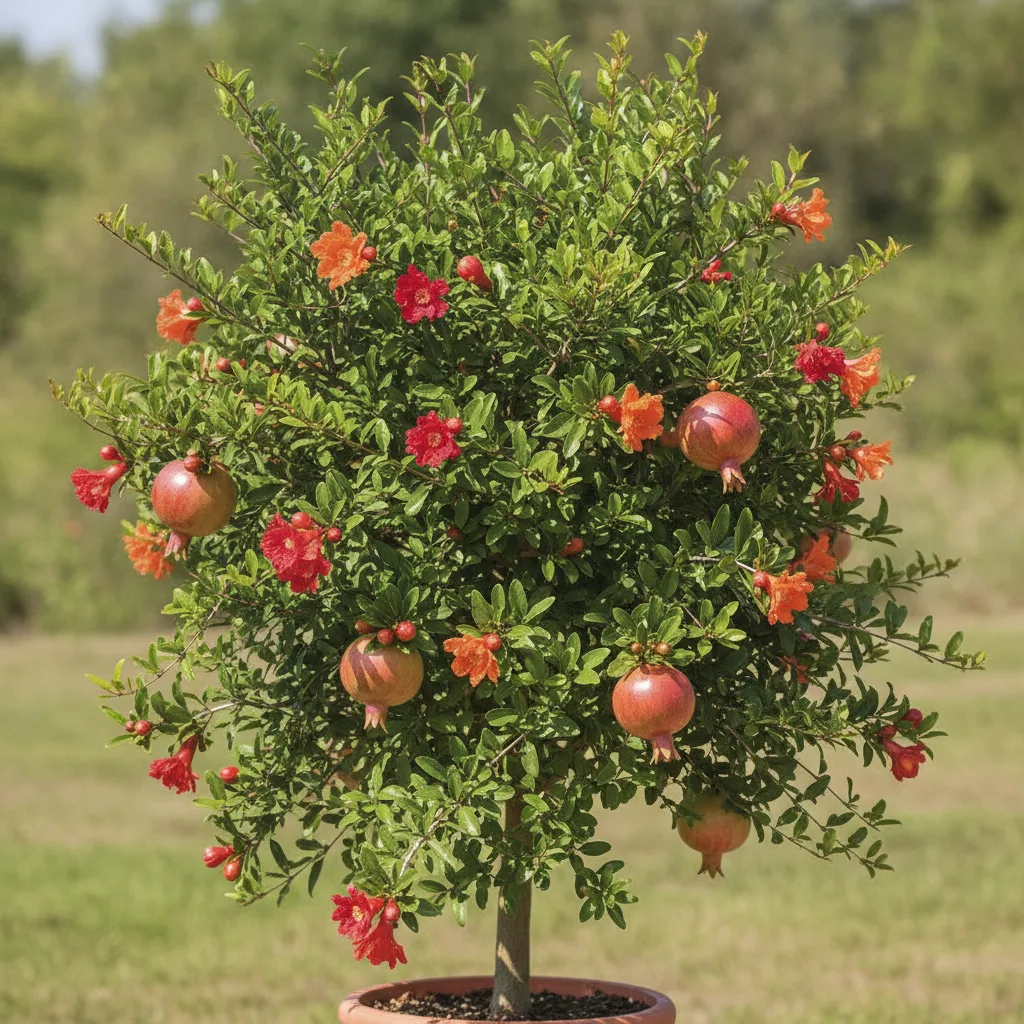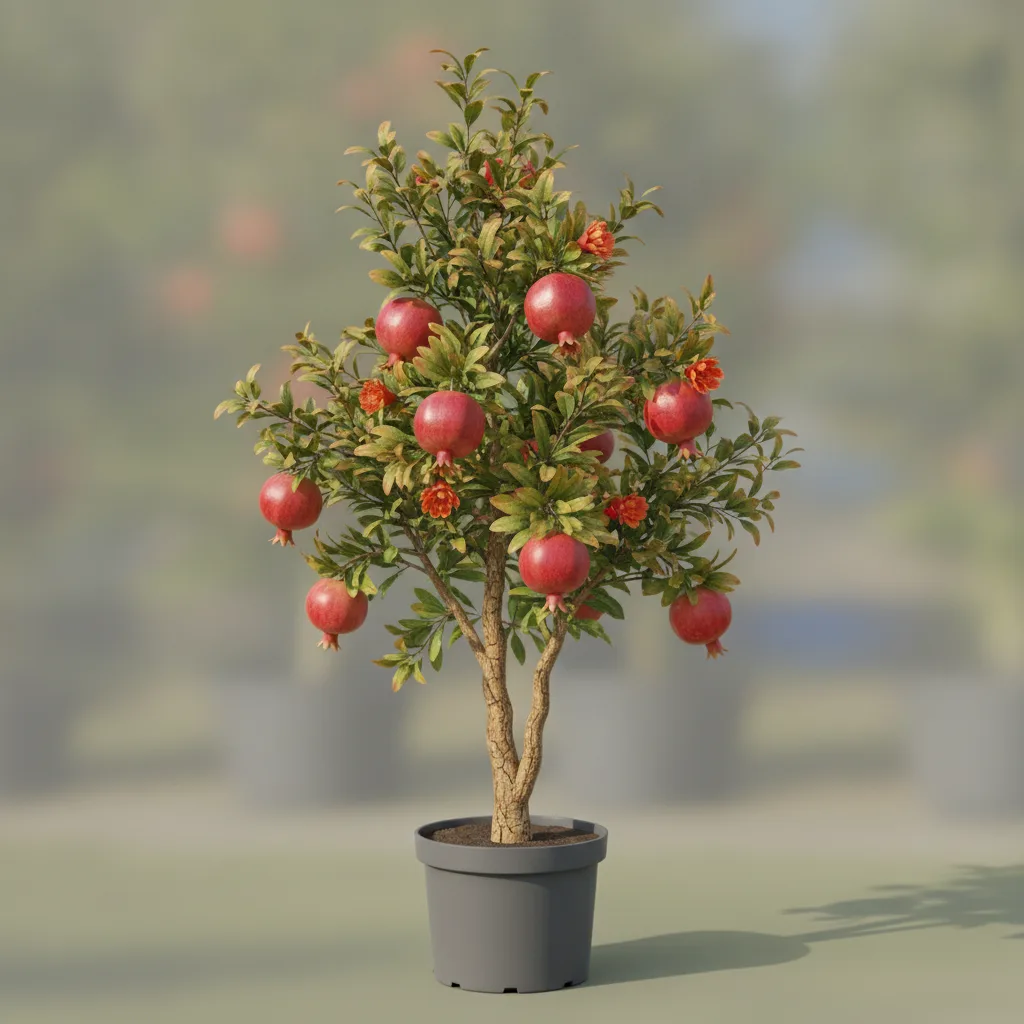
Brilliant orange-red flowers in summer, then leathery fruit packed with ruby, juicy seeds. A tough, drought-hardy and self-fertile small tree that loves a hot, dry summer.
At a glance
- Plant type: Fruiting tree
- Mature size: 4 m H × 3 m W
- Aspect: full sun
- Water: happy on low water
- Frost: hardy
- Maintenance: low maintenance
- Origin: Exotic
About Pomegranate
Punica granatum is a moderate-growing fruiting tree in the Lythraceae family. It reaches around 4 m tall and 3 m wide at maturity, with deciduous foliage.
Where to grow Pomegranate
Pomegranate suits Mediterranean, warm-temperate and subtropical climates and grows best in full sun. It is frost hardy and shrugs off cold winters. It also is a genuinely water-wise choice.
Soil & planting
Pomegranate does best in free-draining soil. Plant into well-prepared ground, firm the soil around the roots and water deeply to settle it in.
Watering & feeding
Pomegranate performs well with relatively little water once established. Feed regularly through the growing season for the best crop. For the first year, favour occasional deep watering over frequent shallow drinks so roots move into the surrounding soil.
Pruning & care
Tip-prune Pomegranate in spring to maintain a dense, shapely habit. Its ongoing care level is low maintenance.
Using Pomegranate in the garden
Pomegranate earns its place for edible harvests, pots and courtyard containers and a feature or specimen planting. It is equally at home in the ground or a large pot on a balcony or courtyard.
Companion planting & design
Build the planting around neighbours suited to the same low water use and Mediterranean climate as Pomegranate. Repeating the foliage or flower colour nearby will make the composition feel deliberate.
Buying Pomegranate
Plant Sale lists Pomegranate as potted plants, advanced specimens and bare-root stock. Use the quote builder above to check current sizes, pricing and availability before ordering.