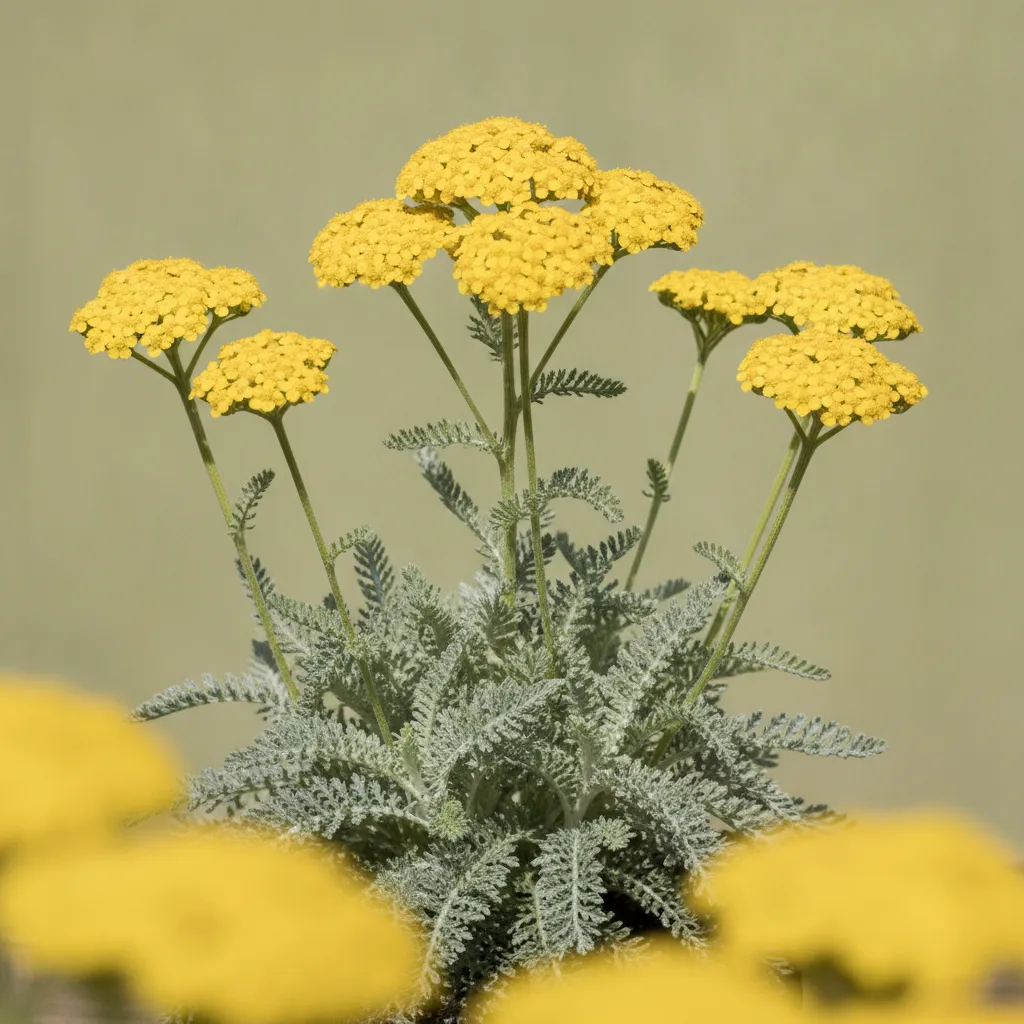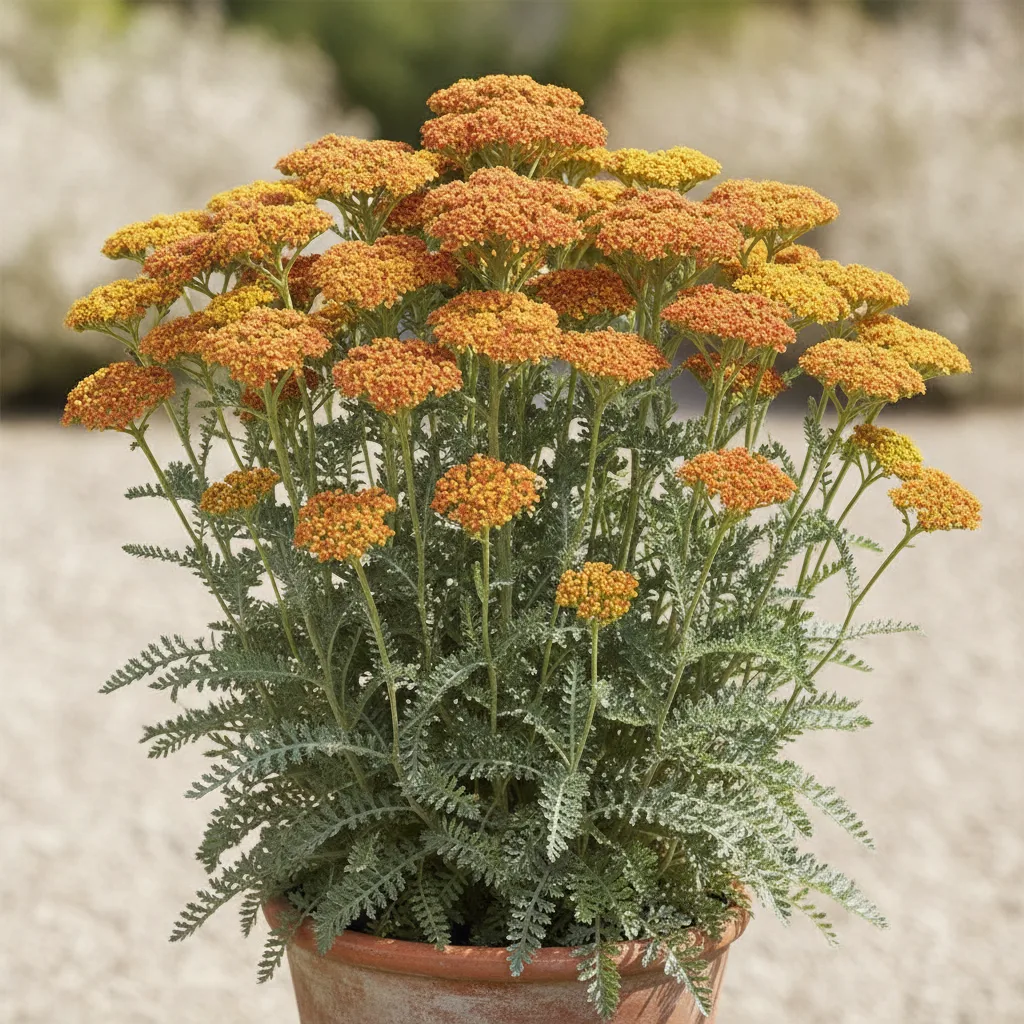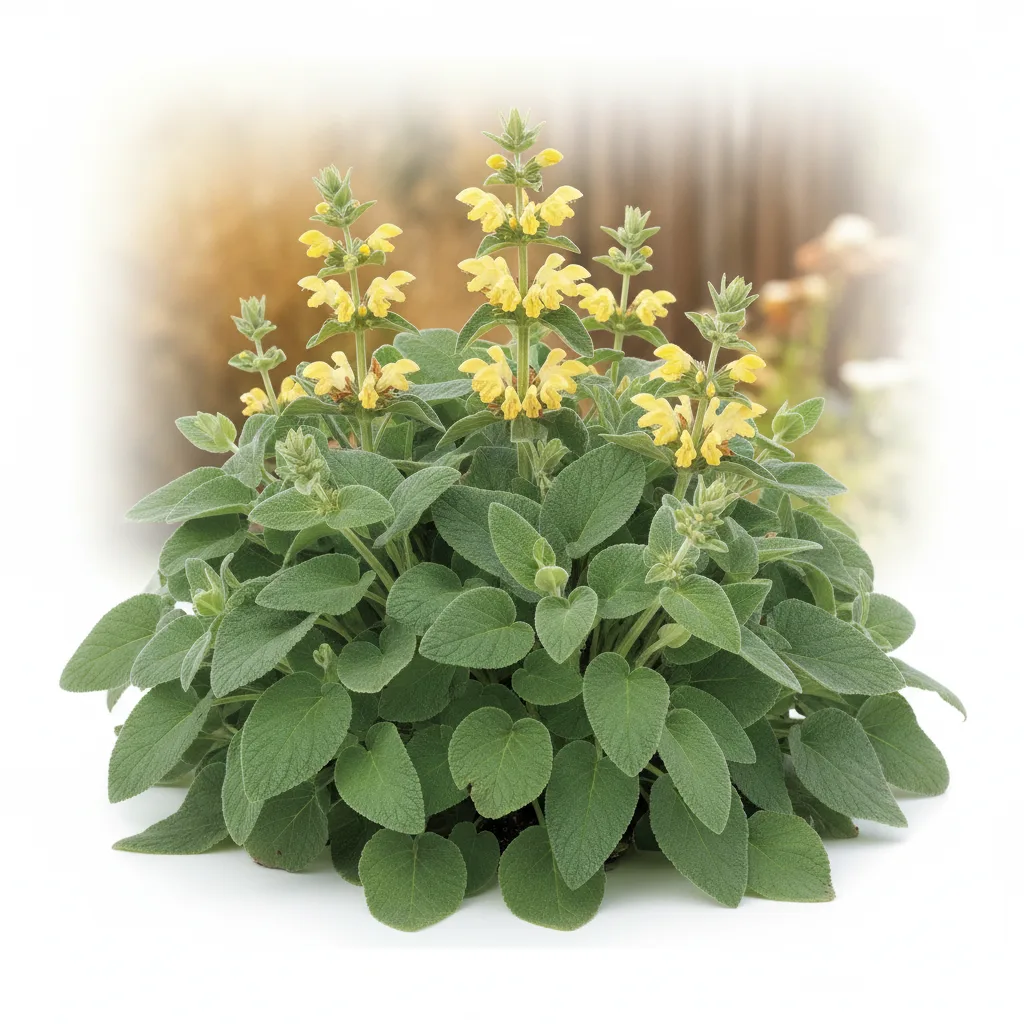
Tiered whorls of soft-yellow hooded flowers stack up sturdy stems above big felted leaves. The architectural dried seed heads earn their keep right through winter.
At a glance
- Plant type: Perennial
- Mature size: 90 cm H × 60 cm W
- Aspect: full sun
- Water: happy on low water
- Frost: hardy
- Maintenance: low maintenance
- Origin: Exotic
About Turkish Sage
Phlomis russeliana is a moderate-growing perennial in the Lamiaceae family. It reaches around 90 cm tall and 60 cm wide at maturity, with evergreen and silver-grey foliage. Yellow flowers appear in spring and summer.
Where to grow Turkish Sage
Turkish Sage suits cool-temperate, warm-temperate and Mediterranean climates and grows best in full sun. It is frost hardy and shrugs off cold winters. It also is a genuinely water-wise choice and is deer-resistant.
Soil & planting
Most soils suit Turkish Sage provided drainage is reasonable. Plant into well-prepared ground, firm the soil around the roots and water deeply to settle it in.
Watering & feeding
Turkish Sage performs well with relatively little water once established. Apply a balanced fertiliser in spring to support healthy growth. During the first growing season, water deeply whenever the upper soil begins to dry, then reduce the frequency as roots establish.
Pruning & care
Prune Turkish Sage after flowering to keep it compact and encourage the next flush of blooms. Its ongoing care level is low maintenance.
Using Turkish Sage in the garden
Turkish Sage earns its place for feeding bees and pollinators, cut flowers for the vase, a feature or specimen planting and holding soil on banks and slopes.
Companion planting & design
Build the planting around neighbours suited to the same low water use and cool-temperate climate as Turkish Sage. Repeating the foliage or flower colour nearby will make the composition feel deliberate.
Buying Turkish Sage
Plant Sale lists Turkish Sage as potted plants. Use the quote builder above to check current sizes, pricing and availability before ordering.