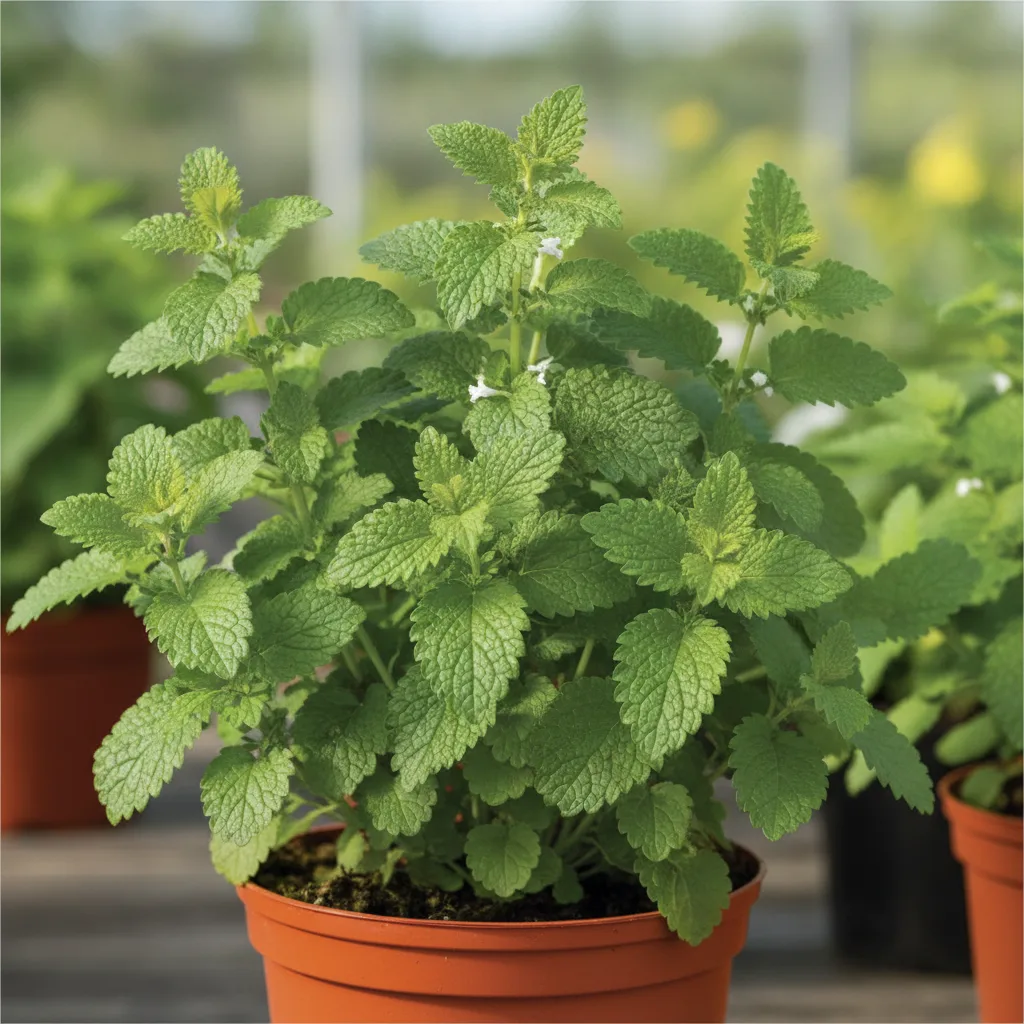
Crushed leaves give off a bright lemon-mint scent the bees flock to — soothing in teas and good in summer drinks. Vigorous and self-seeding, so trim before it sets seed.
At a glance
- Plant type: Edible plant
- Mature size: 70 cm tall
- Aspect: full sun and part shade or morning sun
- Water: regular, moderate watering
- Frost: hardy
- Maintenance: low maintenance
- Origin: Exotic
About Lemon Balm
Botanically, Melissa officinalis is a fast-growing edible plant in the Lamiaceae family. It reaches around 70 cm tall at maturity, with aromatic foliage.
Where to grow Lemon Balm
Lemon Balm suits warm-temperate, cool-temperate and Mediterranean climates and grows best in full sun and part shade or morning sun. It is frost hardy and shrugs off cold winters.
Soil & planting
Most soils suit Lemon Balm provided drainage is reasonable. Dig in plenty of compost before planting, water in well, and mulch to keep roots cool.
Watering & feeding
Lemon Balm does best with regular, moderate watering. Feed regularly through the growing season for the best crop. Check moisture below the mulch during establishment and water thoroughly when needed rather than following a rigid schedule.
Pruning & care
Tip-prune Lemon Balm in spring to maintain a dense, shapely habit. Overall it is low maintenance.
Using Lemon Balm in the garden
Lemon Balm earns its place for edible harvests, pots and courtyard containers, feeding bees and pollinators and its fragrance. It is equally at home in the ground or a large pot on a balcony or courtyard.
Companion planting & design
Combine Lemon Balm with plants that share its preference for regular, moderate watering and warm-temperate climate. Use an odd-numbered group where space allows, or repeat it at intervals through a longer bed.
Good to know
It is regarded as non-toxic and pet-safe.
Buying Lemon Balm
Plant Sale lists Lemon Balm as potted plants and seed. Current stock is confirmed with your quote; ask about your preferred size before planning a purchase.
Prefer to grow it yourself? See the Lemon Balm seed sowing guide for depth, timing and germination.