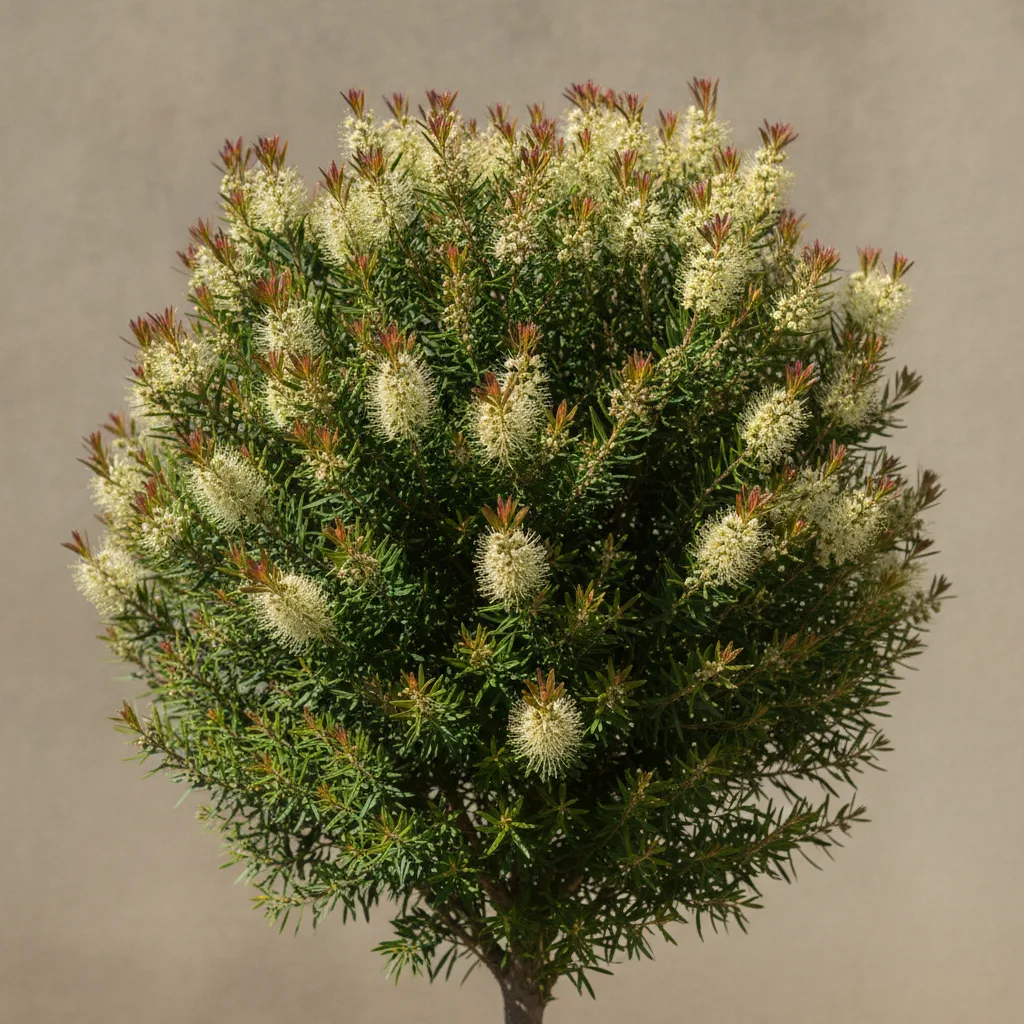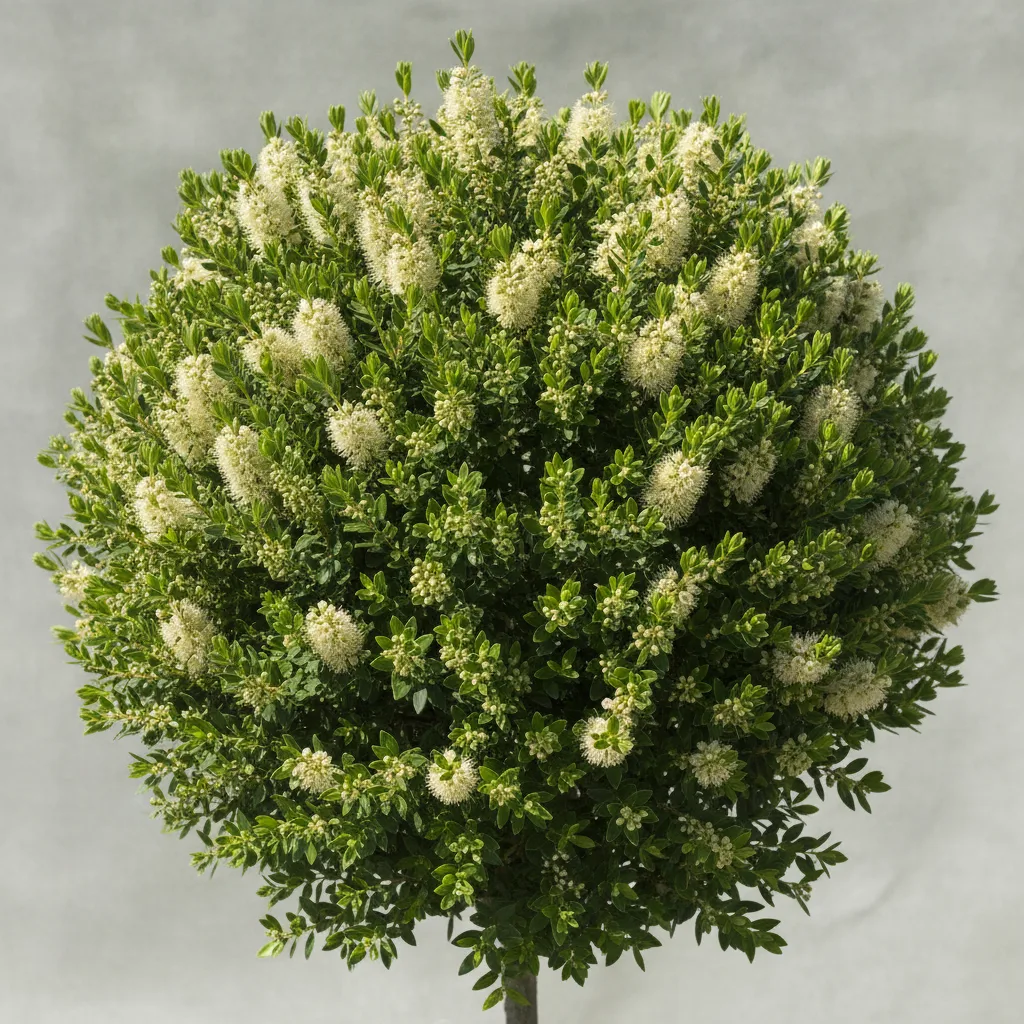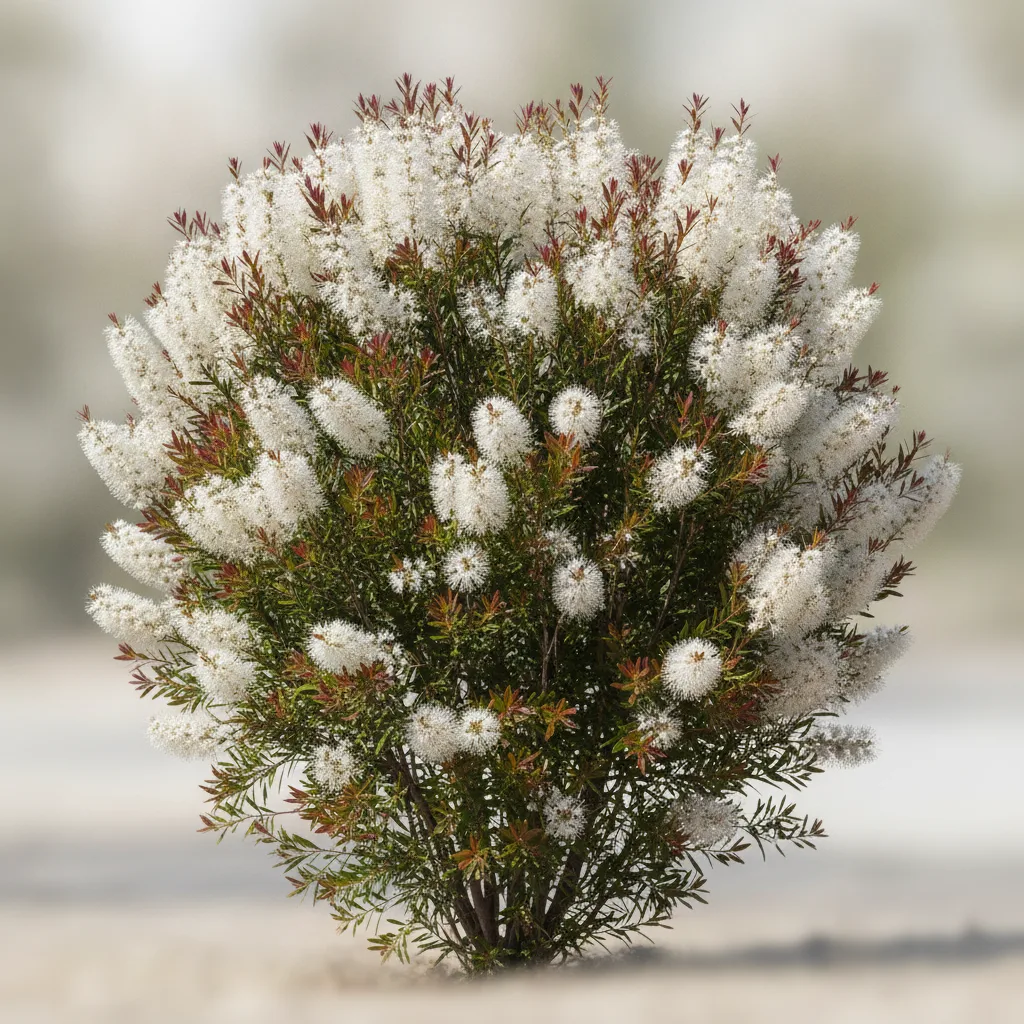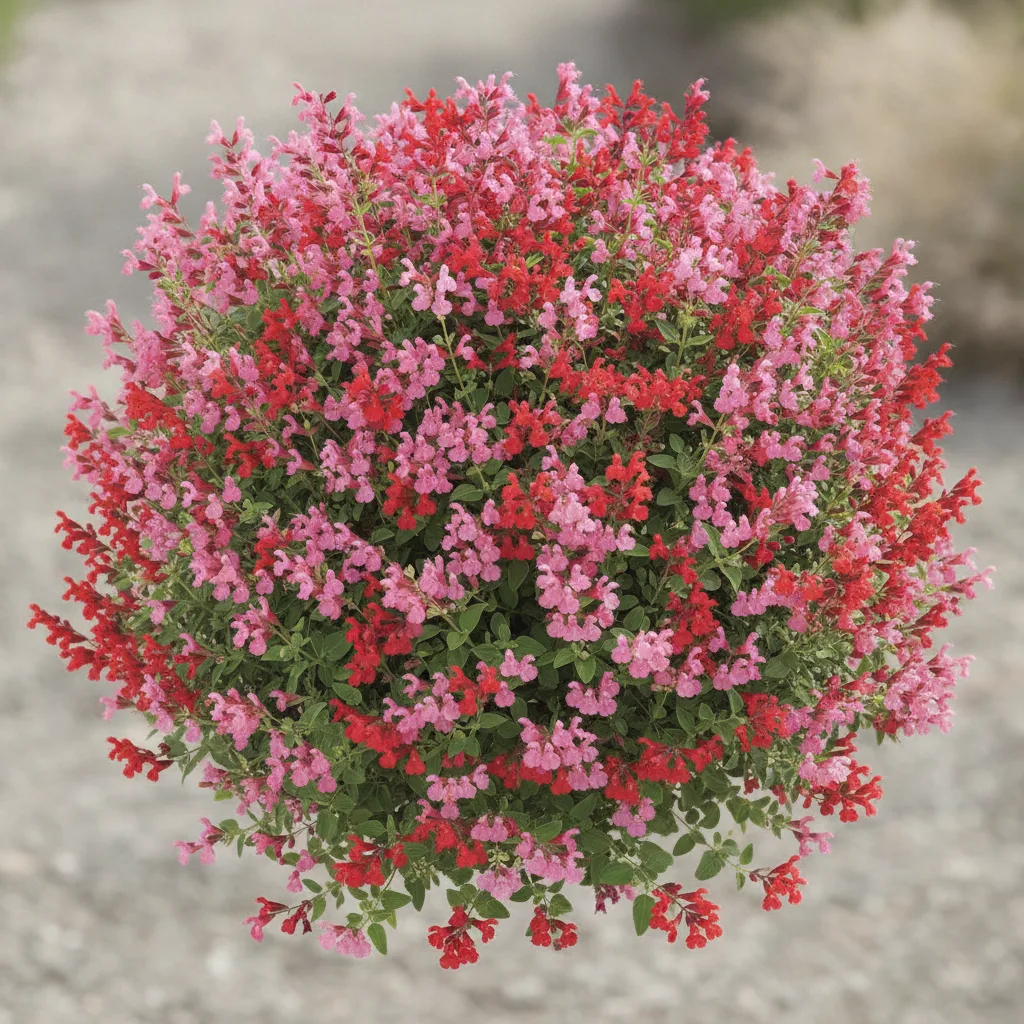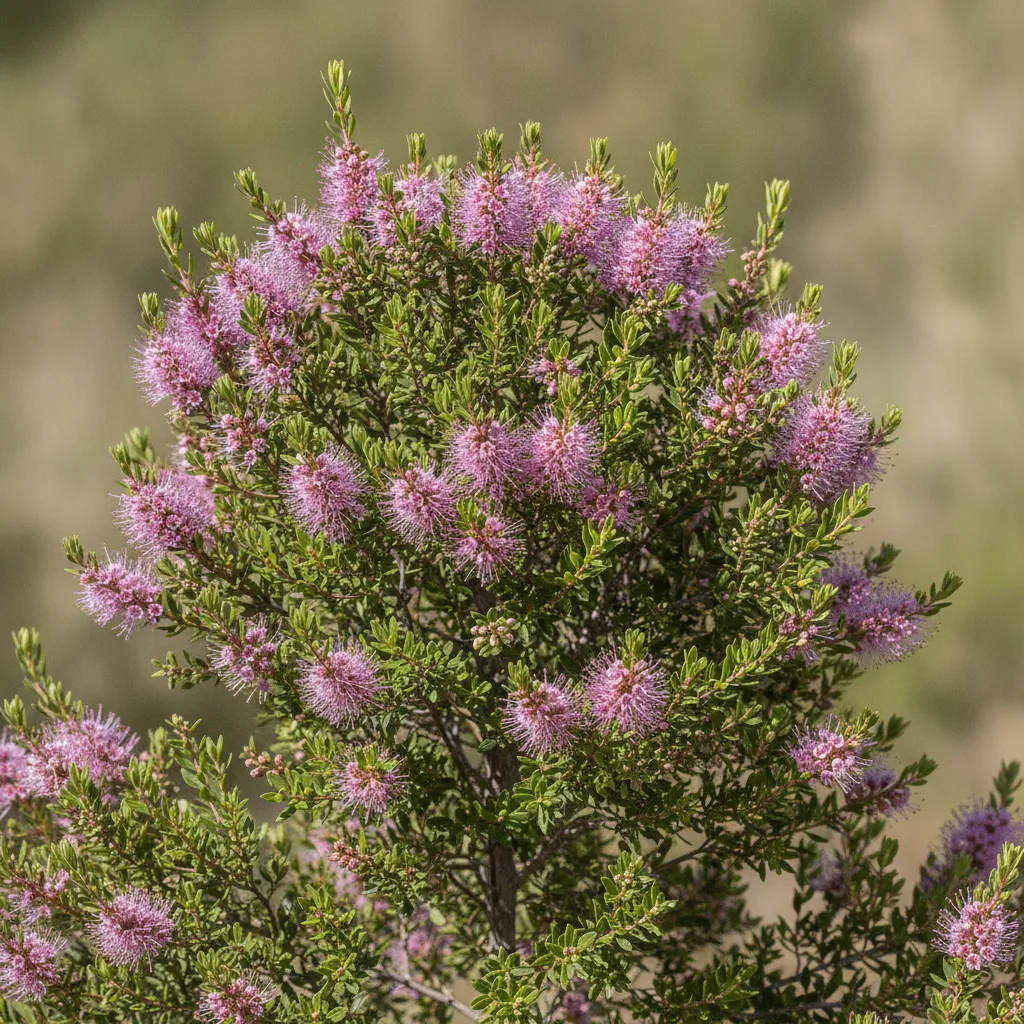
A small, dainty paperbark with fine blue-green leaves and curious fringed mauve-purple claw flowers through the warmer months. Tolerates wet feet and suits damp or boggy spots.
At a glance
- Plant type: Shrub
- Mature size: 1 m H × 1 m W
- Aspect: full sun and part shade or morning sun
- Water: consistently moist soil
- Frost: hardy
- Maintenance: low maintenance
- Origin: Australian native
About Thyme Honey-myrtle
Melaleuca thymifolia is a moderate-growing shrub in the Myrtaceae family, native to New South Wales, Queensland and Victoria. It reaches around 1 m tall and 1 m wide at maturity, with evergreen foliage. Purple and pink flowers appear for much of the year.
Where to grow Thyme Honey-myrtle
Thyme Honey-myrtle suits warm-temperate, subtropical and cool-temperate climates and grows best in full sun and part shade or morning sun. It is frost hardy and shrugs off cold winters. It also tolerates salt-laden coastal winds.
Soil & planting
Thyme Honey-myrtle does best in clay and loamy soil. Plant into well-prepared ground, firm the soil around the roots and water deeply to settle it in.
Watering & feeding
Thyme Honey-myrtle prefers consistently moist soil. As an Australian native, feed it only with a low-phosphorus native fertiliser. During the first growing season, water deeply whenever the upper soil begins to dry, then reduce the frequency as roots establish.
Pruning & care
Prune Thyme Honey-myrtle after flowering to keep it compact and encourage the next flush of blooms. For most gardens, it is low maintenance.
Using Thyme Honey-myrtle in the garden
Thyme Honey-myrtle earns its place for drawing nectar-feeding birds into the garden, feeding bees and pollinators, pots and courtyard containers and a feature or specimen planting. It is equally at home in the ground or a large pot on a balcony or courtyard.
Companion planting & design
Thyme Honey-myrtle sits most comfortably beside plants adapted to consistently moist soil and warm-temperate climate. A small cluster gives stronger visual impact than isolated plants scattered through the garden. It combines naturally with other Australian natives in a habitat or water-wise garden.
Buying Thyme Honey-myrtle
Plant Sale lists Thyme Honey-myrtle as tube stock and potted plants. Use the quote builder above to ask about current stock, sizes and pricing.