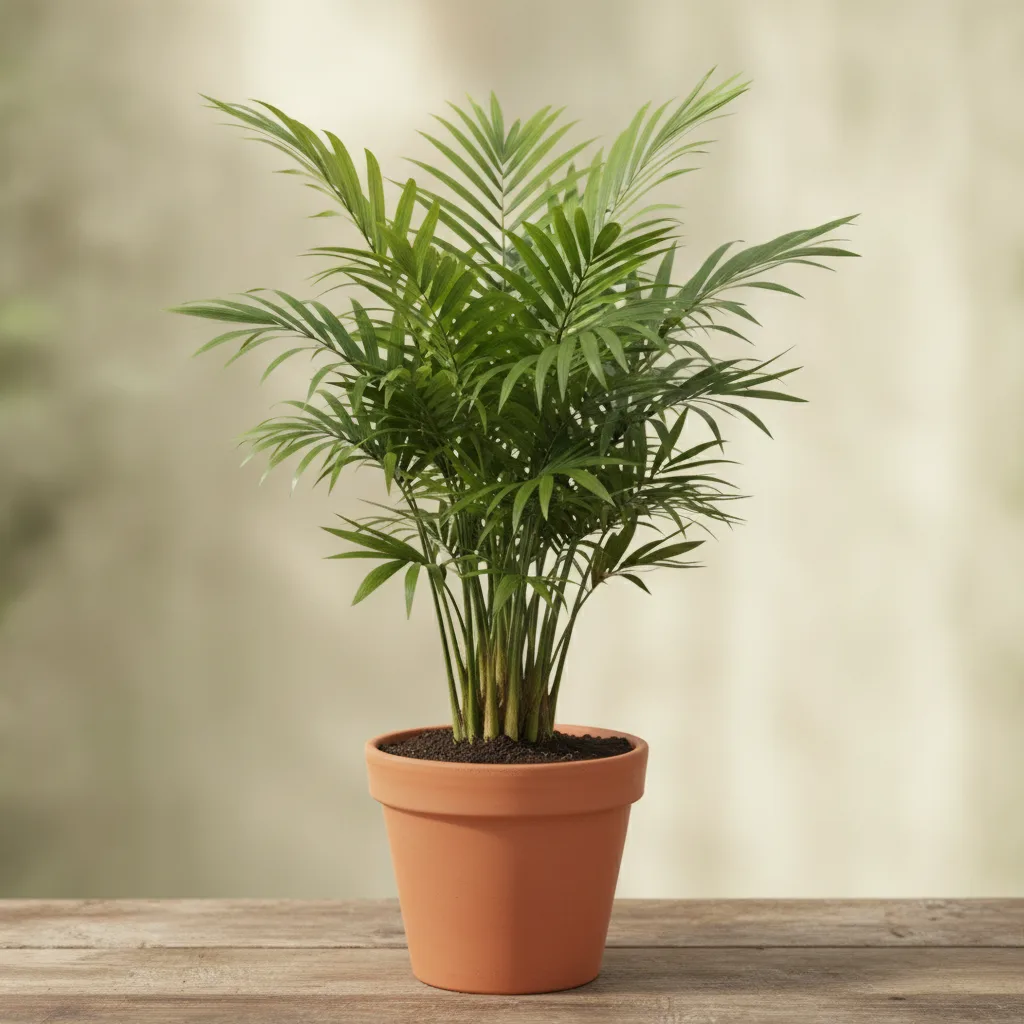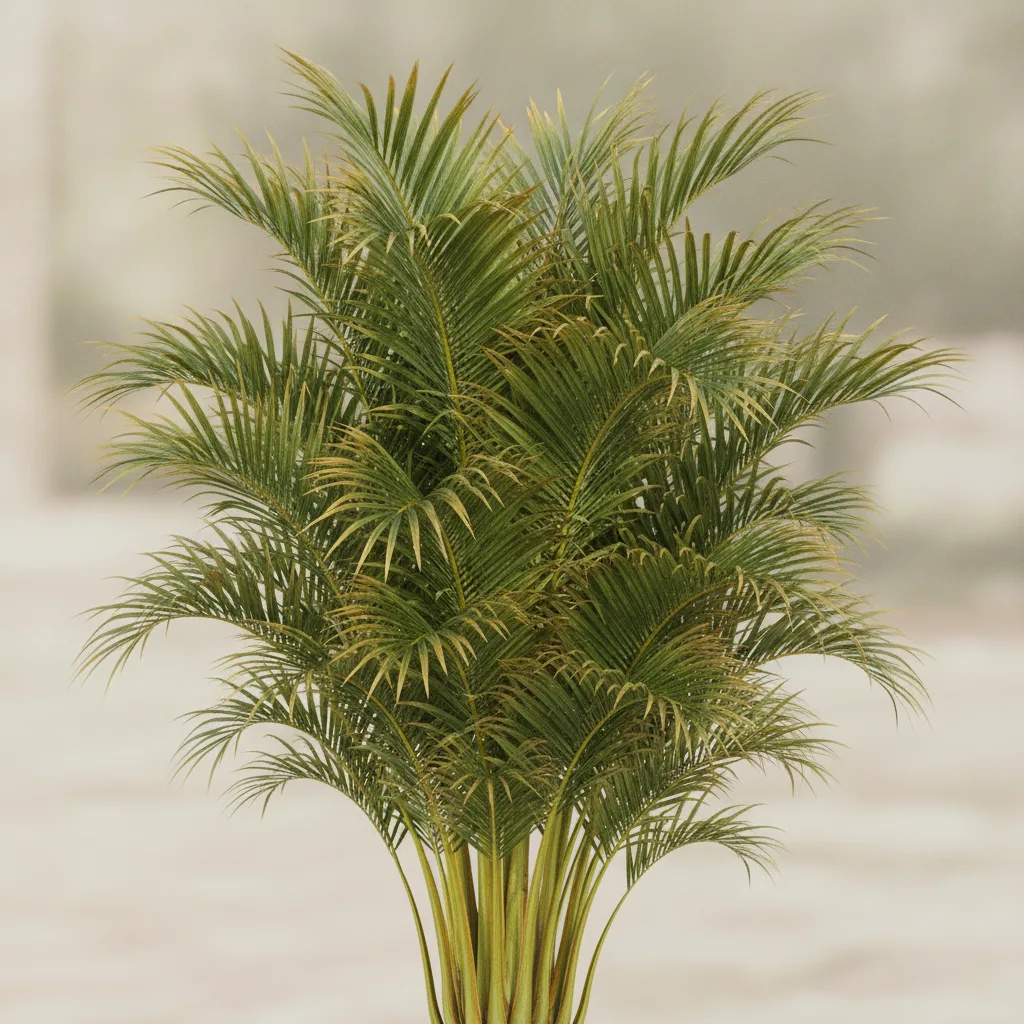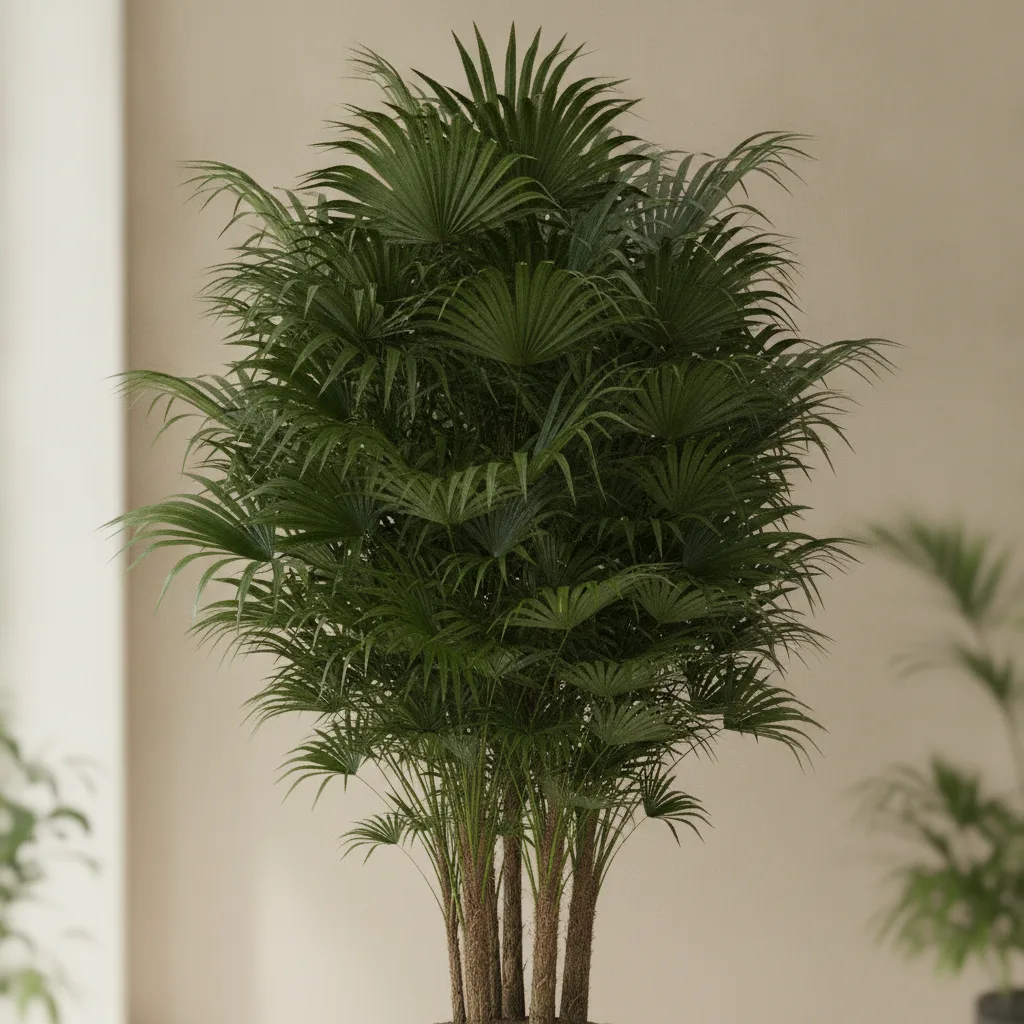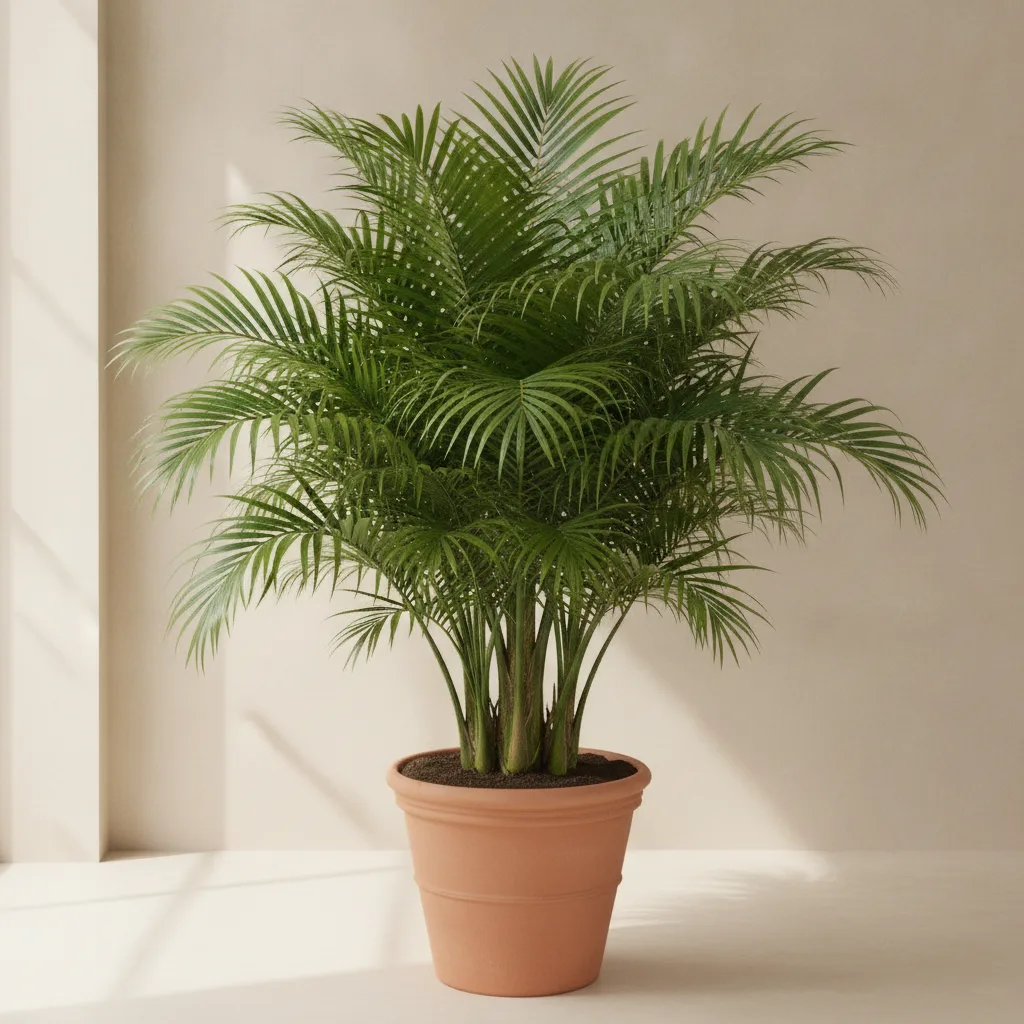
The elegant, arching feather palm beloved since Victorian parlours, tolerant of low light and neglect. Pet-safe and graceful, the classic indoor palm.
At a glance
- Plant type: Palm or cycad
- Mature size: 3 m H × 1.5 m W
- Aspect: part shade or morning sun and shade and low-light positions
- Water: regular, moderate watering
- Frost: tender
- Maintenance: low maintenance
- Origin: Exotic
About Kentia Palm
Botanically, Howea forsteriana is a slow-growing palm or cycad in the Arecaceae family. It reaches around 3 m tall and 1.5 m wide at maturity, with evergreen foliage.
Where to grow Kentia Palm
Kentia Palm suits subtropical climates and grows best in part shade or morning sun and shade and low-light positions. It is frost tender, so protect it from hard frosts or grow it in a sheltered spot or pot.
Soil & planting
Most soils suit Kentia Palm provided drainage is reasonable. Dig in plenty of compost before planting, water in well, and mulch to keep roots cool.
Watering & feeding
Kentia Palm does best with regular, moderate watering. Refresh mulch and provide a modest balanced feed at the start of spring. New plantings need closer moisture checks in hot or windy weather, with watering tapered once strong new growth appears.
Pruning & care
Tip-prune Kentia Palm in spring to maintain a dense, shapely habit. Overall it is low maintenance.
Using Kentia Palm in the garden
Kentia Palm earns its place for pots and courtyard containers and a feature or specimen planting. It is equally at home in the ground or a large pot on a balcony or courtyard.
Companion planting & design
Combine Kentia Palm with plants that share its preference for regular, moderate watering and subtropical climate. Use an odd-numbered group where space allows, or repeat it at intervals through a longer bed.
Good to know
It is regarded as non-toxic and pet-safe.
Buying Kentia Palm
Plant Sale lists Kentia Palm as potted plants and advanced specimens. Current stock is confirmed with your quote; ask about your preferred size before planning a purchase.