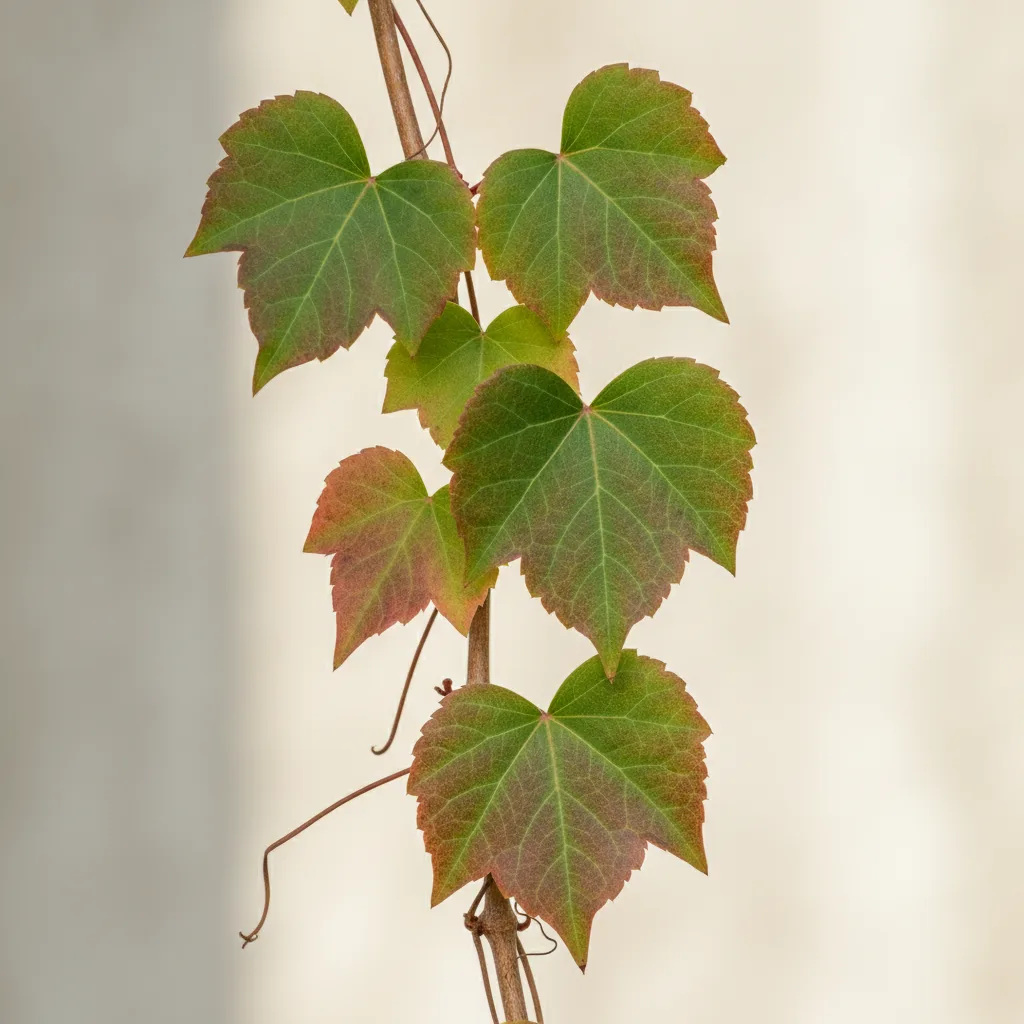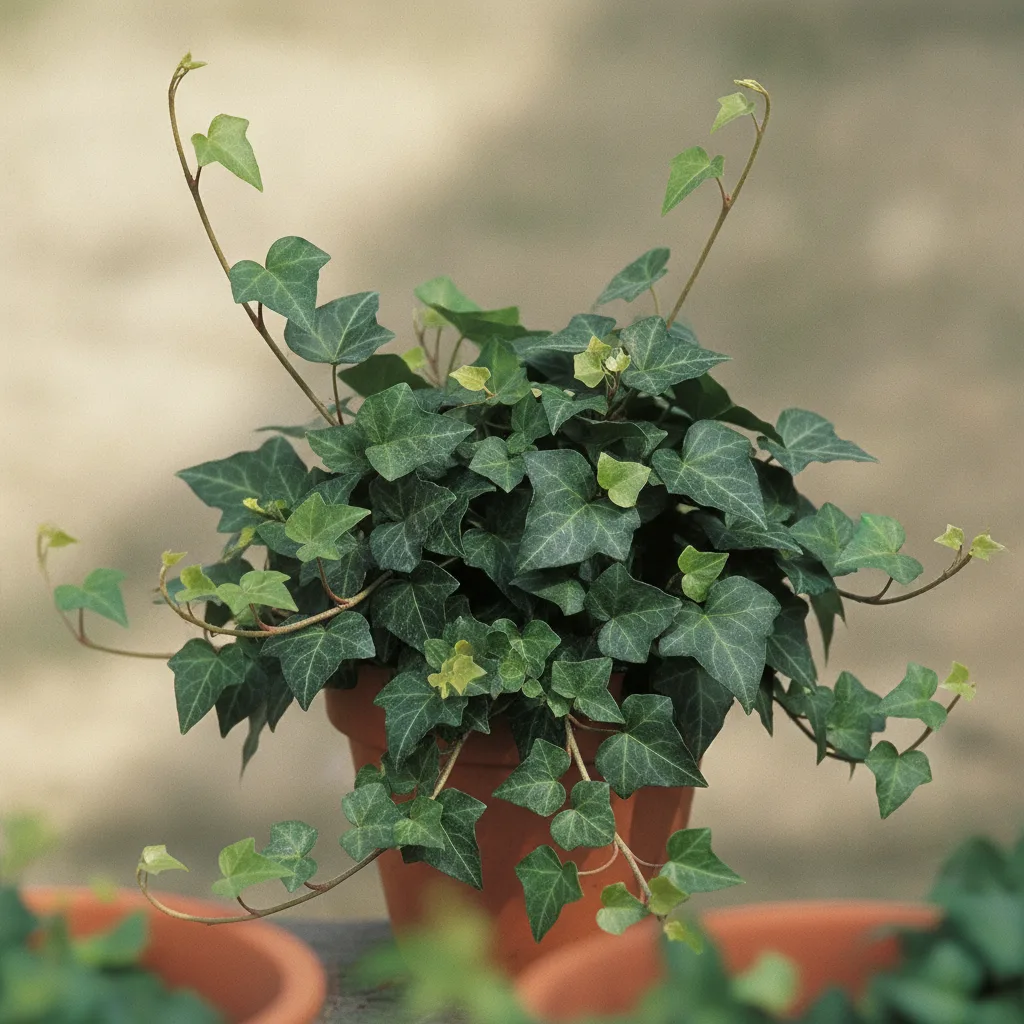
A tough, self-clinging evergreen climber and groundcover with classic lobed dark-green leaves that thrives in deep shade. Useful but invasive, it can damage masonry and is toxic if eaten.
At a glance
- Plant type: Climber
- Mature size: 20 m H × 5 m W
- Aspect: part shade or morning sun and shade and low-light positions
- Water: regular, moderate watering
- Frost: hardy
- Maintenance: moderate maintenance
- Origin: Exotic
About English Ivy
Hedera helix is a fast-growing climber in the Araliaceae family. It reaches around 20 m tall and 5 m wide at maturity, with evergreen foliage.
Where to grow English Ivy
English Ivy suits cool-temperate and warm-temperate climates and grows best in part shade or morning sun and shade and low-light positions. It is frost hardy and shrugs off cold winters.
Soil & planting
English Ivy does best in loamy, clay and free-draining soil. Plant into well-prepared ground, firm the soil around the roots and water deeply to settle it in. For a screen, space plants about 3 m apart.
Watering & feeding
English Ivy does best with regular, moderate watering. Apply a balanced fertiliser in spring to support healthy growth. Check moisture below the mulch during establishment and water thoroughly when needed rather than following a rigid schedule.
Pruning & care
Tip-prune English Ivy in spring to maintain a dense, shapely habit. It clips well, so trim two or three times a year for a formal finish. Its ongoing care level is moderate maintenance.
Using English Ivy in the garden
English Ivy earns its place for a low lawn alternative, a fast screen or informal hedge, a shade tree and clipping into topiary.
Companion planting & design
Build the planting around neighbours suited to the same regular, moderate watering and cool-temperate climate as English Ivy. Repeating the foliage or flower colour nearby will make the composition feel deliberate.
Good to know
Note that it is toxic to cats and dogs, so site it away from pets that chew. All parts can be toxic if eaten, so keep it away from small children. It is thornless and easy to handle. Be aware it can self-seed or spread into bushland in some regions — check it is not a declared weed in your area before planting.
Buying English Ivy
Plant Sale lists English Ivy as potted plants and advanced specimens. Use the quote builder above to check current sizes, pricing and availability before ordering.