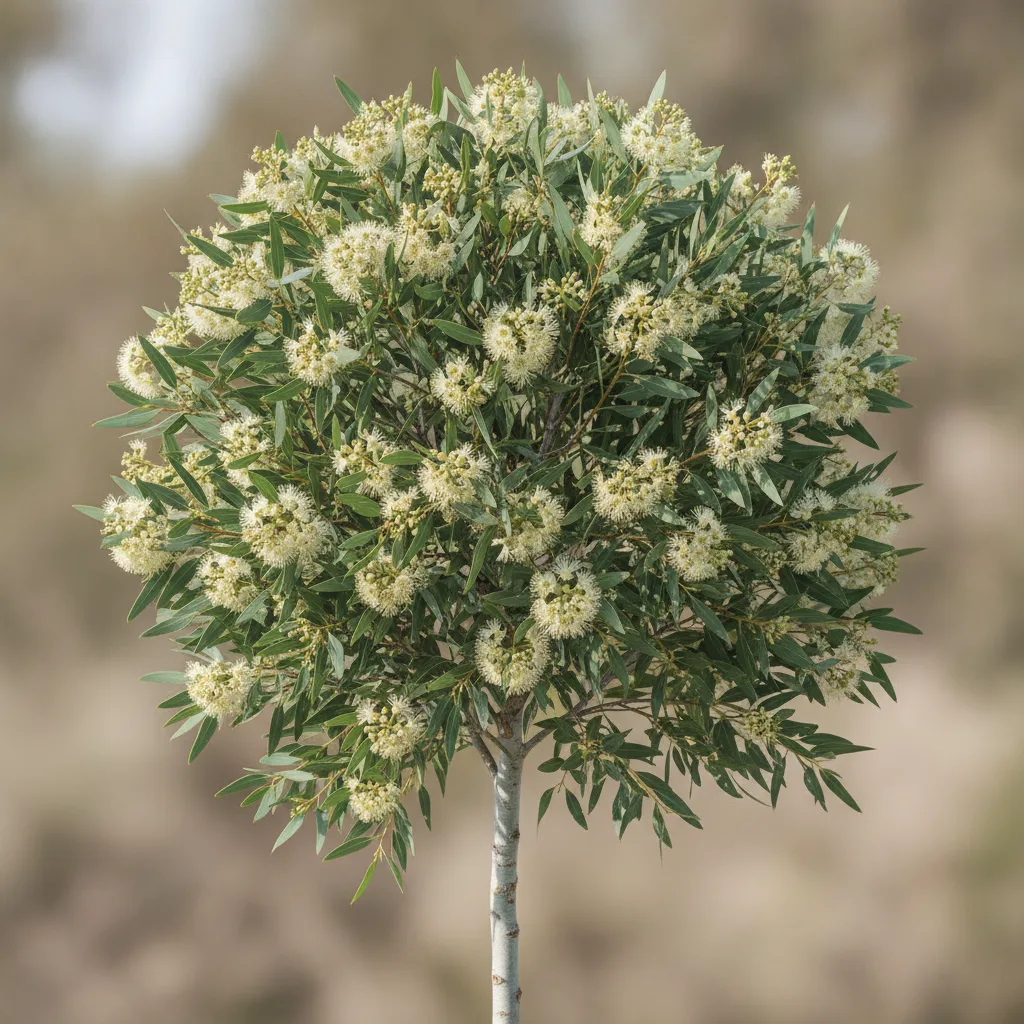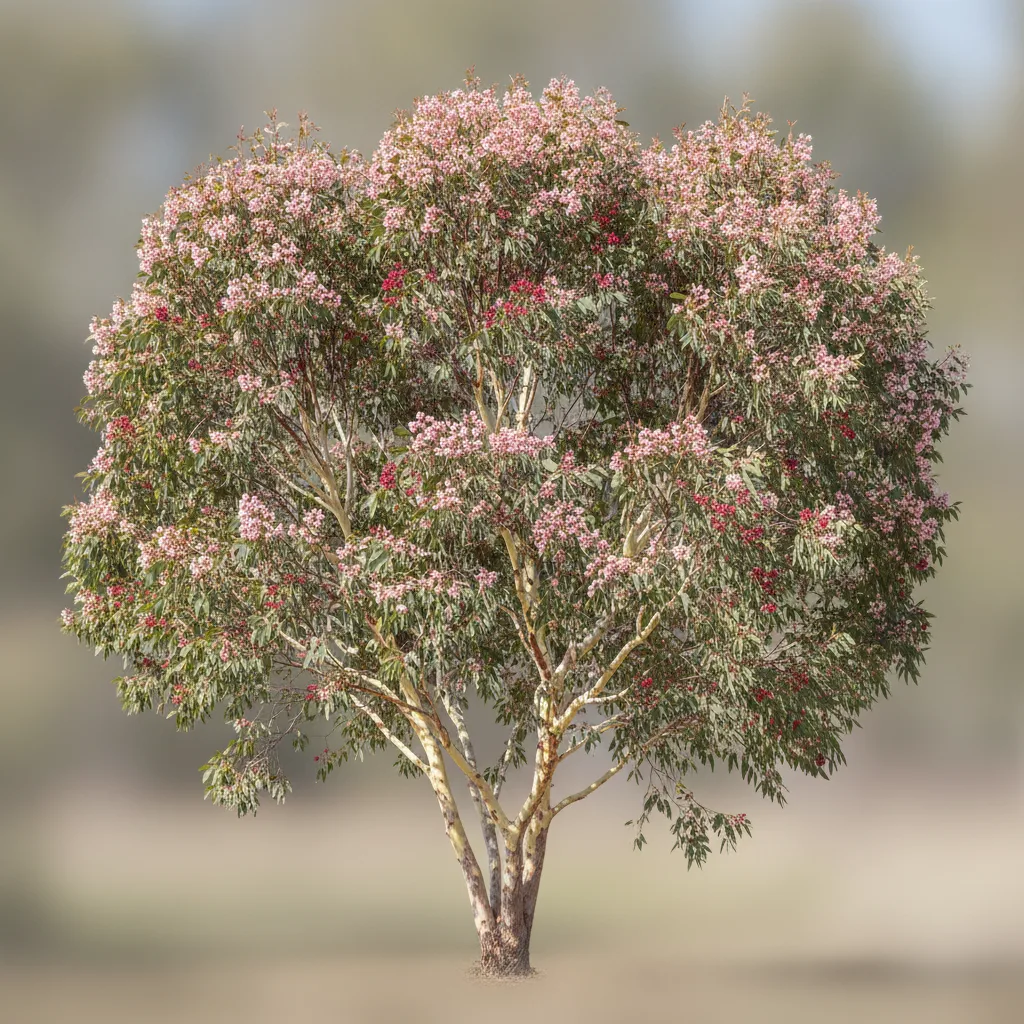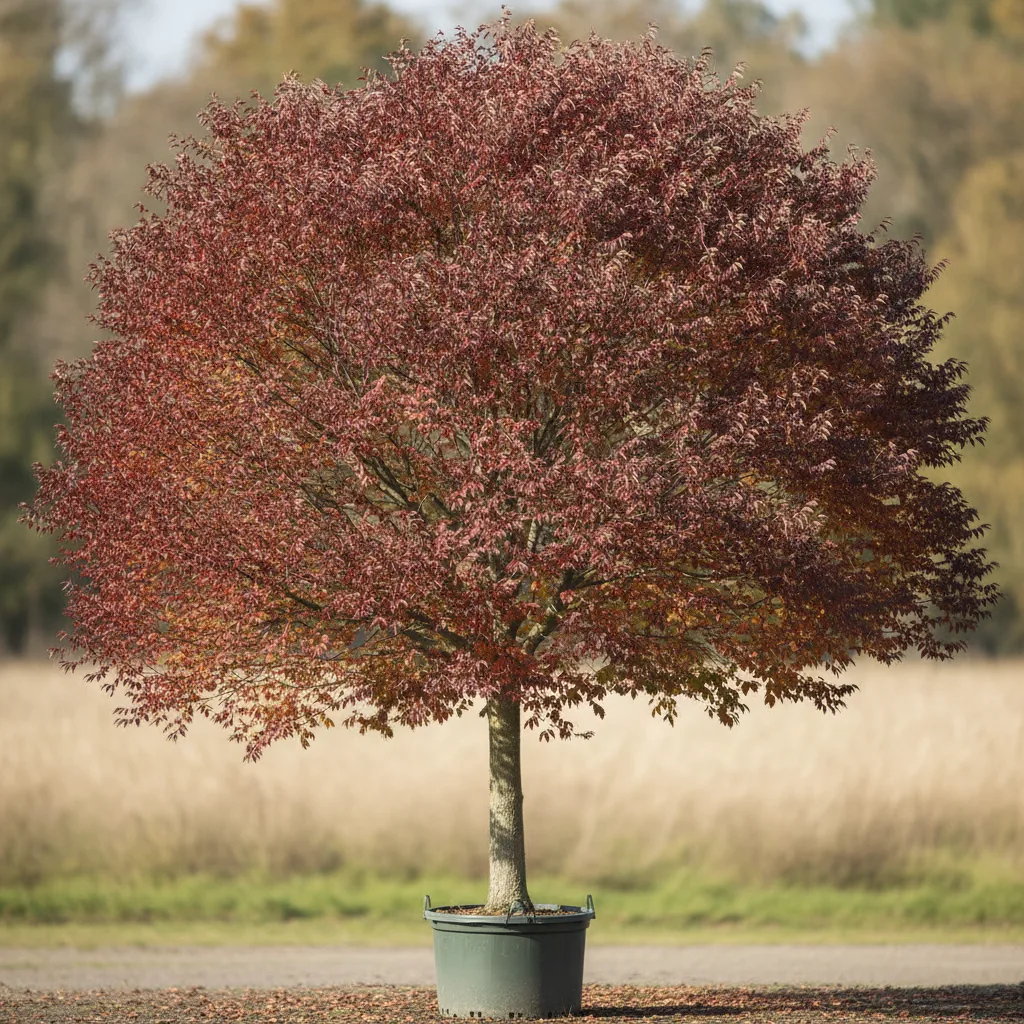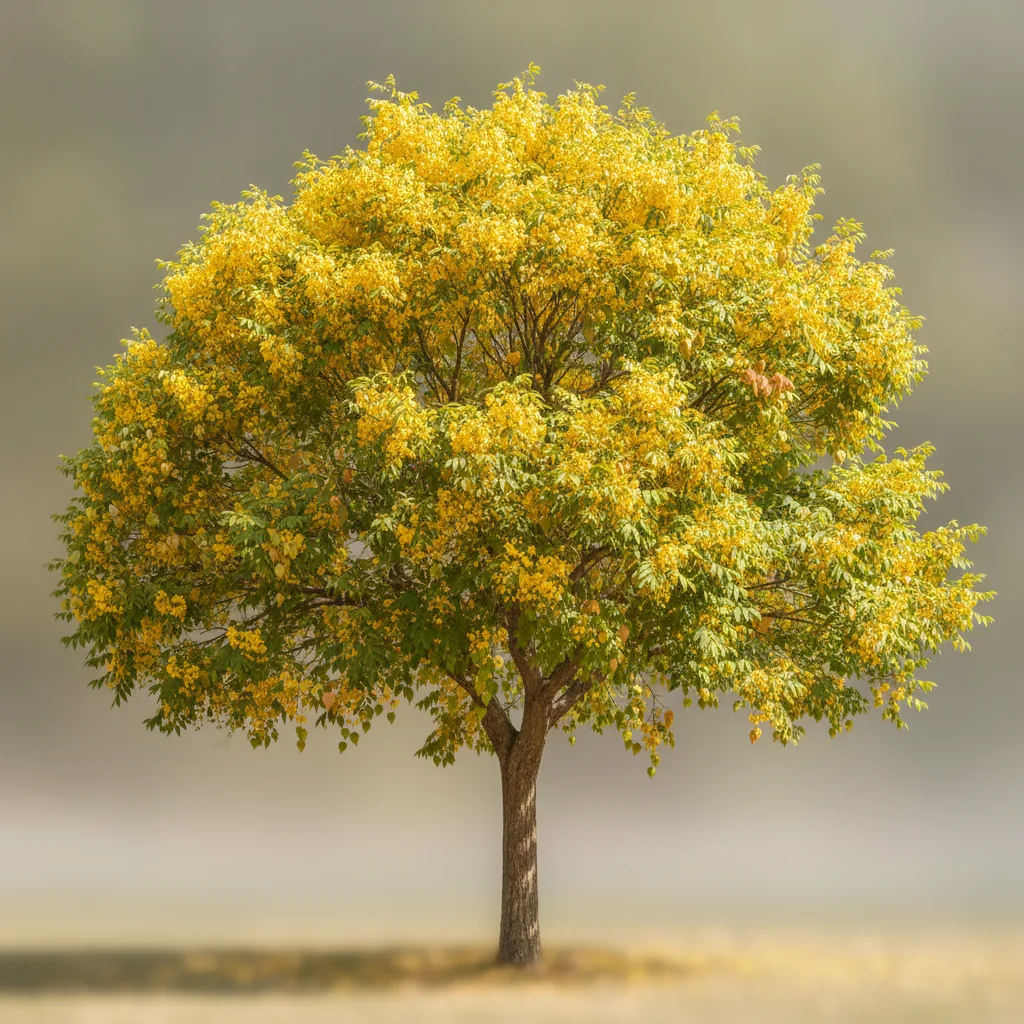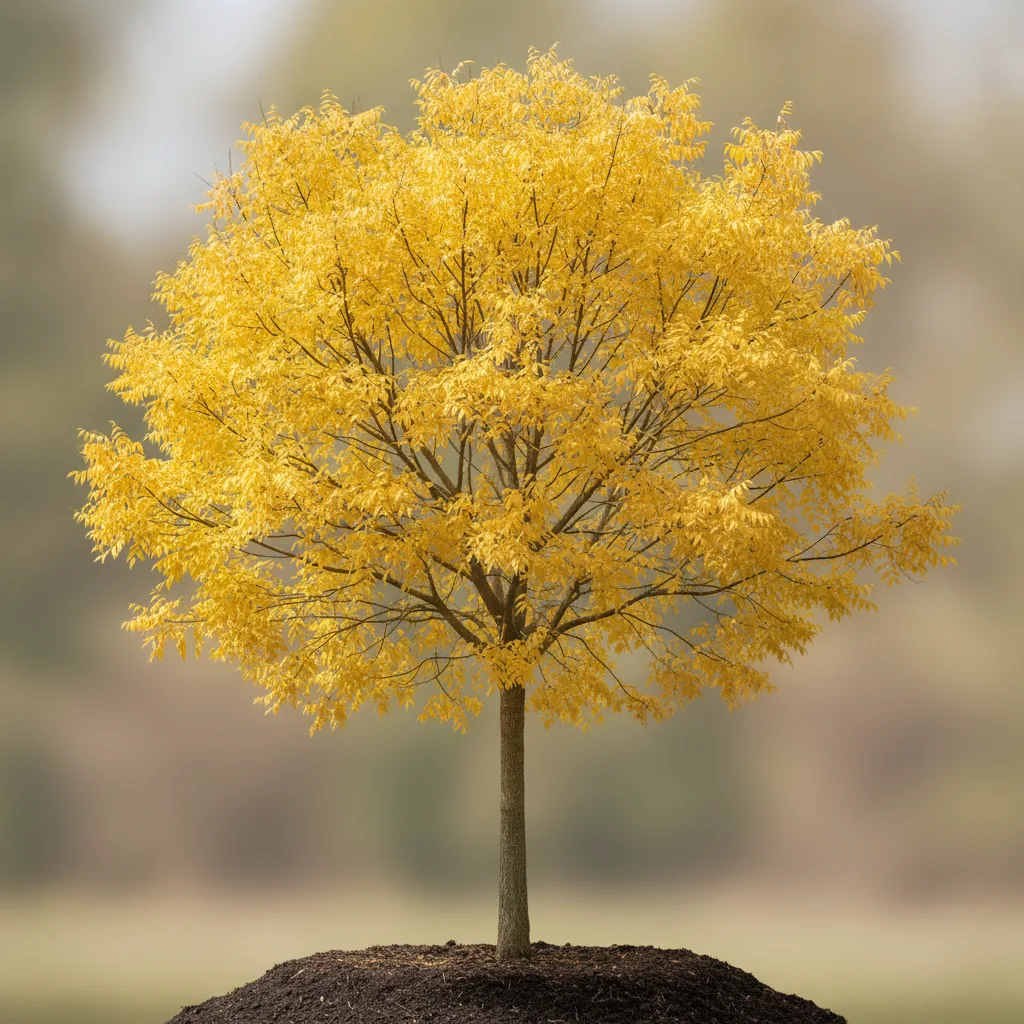
A thornless, podless cultivar with airy ferny foliage that emerges bright gold, matures to lime-green and returns to yellow in autumn, casting light dappled shade. A graceful lawn tree.
At a glance
- Plant type: Tree
- Mature size: 10 m H × 8 m W
- Aspect: full sun
- Water: happy on low water
- Frost: hardy
- Maintenance: low maintenance
- Origin: Exotic
About Golden Honey Locust
Gleditsia triacanthos 'Sunburst' is a fast-growing tree in the Fabaceae family. It reaches around 10 m tall and 8 m wide at maturity, with deciduous, golden and rich in autumn colour foliage.
Where to grow Golden Honey Locust
Golden Honey Locust suits cool-temperate, warm-temperate and Mediterranean climates and grows best in full sun. It is frost hardy and shrugs off cold winters.
Soil & planting
Golden Honey Locust does best in loamy, free-draining and alkaline soil. Plant into well-prepared ground, firm the soil around the roots and water deeply to settle it in.
Watering & feeding
Golden Honey Locust performs well with relatively little water once established. Apply a balanced fertiliser in spring to support healthy growth. Check moisture below the mulch during establishment and water thoroughly when needed rather than following a rigid schedule.
Pruning & care
Tip-prune Golden Honey Locust in spring to maintain a dense, shapely habit. Its ongoing care level is low maintenance.
Using Golden Honey Locust in the garden
Golden Honey Locust earns its place for a shade tree and a feature or specimen planting.
Companion planting & design
Build the planting around neighbours suited to the same low water use and cool-temperate climate as Golden Honey Locust. Repeating the foliage or flower colour nearby will make the composition feel deliberate.
Good to know
It is thornless and easy to handle.
Buying Golden Honey Locust
Plant Sale lists Golden Honey Locust as advanced specimens and bare-root stock. Use the quote builder above to check current sizes, pricing and availability before ordering.