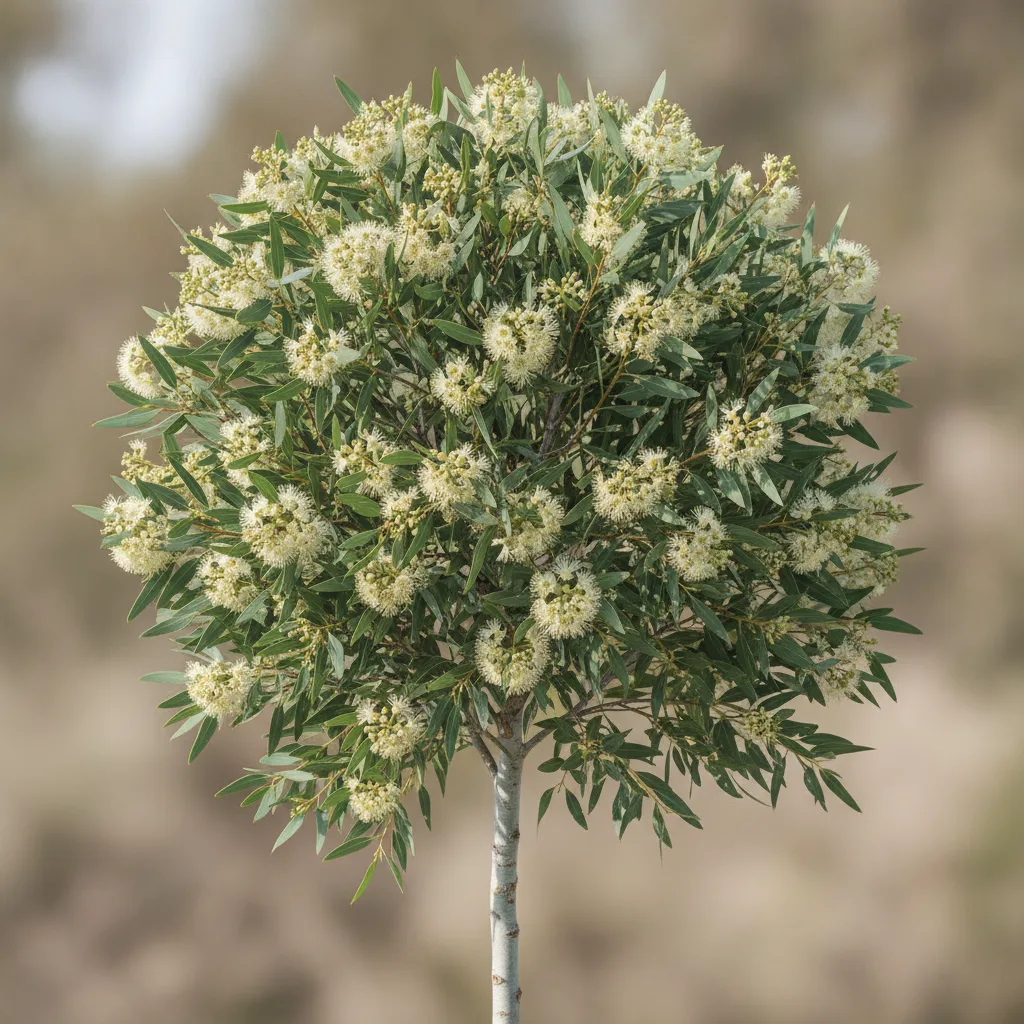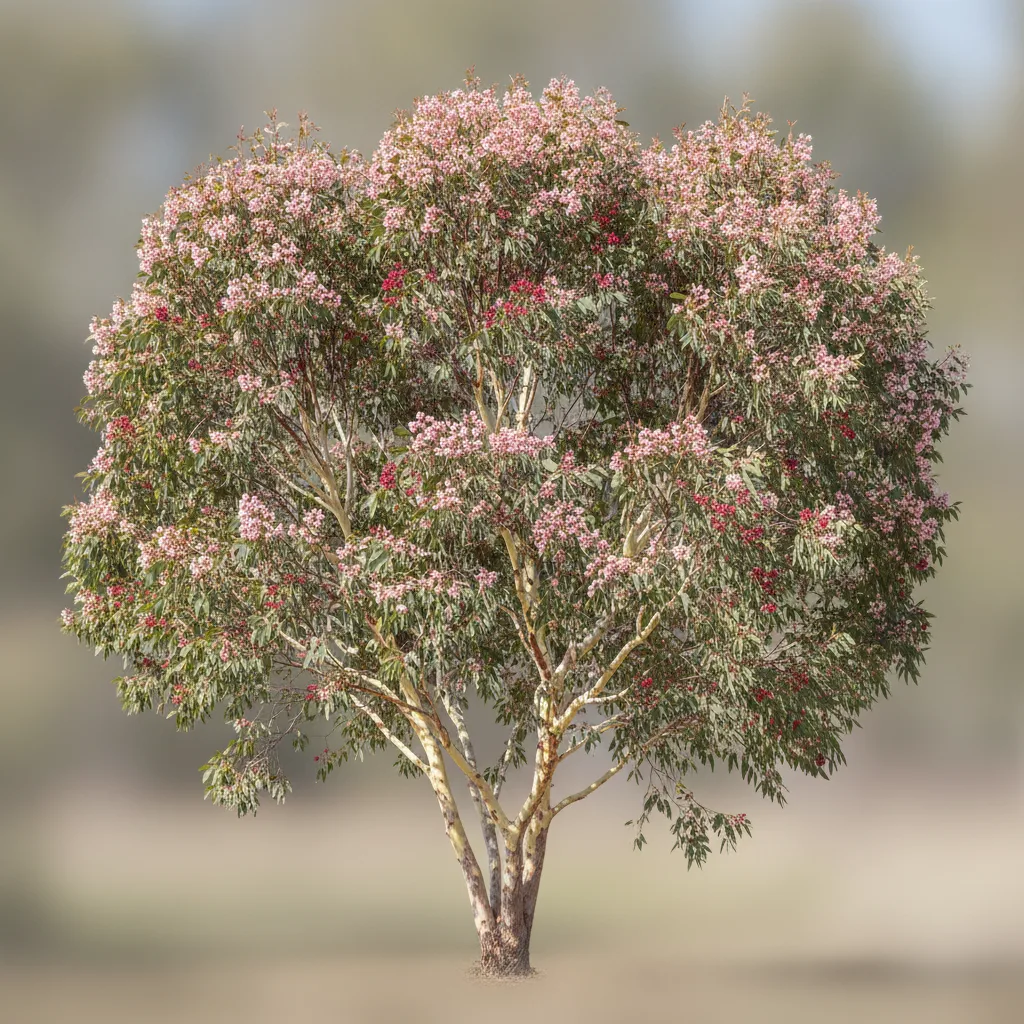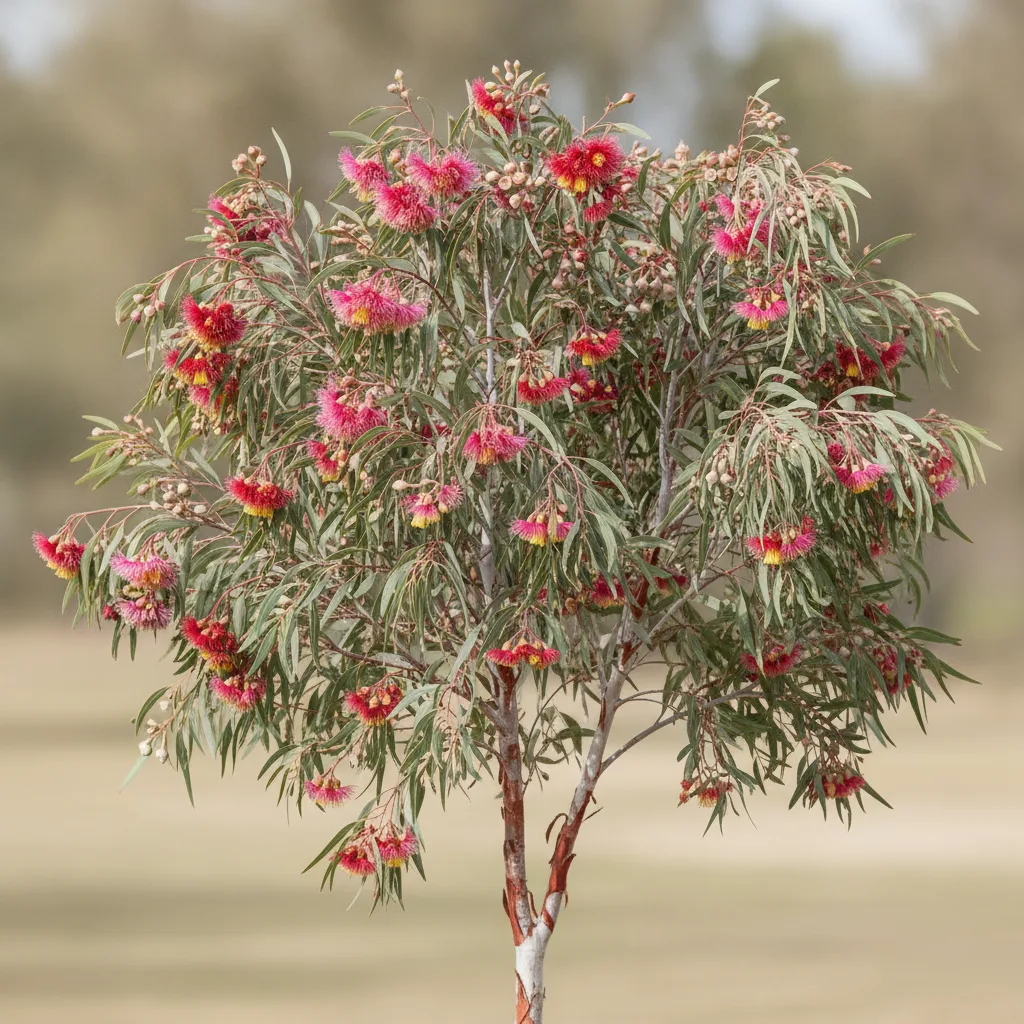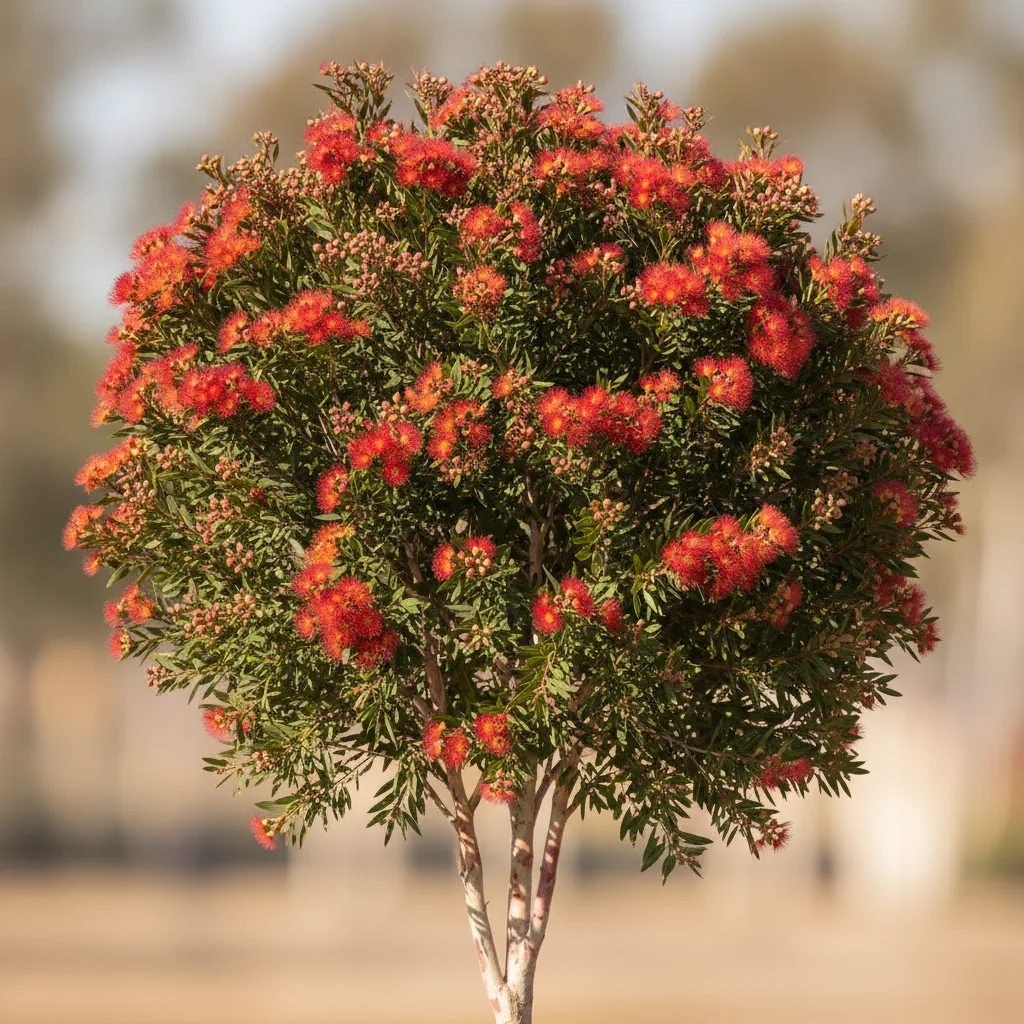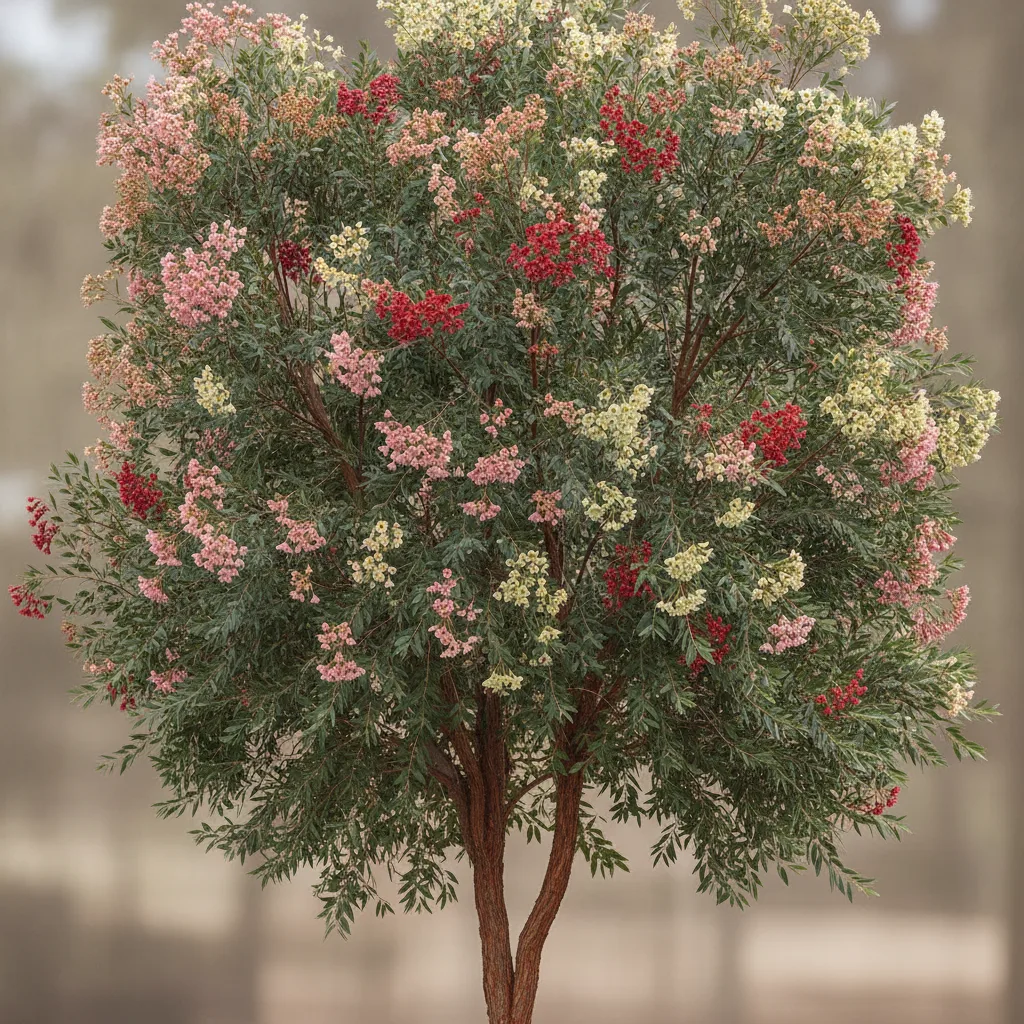
A handsome upright tree with deeply furrowed near-black ironbark and blue-grey foliage, carrying pink to red winter flowers rich in nectar. Tough, drought-hardy and excellent for birds.
At a glance
- Plant type: Tree
- Mature size: 18 m H × 10 m W
- Aspect: full sun
- Water: very drought tolerant once established
- Frost: hardy
- Maintenance: low maintenance
- Origin: Australian native
About Red Ironbark
Botanically, Eucalyptus sideroxylon 'Rosea' is a moderate-growing tree in the Myrtaceae family, native to New South Wales, Victoria and Queensland. It reaches around 18 m tall and 10 m wide at maturity, with evergreen and silver-grey foliage. Pink, red and cream green flowers appear in winter and spring.
Where to grow Red Ironbark
Red Ironbark suits warm-temperate, cool-temperate, subtropical and arid and semi-arid climates and grows best in full sun. It is frost hardy and shrugs off cold winters. It also is a genuinely water-wise choice.
Soil & planting
Red Ironbark does best in clay, loamy and poor soil. Dig in plenty of compost before planting, water in well, and mulch to keep roots cool.
Watering & feeding
Red Ironbark handles dry conditions well once established. As an Australian native, feed it only with a low-phosphorus native fertiliser. Check moisture below the mulch during establishment and water thoroughly when needed rather than following a rigid schedule.
Pruning & care
Prune Red Ironbark after flowering to keep it compact and encourage the next flush of blooms. Once established, it is low maintenance.
Using Red Ironbark in the garden
Red Ironbark earns its place for a shade tree, a feature or specimen planting, drawing nectar-feeding birds into the garden and a windbreak.
Companion planting & design
For easier irrigation and care, group Red Ironbark with species that also favour dry conditions once established and warm-temperate climate. Leave enough room for the mature spread so neighbouring plants are not crowded out. It combines naturally with other Australian natives in a habitat or water-wise garden.
Buying Red Ironbark
Plant Sale lists Red Ironbark as tube stock, potted plants, advanced specimens and seed. Catalogue forms are planning guidance until the Plant Sale team confirms live availability.
Prefer to grow it yourself? See the Red Ironbark seed sowing guide for depth, timing and germination.