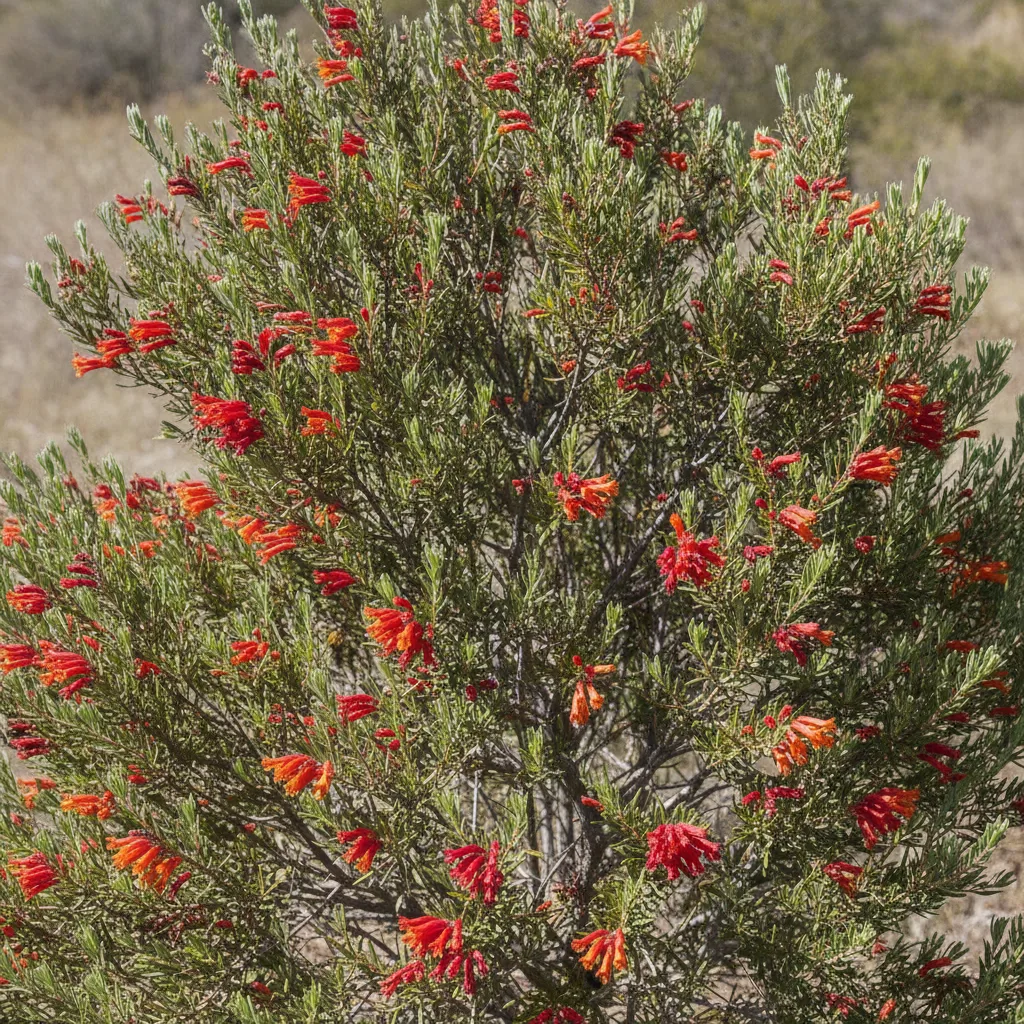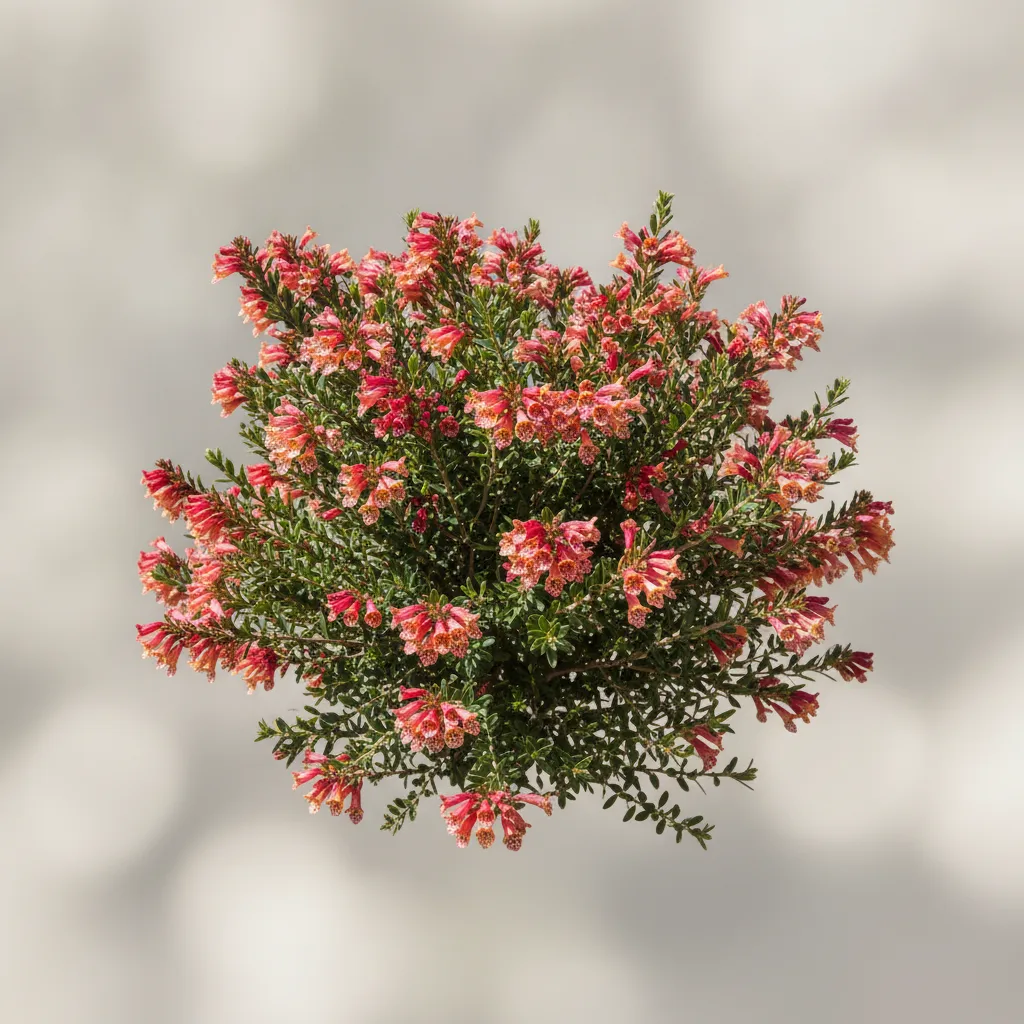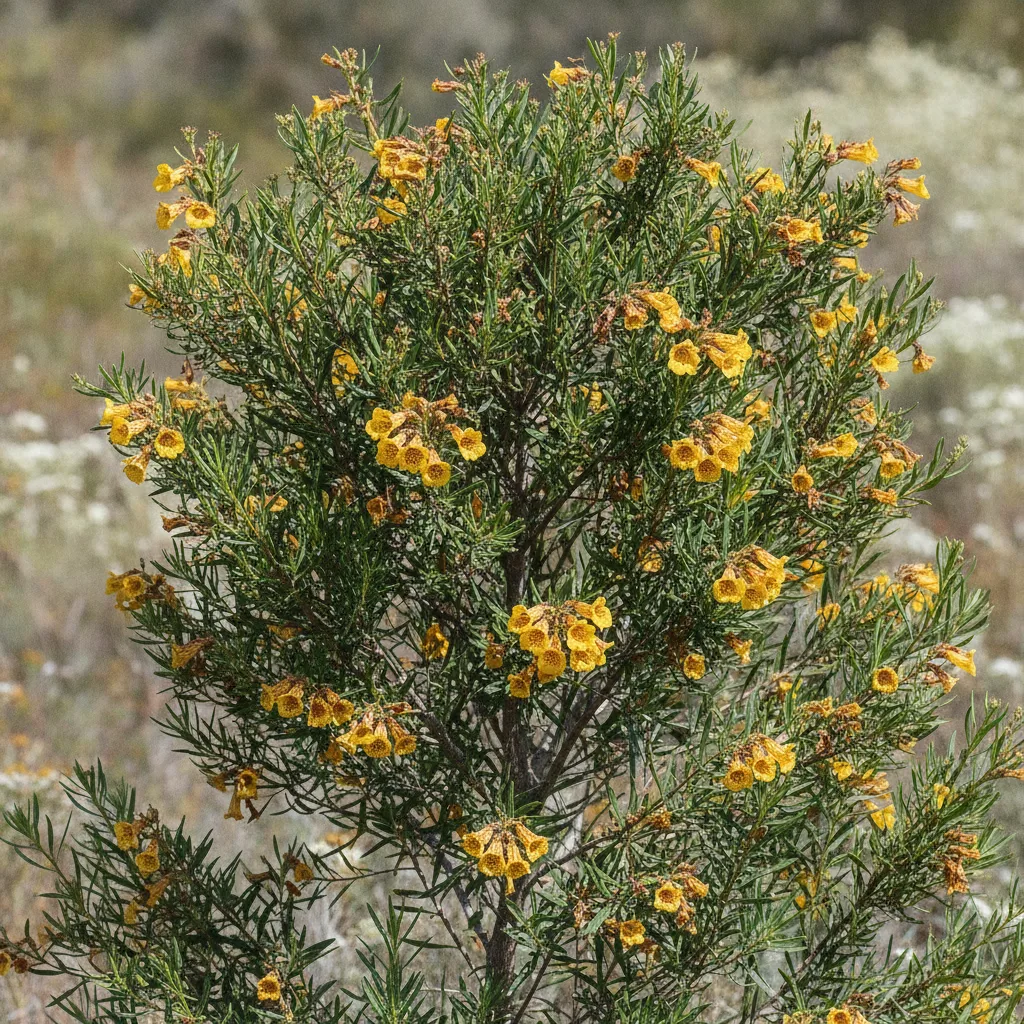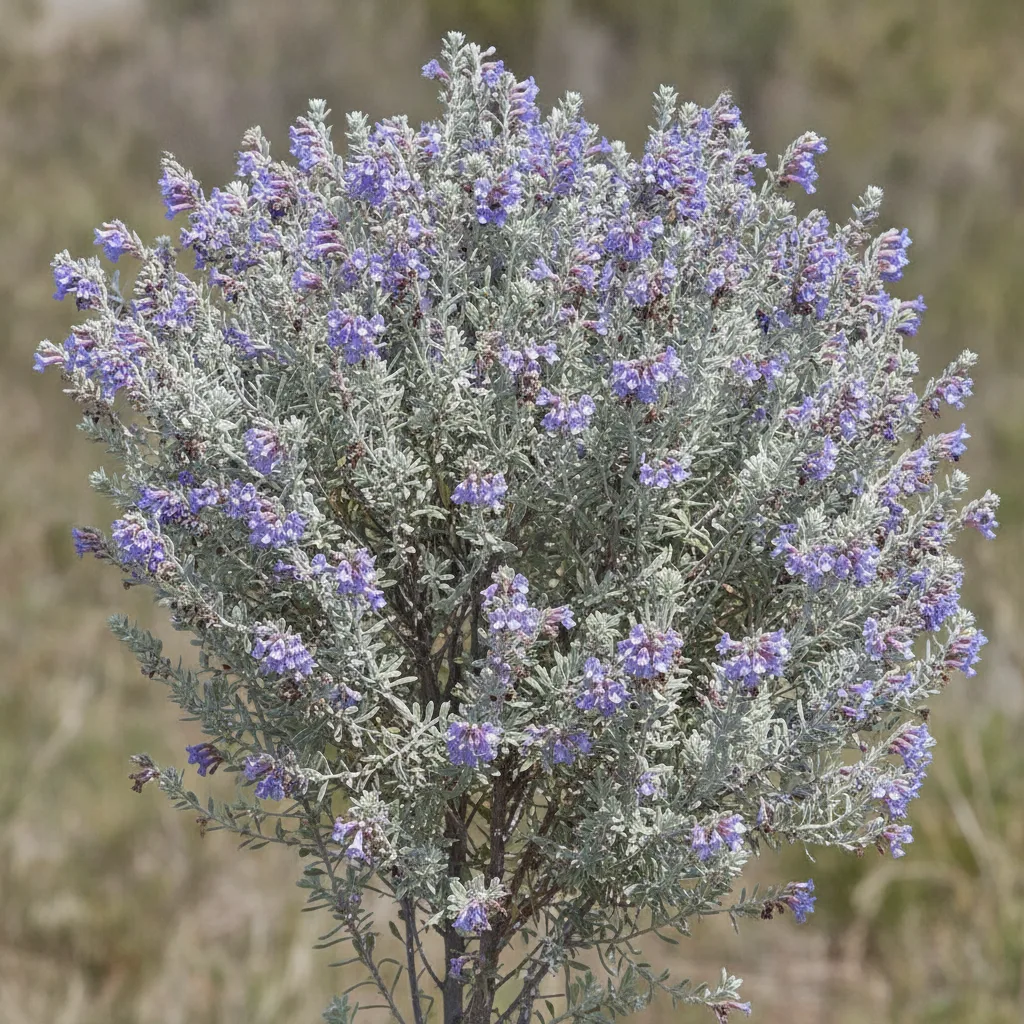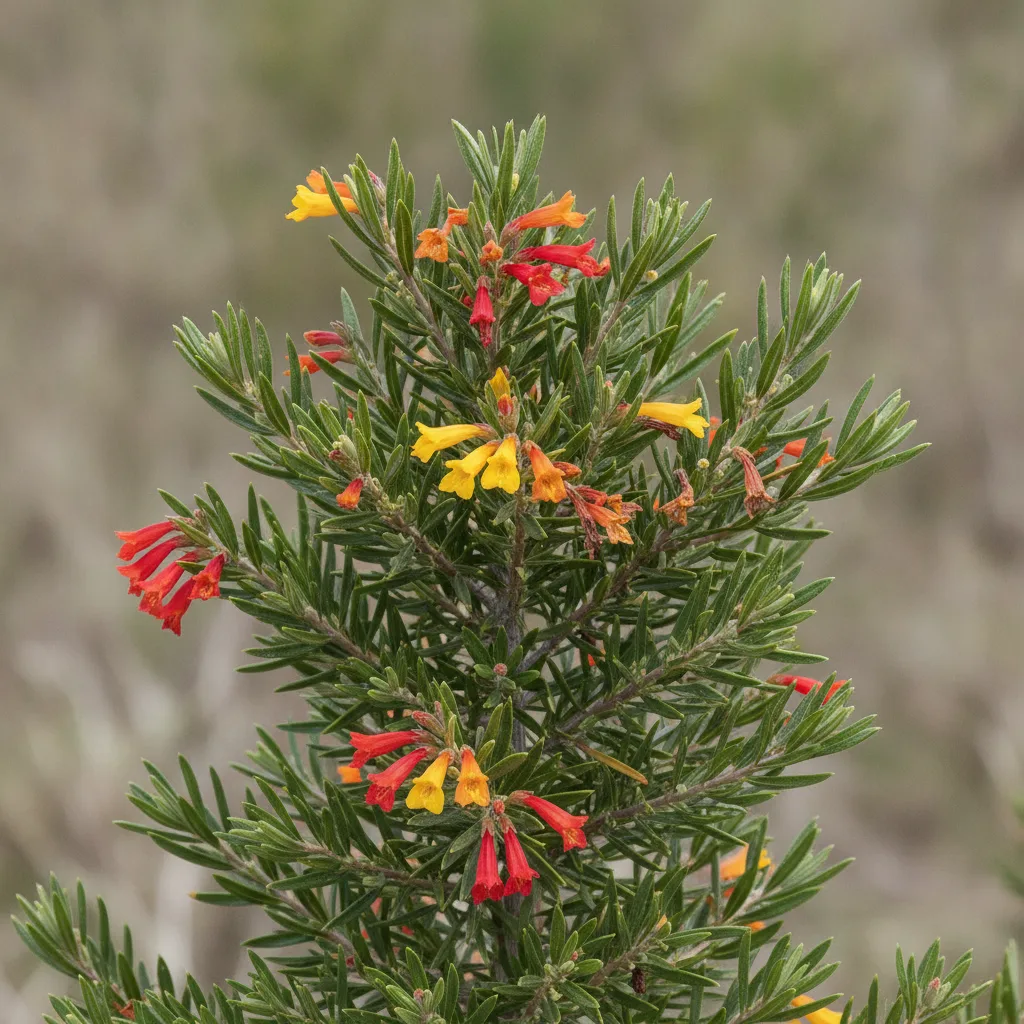
An outback survivor built for heat and drought, with tubular nectar flowers loved by honeyeaters. One of the most reliable natives for hot, dry, low-water gardens.
At a glance
- Plant type: Shrub
- Mature size: 1.2 m tall
- Aspect: full sun
- Water: very drought tolerant once established
- Frost: hardy
- Maintenance: low maintenance
- Origin: Australian native
About Tar Bush
Botanically, Eremophila glabra is a moderate-growing shrub in the Scrophulariaceae family, native to Australia. It reaches around 1.2 m tall at maturity, with evergreen and silver-grey foliage. Red, orange and yellow flowers appear for much of the year.
Where to grow Tar Bush
Tar Bush suits arid and semi-arid, Mediterranean and warm-temperate climates and grows best in full sun. It is frost hardy and shrugs off cold winters. It also is a genuinely water-wise choice and tolerates salt-laden coastal winds.
Soil & planting
Most soils suit Tar Bush provided drainage is reasonable. Dig in plenty of compost before planting, water in well, and mulch to keep roots cool.
Watering & feeding
Tar Bush handles dry conditions well once established. As an Australian native, feed it only with a low-phosphorus native fertiliser. Check moisture below the mulch during establishment and water thoroughly when needed rather than following a rigid schedule.
Pruning & care
Prune Tar Bush after flowering to keep it compact and encourage the next flush of blooms. Overall it is low maintenance.
Using Tar Bush in the garden
Tar Bush earns its place for drawing nectar-feeding birds into the garden and a feature or specimen planting.
Companion planting & design
Combine Tar Bush with plants that share its preference for dry conditions once established and arid and semi-arid climate. Use an odd-numbered group where space allows, or repeat it at intervals through a longer bed. It combines naturally with other Australian natives in a habitat or water-wise garden.