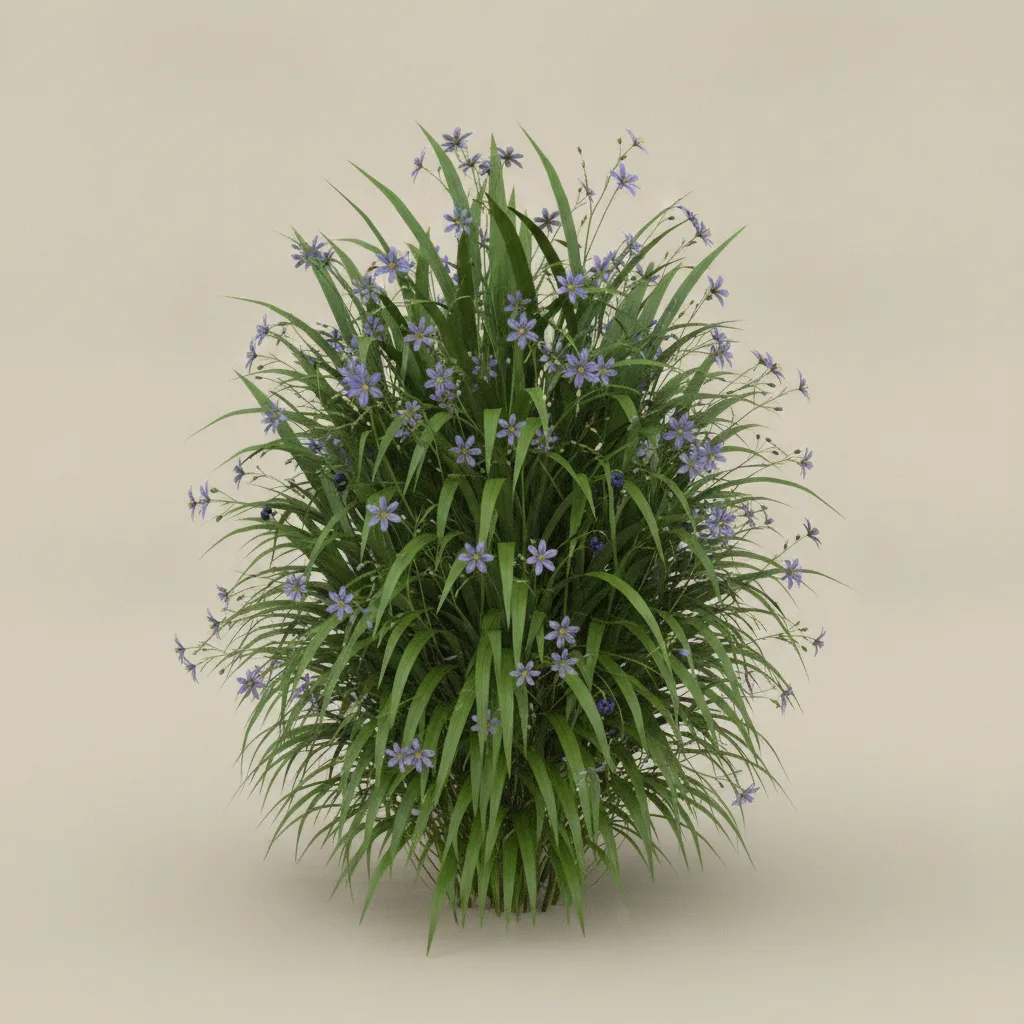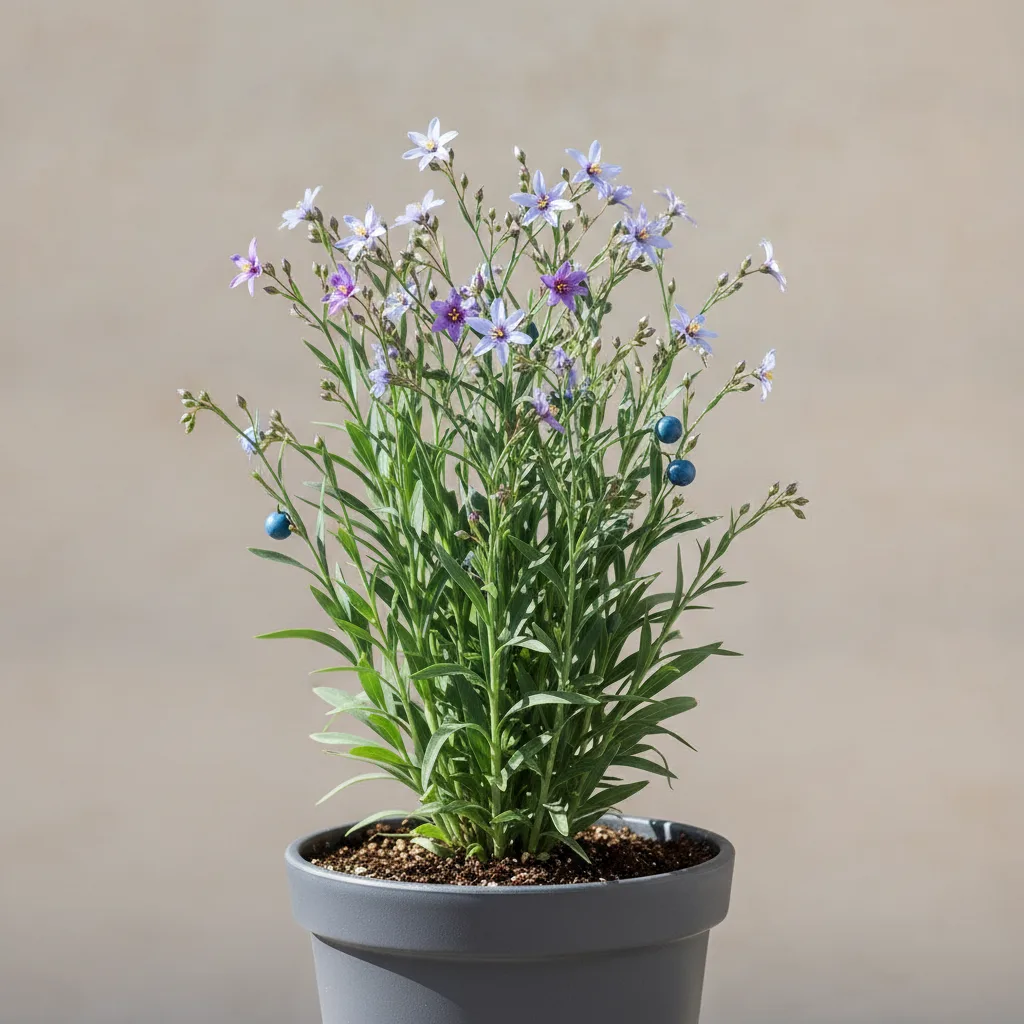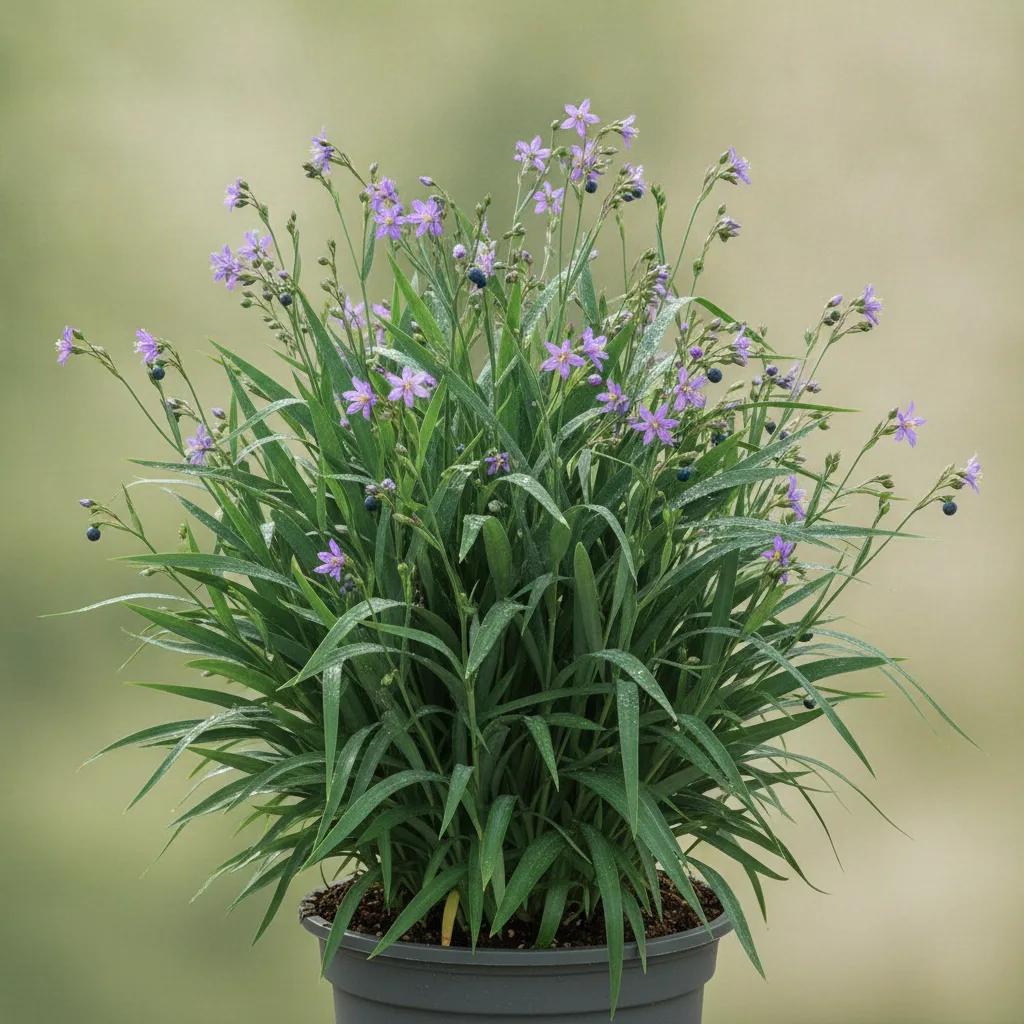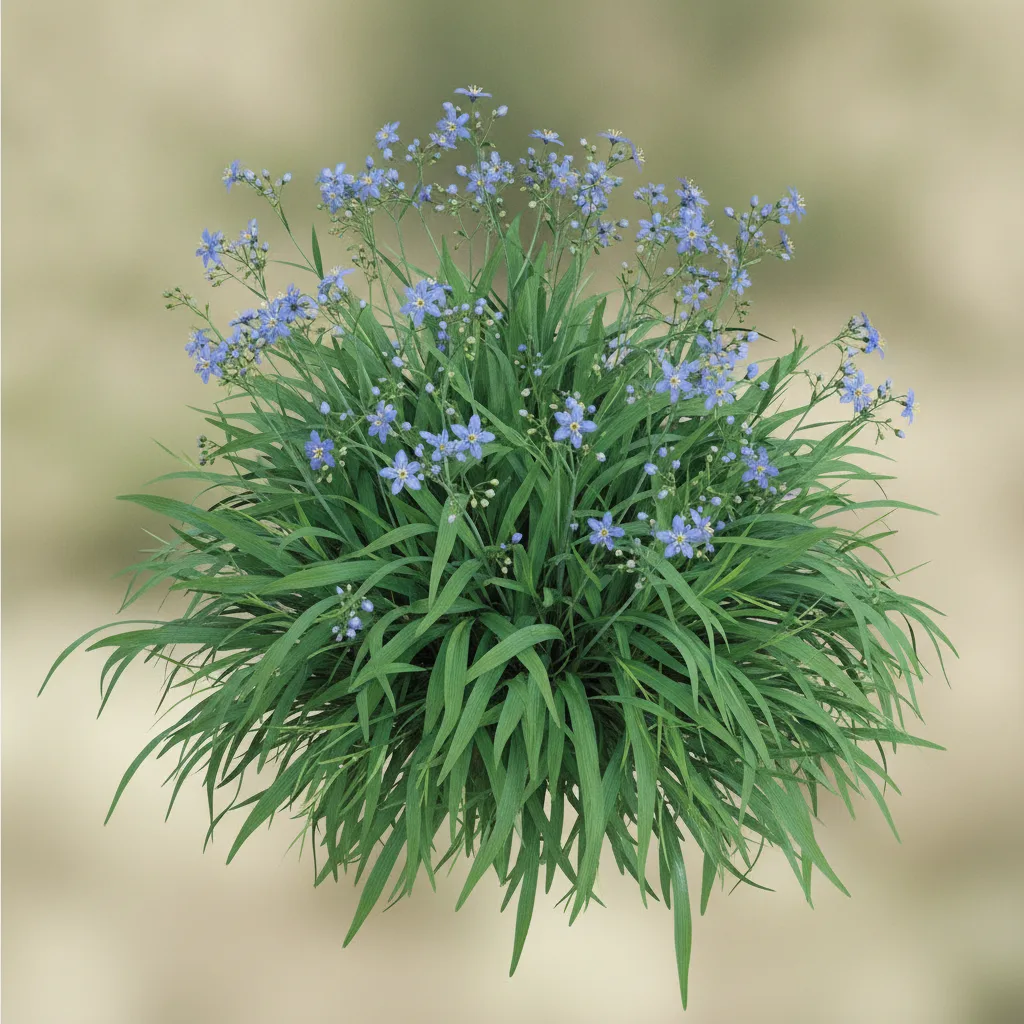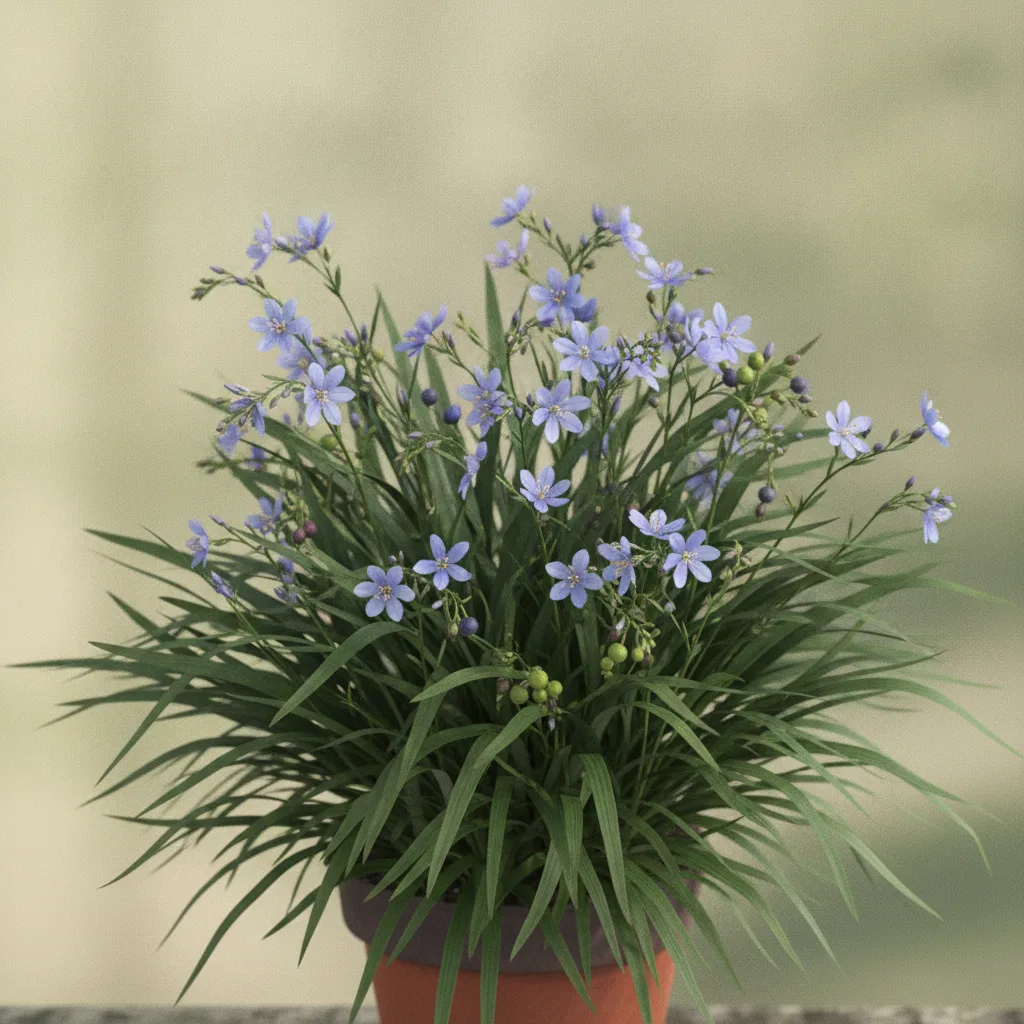
A clumping strappy native with starry blue flowers followed by glossy violet berries that draw birds. Tough, tidy and at home in mass plantings or pots.
At a glance
- Plant type: Ornamental grass
- Mature size: 80 cm tall
- Aspect: full sun and part shade or morning sun
- Water: very drought tolerant once established
- Frost: hardy
- Maintenance: low maintenance
- Origin: Australian native
About Blue Flax-Lily
Botanically, Dianella caerulea is a moderate-growing ornamental grass in the Asphodelaceae family, native to New South Wales, Queensland and Victoria. It reaches around 80 cm tall at maturity, with evergreen foliage. Blue and purple flowers appear in spring and summer.
Where to grow Blue Flax-Lily
Blue Flax-Lily suits warm-temperate, subtropical and cool-temperate climates and grows best in full sun and part shade or morning sun. It is frost hardy and shrugs off cold winters. It also tolerates salt-laden coastal winds and is a genuinely water-wise choice.
Soil & planting
Most soils suit Blue Flax-Lily provided drainage is reasonable. Dig in plenty of compost before planting, water in well, and mulch to keep roots cool.
Watering & feeding
Blue Flax-Lily handles dry conditions well once established. As an Australian native, feed it only with a low-phosphorus native fertiliser. Keep a newly planted specimen evenly watered through its first season; established plants can then follow the water needs above.
Pruning & care
Prune Blue Flax-Lily after flowering to keep it compact and encourage the next flush of blooms. Once established, it is low maintenance.
Using Blue Flax-Lily in the garden
Blue Flax-Lily earns its place for holding soil on banks and slopes, pots and courtyard containers, a feature or specimen planting and drawing nectar-feeding birds into the garden. It is equally at home in the ground or a large pot on a balcony or courtyard.
Companion planting & design
For easier irrigation and care, group Blue Flax-Lily with species that also favour dry conditions once established and warm-temperate climate. Leave enough room for the mature spread so neighbouring plants are not crowded out. It combines naturally with other Australian natives in a habitat or water-wise garden.