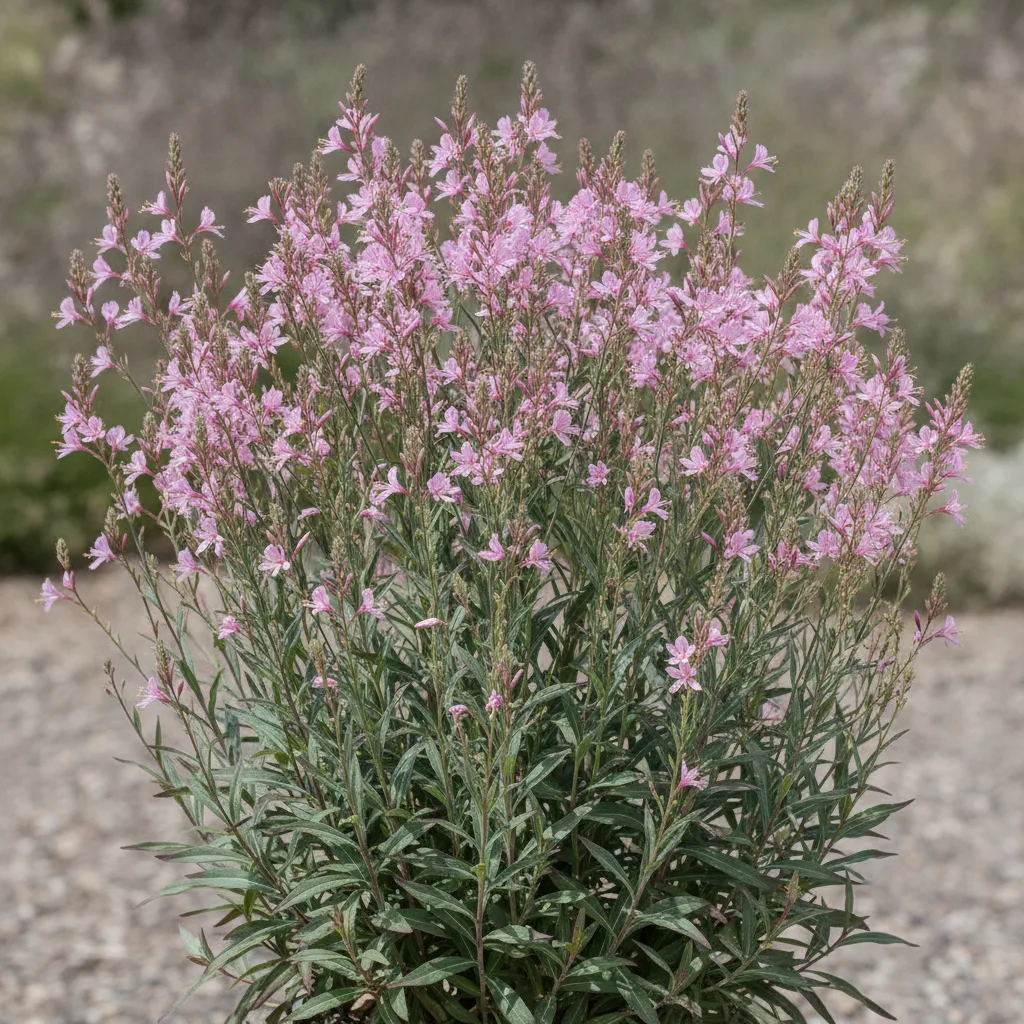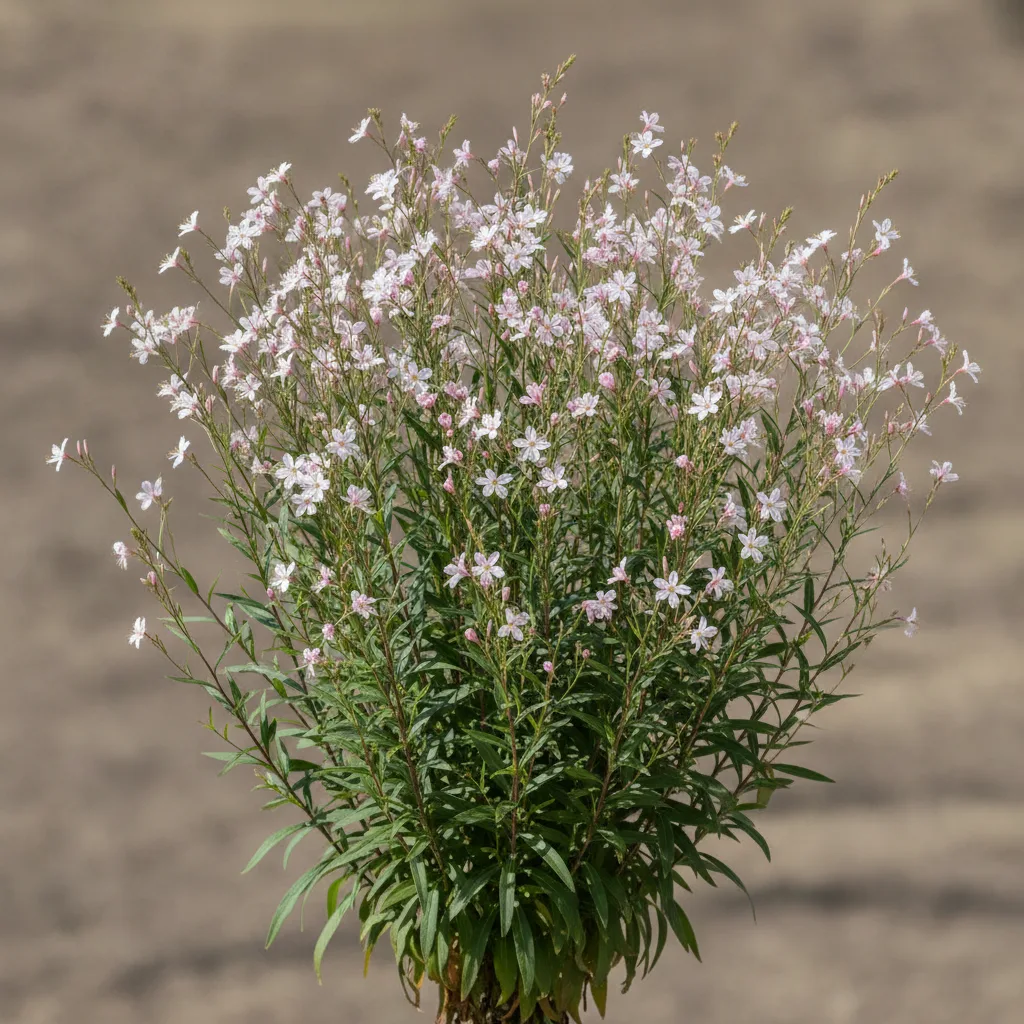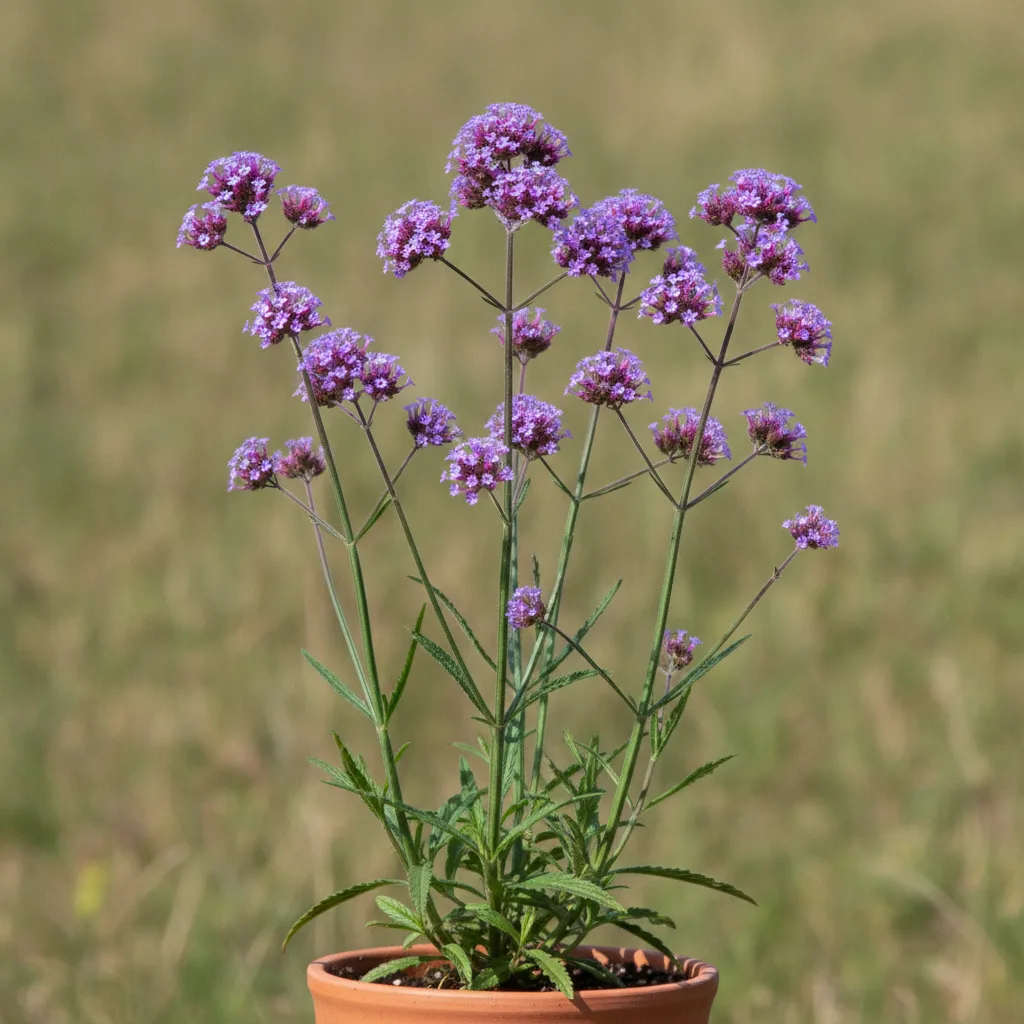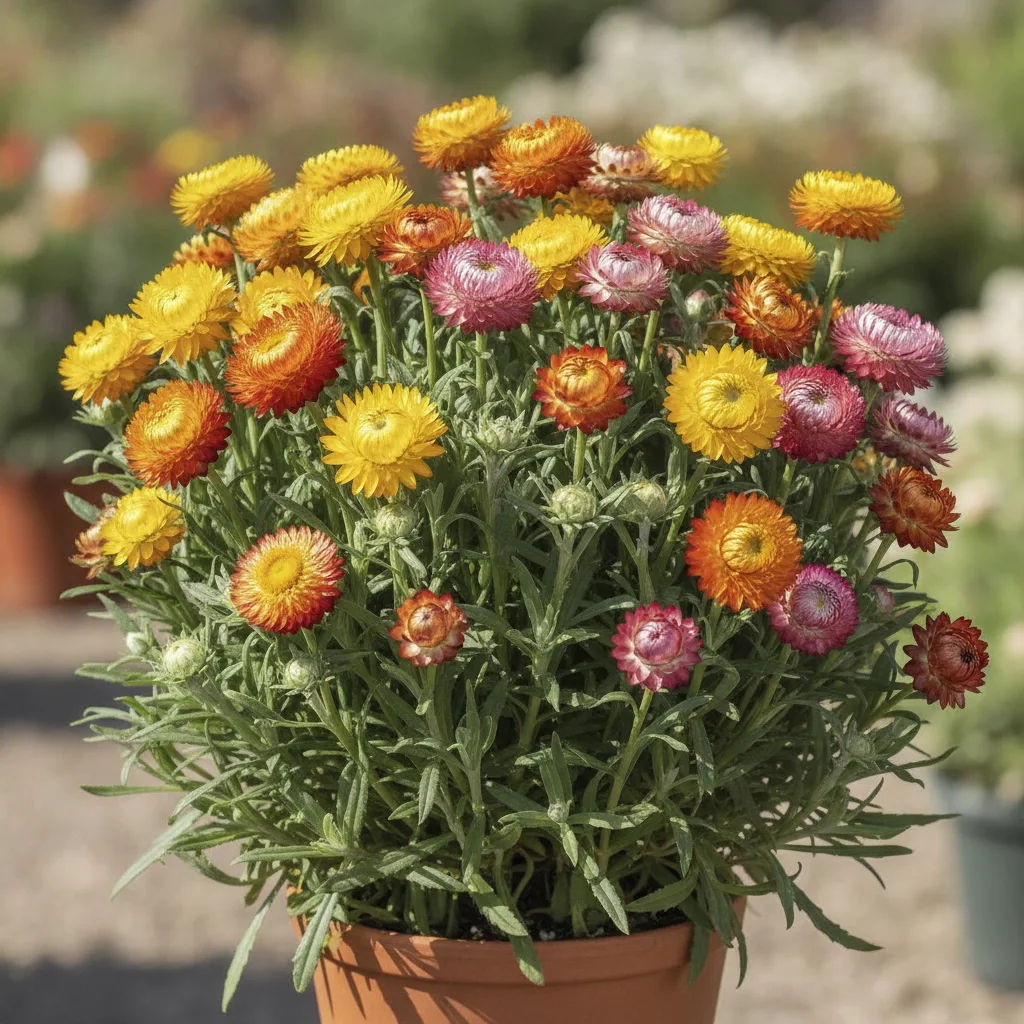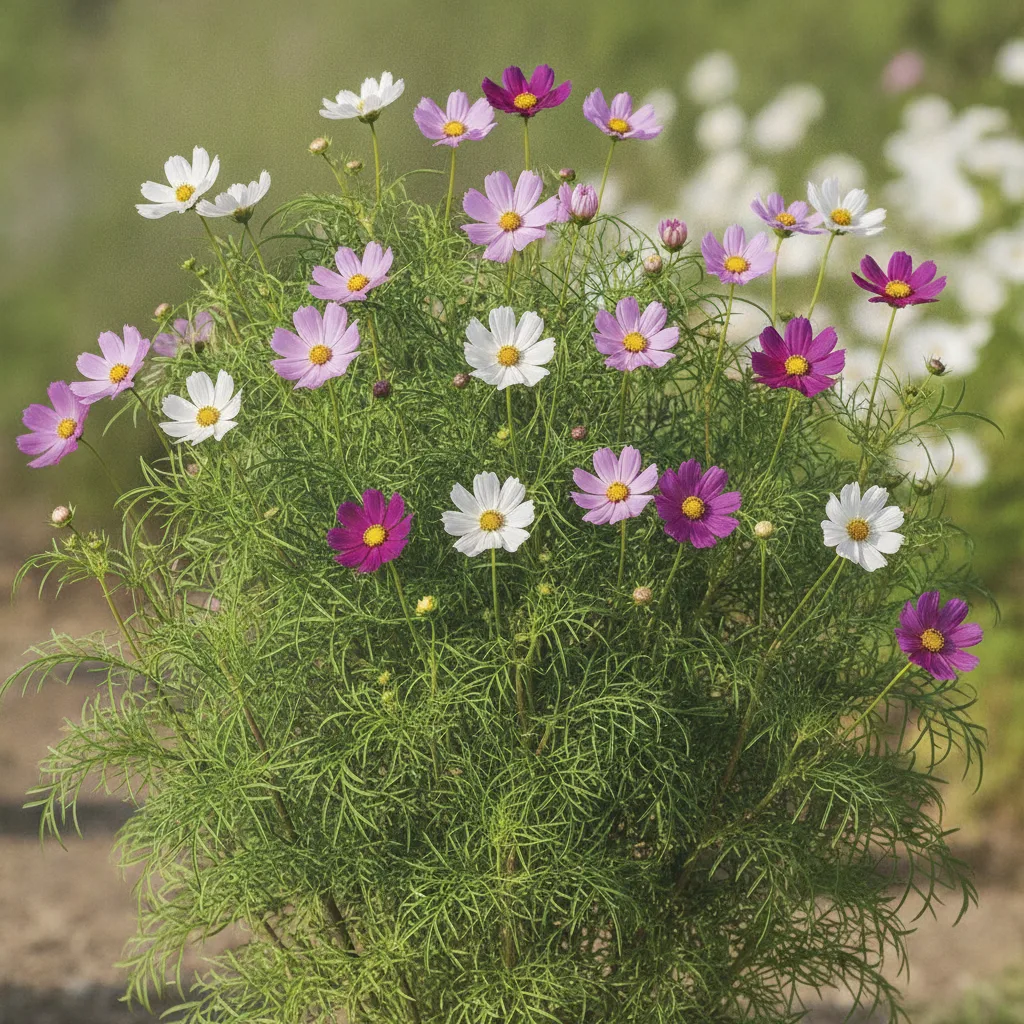
Airy ferny plants topped by simple daisies that wave on tall stems and adore poor, dry soil. One of the easiest cut flowers from seed, loved by bees and butterflies.
At a glance
- Plant type: Annual
- Mature size: 1.2 m H × 40 cm W
- Aspect: full sun
- Water: happy on low water
- Frost: tender
- Maintenance: low maintenance
- Origin: Exotic
About Cosmos
Botanically, Cosmos bipinnatus is a fast-growing annual in the Asteraceae family. It reaches around 1.2 m tall and 40 cm wide at maturity, with deciduous foliage. Pink, white and purple flowers appear for much of the year.
Where to grow Cosmos
Cosmos suits warm-temperate, subtropical and Mediterranean climates and grows best in full sun. It is frost tender, so protect it from hard frosts or grow it in a sheltered spot or pot. It also is a genuinely water-wise choice.
Soil & planting
Most soils suit Cosmos provided drainage is reasonable. Dig in plenty of compost before planting, water in well, and mulch to keep roots cool.
Watering & feeding
Cosmos performs well with relatively little water once established. Refresh mulch and provide a modest balanced feed at the start of spring. Check moisture below the mulch during establishment and water thoroughly when needed rather than following a rigid schedule.
Pruning & care
Prune Cosmos after flowering to keep it compact and encourage the next flush of blooms. Overall it is low maintenance.
Using Cosmos in the garden
Cosmos earns its place for cut flowers for the vase, feeding bees and pollinators, attracting butterflies and a feature or specimen planting.
Companion planting & design
Combine Cosmos with plants that share its preference for low water use and warm-temperate climate. Use an odd-numbered group where space allows, or repeat it at intervals through a longer bed.
Good to know
It is regarded as non-toxic and pet-safe.
Buying Cosmos
Plant Sale lists Cosmos as seed. Current stock is confirmed with your quote; ask about your preferred size before planning a purchase.
Prefer to grow it yourself? See the Cosmos seed sowing guide for depth, timing and germination.