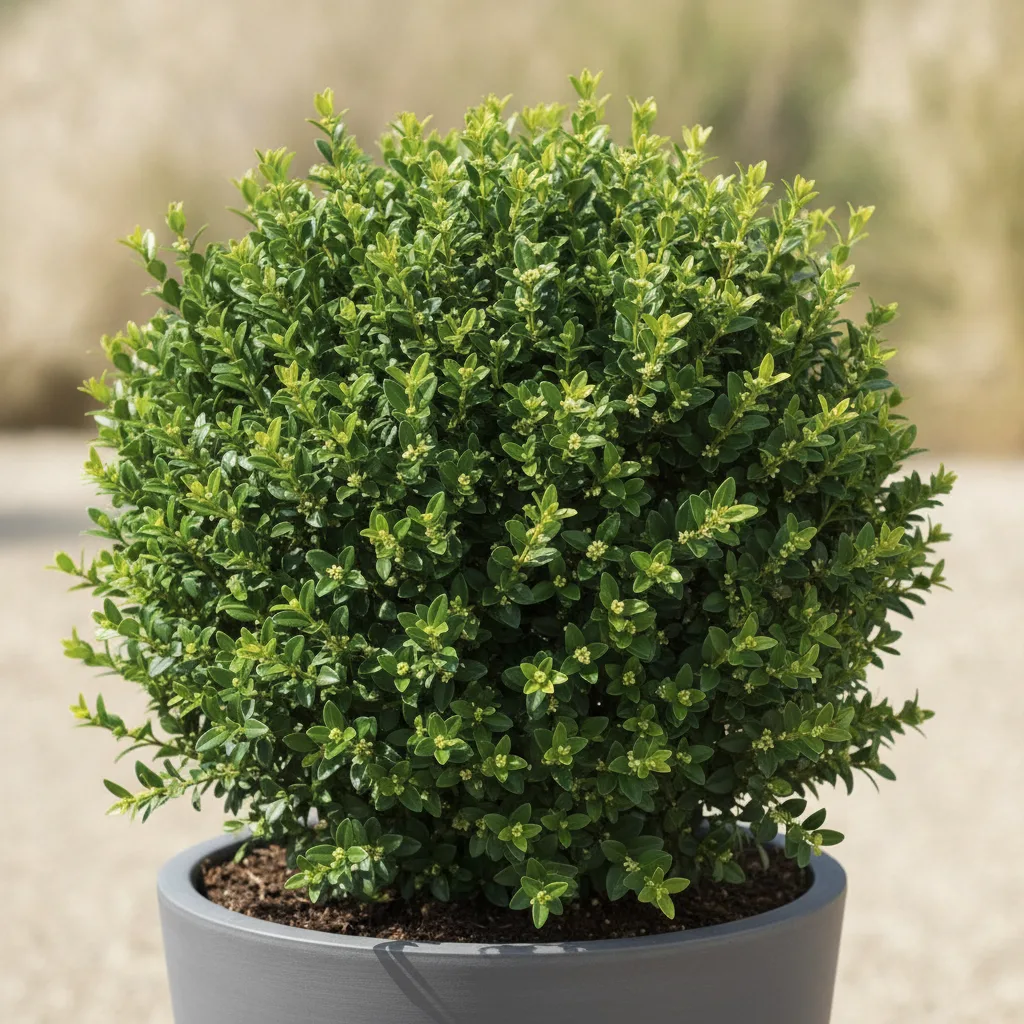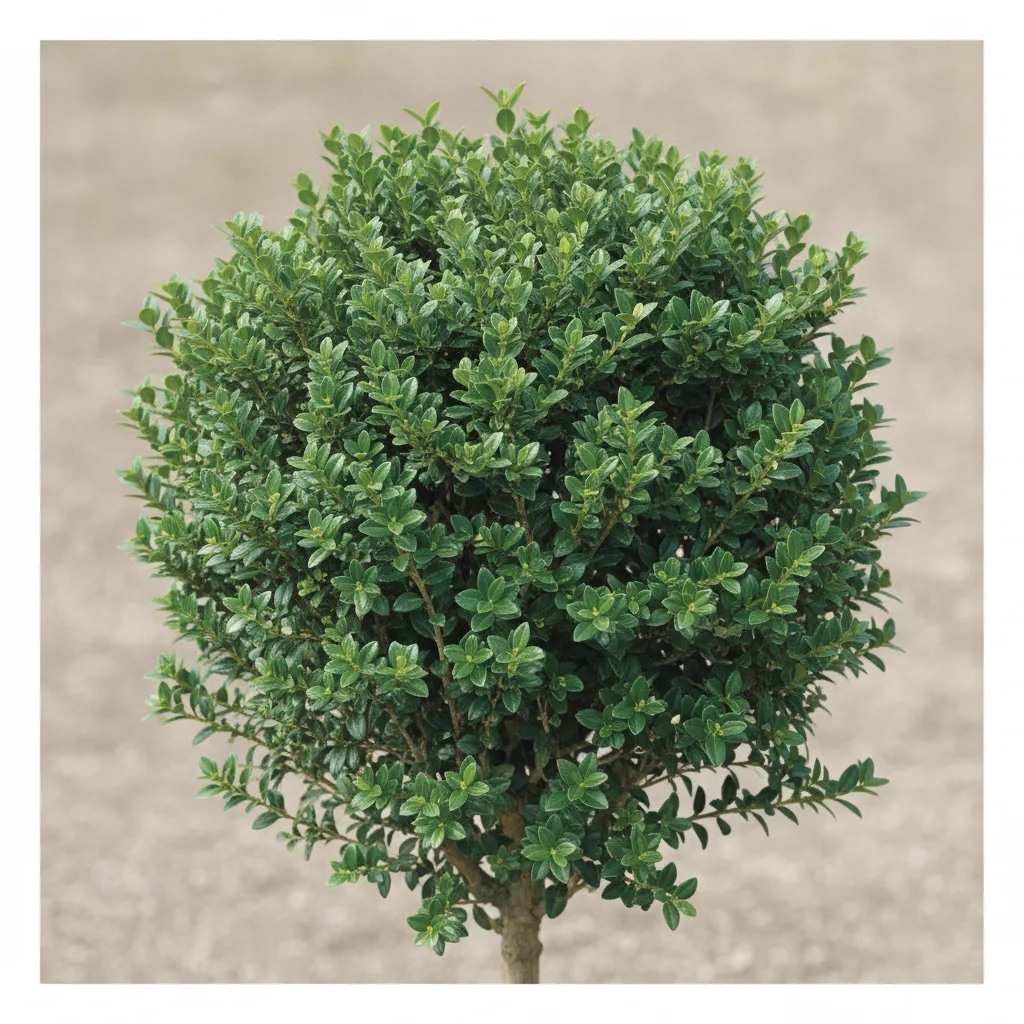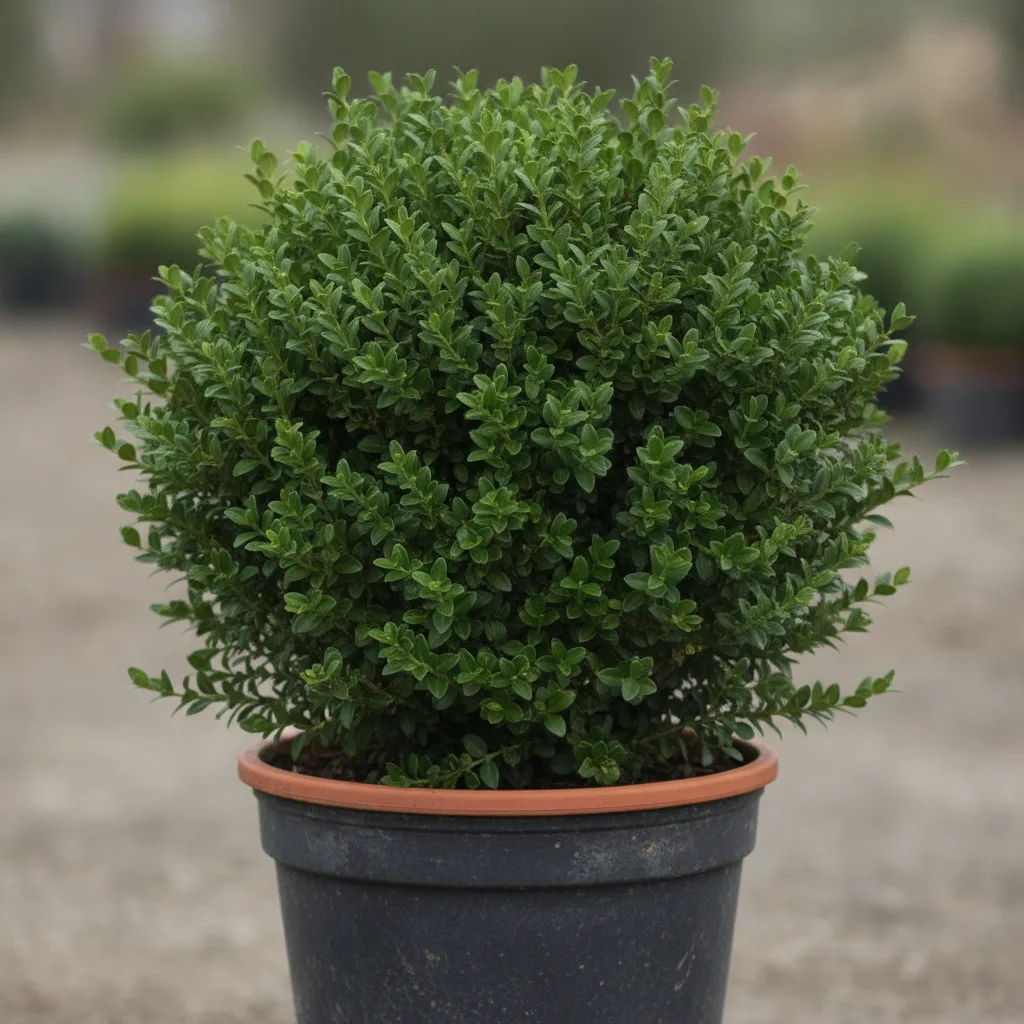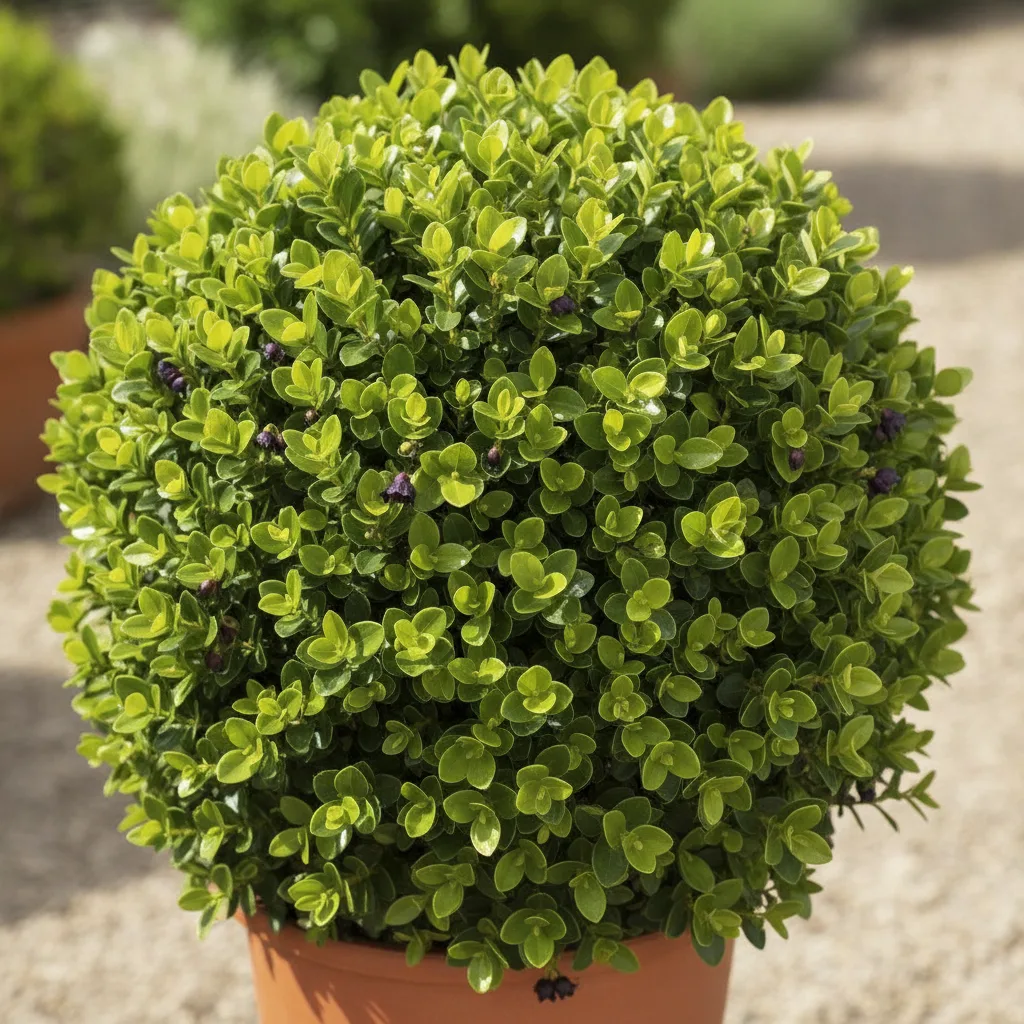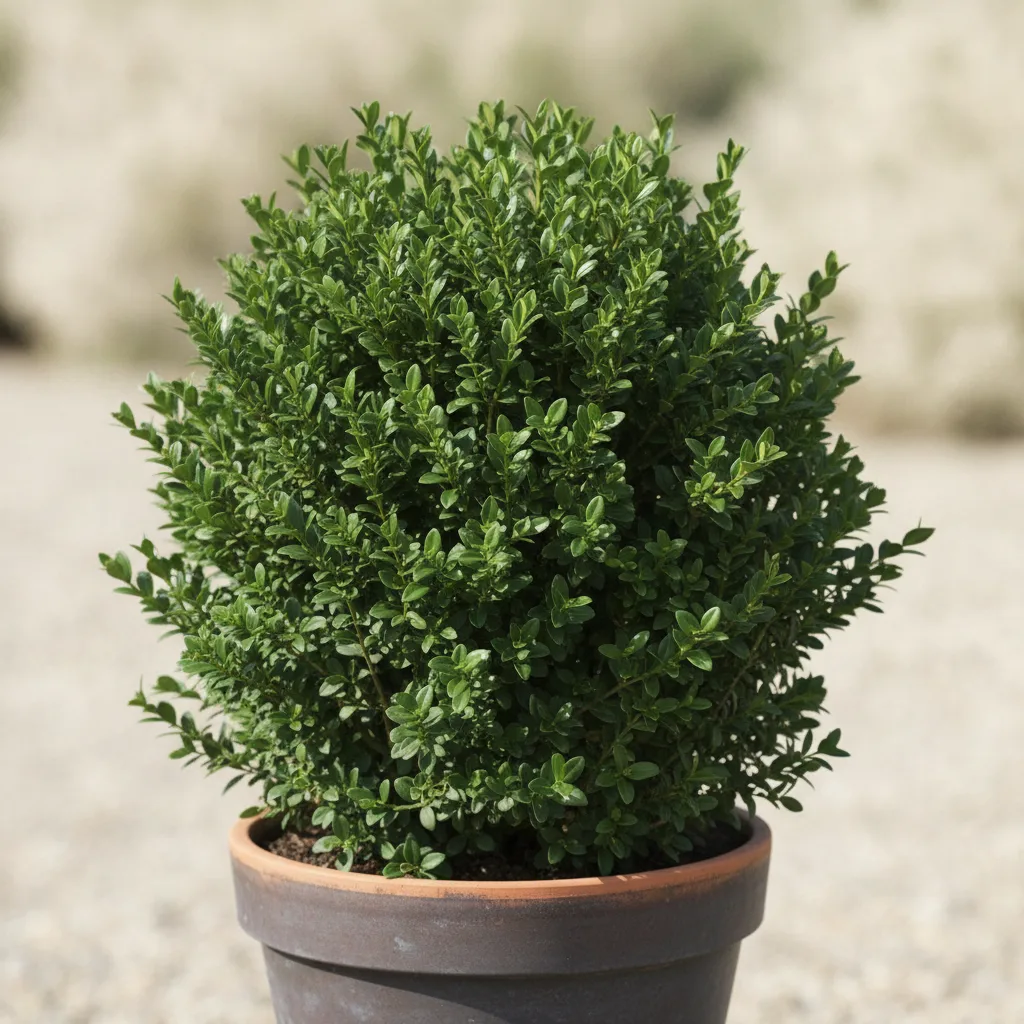
The definitive formal hedge and topiary plant — dense, fine-leaved and endlessly clippable. Slow-growing but unmatched for crisp evergreen structure and parterres.
At a glance
- Plant type: Shrub
- Mature size: 1.5 m tall
- Aspect: full sun and part shade or morning sun
- Water: regular, moderate watering
- Frost: hardy
- Maintenance: moderate maintenance
- Origin: Exotic
About English Box
Buxus sempervirens is a slow-growing shrub in the Buxaceae family. It reaches around 1.5 m tall at maturity, with evergreen foliage.
Where to grow English Box
English Box suits cool-temperate, warm-temperate and Mediterranean climates and grows best in full sun and part shade or morning sun. It is frost hardy and shrugs off cold winters.
Soil & planting
Most soils suit English Box provided drainage is reasonable. Plant into well-prepared ground, firm the soil around the roots and water deeply to settle it in.
Watering & feeding
English Box does best with regular, moderate watering. Apply a balanced fertiliser in spring to support healthy growth. During the first growing season, water deeply whenever the upper soil begins to dry, then reduce the frequency as roots establish.
Pruning & care
Tip-prune English Box in spring to maintain a dense, shapely habit. It clips well, so trim two or three times a year for a formal finish. Its ongoing care level is moderate maintenance.
Using English Box in the garden
English Box earns its place for a fast screen or informal hedge, clipping into topiary and a feature or specimen planting.
Companion planting & design
Build the planting around neighbours suited to the same regular, moderate watering and cool-temperate climate as English Box. Repeating the foliage or flower colour nearby will make the composition feel deliberate.
Good to know
Note that it is toxic to cats and dogs, so site it away from pets that chew.