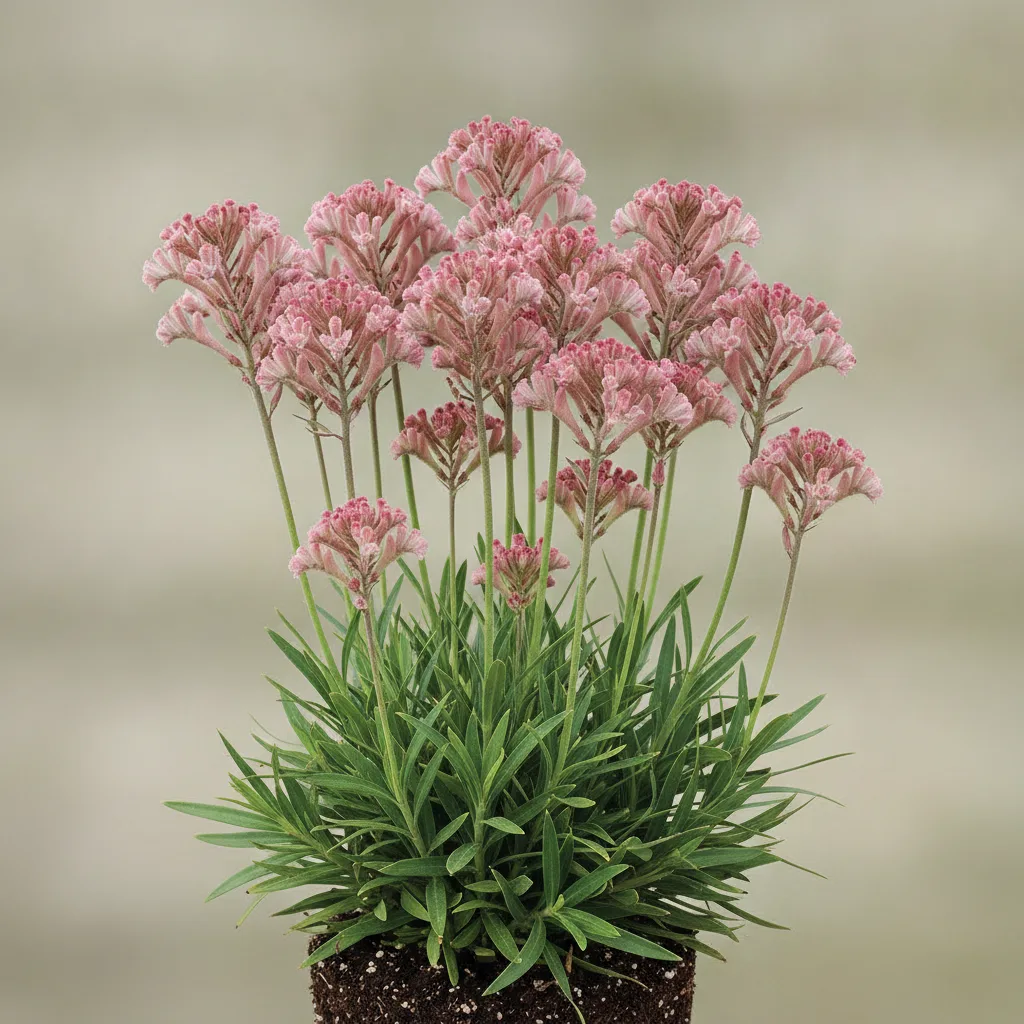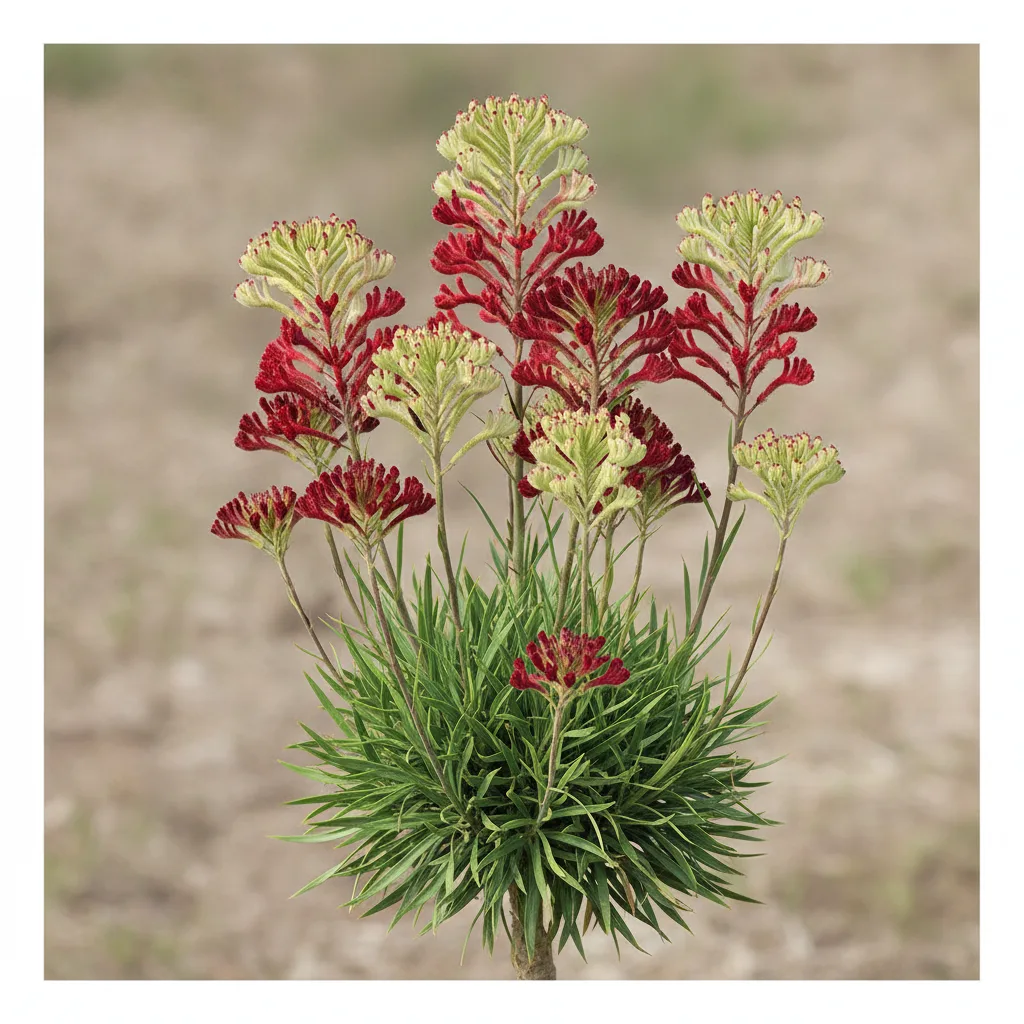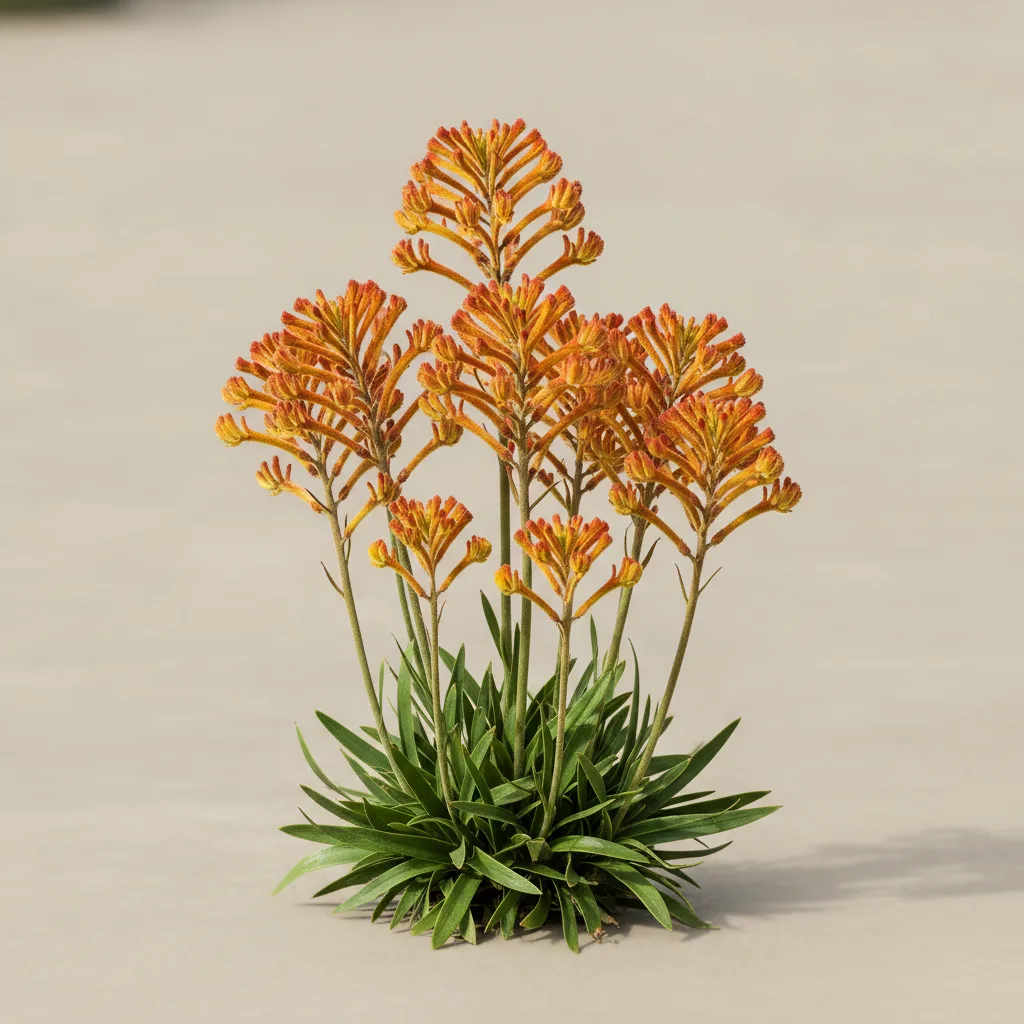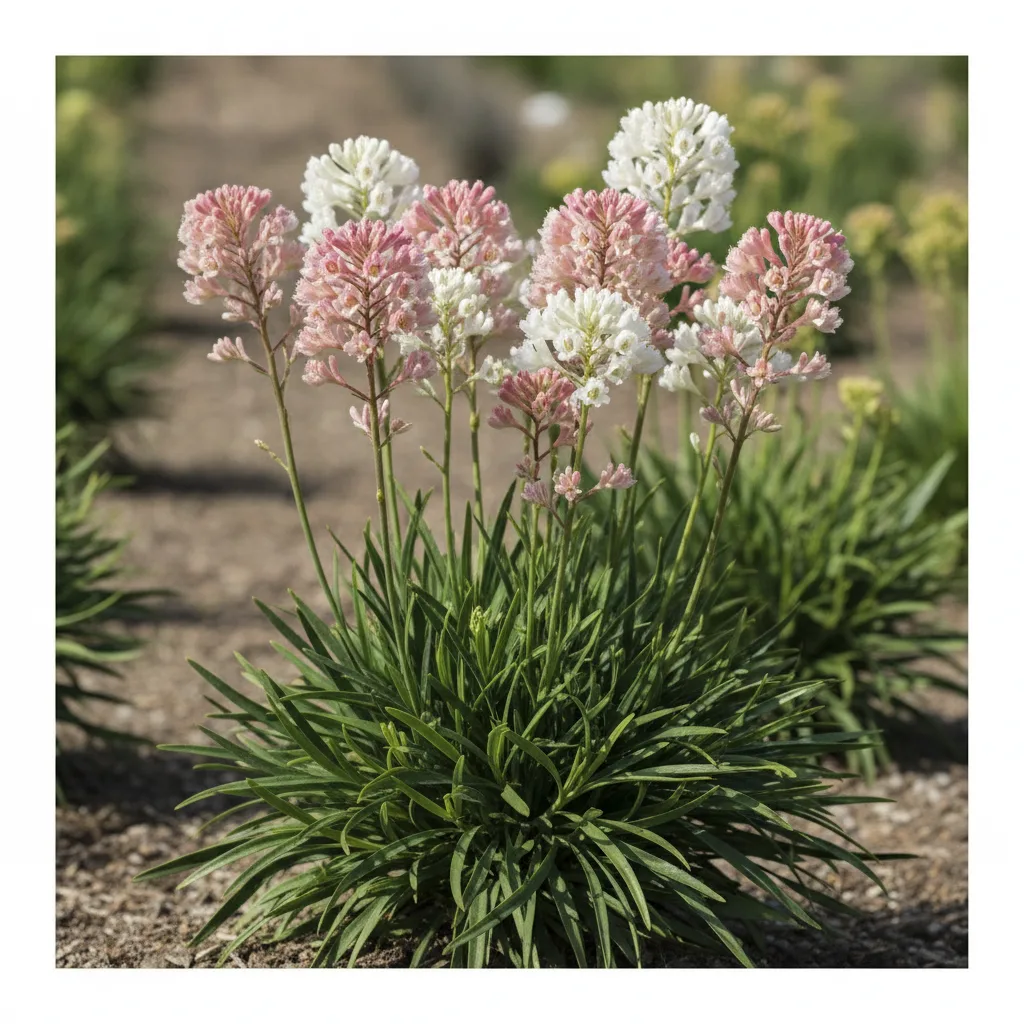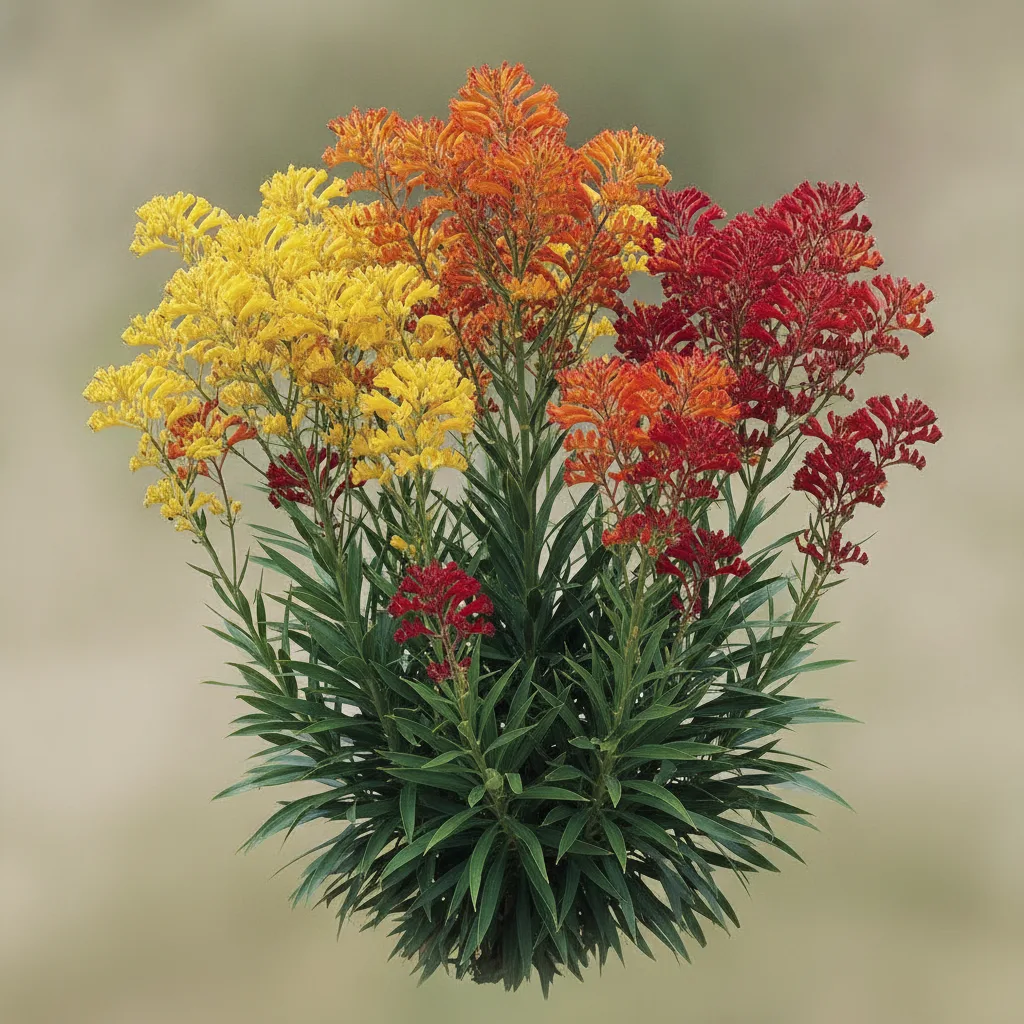
The hardiest and most adaptable kangaroo paw — tall fans of strappy leaves topped by furry, nectar-rich flowers that birds adore. Tougher and longer-lived than the smaller hybrids.
At a glance
- Plant type: Perennial
- Mature size: 1.8 m tall
- Aspect: full sun
- Water: very drought tolerant once established
- Frost: hardy
- Maintenance: low maintenance
- Origin: Australian native
About Tall Kangaroo Paw
Anigozanthos flavidus is a fast-growing perennial in the Haemodoraceae family, native to Western Australia. It reaches around 1.8 m tall at maturity, with evergreen foliage. Yellow, orange and red flowers appear for much of the year.
Where to grow Tall Kangaroo Paw
Tall Kangaroo Paw suits warm-temperate, Mediterranean and subtropical climates and grows best in full sun. It is frost hardy and shrugs off cold winters. It also is a genuinely water-wise choice and tolerates salt-laden coastal winds.
Soil & planting
Most soils suit Tall Kangaroo Paw provided drainage is reasonable. Plant into well-prepared ground, firm the soil around the roots and water deeply to settle it in.
Watering & feeding
Tall Kangaroo Paw handles dry conditions well once established. As an Australian native, feed it only with a low-phosphorus native fertiliser. Check moisture below the mulch during establishment and water thoroughly when needed rather than following a rigid schedule.
Pruning & care
Prune Tall Kangaroo Paw after flowering to keep it compact and encourage the next flush of blooms. For most gardens, it is low maintenance.
Using Tall Kangaroo Paw in the garden
Tall Kangaroo Paw earns its place for drawing nectar-feeding birds into the garden, cut flowers for the vase, a feature or specimen planting and pots and courtyard containers. It is equally at home in the ground or a large pot on a balcony or courtyard.
Companion planting & design
Tall Kangaroo Paw sits most comfortably beside plants adapted to dry conditions once established and warm-temperate climate. A small cluster gives stronger visual impact than isolated plants scattered through the garden. It combines naturally with other Australian natives in a habitat or water-wise garden.